









.png)
.png)












.png)
.png)













.webp)






 Login
Login
A subsidiary of a major international bank was fined for harassing two whistleblowers and ordered to pay damages in the first case of its kind in that European Union member state. The two employees had exposed wrongdoing within the business and claimed they suffered retaliation as a result of their reporting.
This anonymised case study demonstrates the importance of acting on the reports of whistleblowers and investigating their allegations thoroughly. It shows why a speak-up culture can stop wrongdoing early and prevent negative outcomes for organisations and their stakeholders. When backed by a confidential internal reporting channel, such as IntegrityLog, you facilitate that speak-up culture and make it easier for whistleblowers to make their reports without exposing their identity.
Background
In the early 2010s, Person A, the head of internal auditing at the bank, and Person B, the organisation’s marketing manager, became aware that the institution was running a significant scheme to allow wealthy customers to evade tax. They worked together to gather evidence of this illegal activity, with Person A compiling a comprehensive report and Person B working with authorities to help them carry out surveillance on some of the bank’s customers who were using the tax evasion strategy.
Rather than working with the whistleblowers to investigate the issues within the organisation, the bank was found to have harassed them through a series of measures. Person A told the court that he was sidelined and his bonus was cut significantly. Person B had the scope of her tasks reduced and was provided with a negative evaluation.

What happened next?
The bank failed to prevent the details of the scheme from being uncovered by the authorities. Person A’s report led, in part, to the bank being found guilty by the country’s top court of money laundering and tax evasion. A judge demanded the bank pay a fine of €3.7 billion, reduced later to €1.8 billion.
Person B settled a legal case with the bank out of court. However, Person A took the company to trial and won €50,000 in compensation for the psychological harassment caused by the actions of the organisation, including harming his good standing and career.
By failing to engage in the process of listening to the reporting persons and challenging internal behaviour that breached the law in the country in which it took place, the bank found itself damaged both financially and reputationally.
What should have happened?
As evidenced in the significant sanction for tax evasion and money laundering, the bank was not involved in just unethical practices, but also those that broke the law within the EU country in which the subsidiary was based. The fact that the whistleblowers’ reports were not only ignored but that the individuals were also punished for making those reports suggests a toxic internal culture that led to negative outcomes for the business and its key stakeholders.
The company could have avoided a multibillion-euro fine by conducting a thorough and impartial investigation into the allegations of Person A and Person B and creating a speak-up culture that ensures the safety of anyone raising concerns. The fact that Person B had to work with the authorities to monitor clients, instead of the company launching its own internal investigation, suggests a limited internal response at the time.
What can you do?
EU organisations with 50 or more employees are obliged to provide internal reporting channels and appoint impartial investigators, in line with the whistleblowing laws across member states that were developed following the introduction of the EU Whistleblowing Directive. Keep whistleblowers’ identities confidential, provide support to help them understand their rights and put in place robust sanctions for anyone who carries out any form of retaliation against them. This includes demotion, firing, passing over for opportunities, pay cuts or any other detrimental behaviour.
Conclusion
When employees feel safe and supported to speak up about misconduct in the workplace, they can play an important role in your compliance culture. Whistleblowers are the first line of defence to alert you to wrongdoing so that you can stop it before it spreads and causes greater damage to your business.
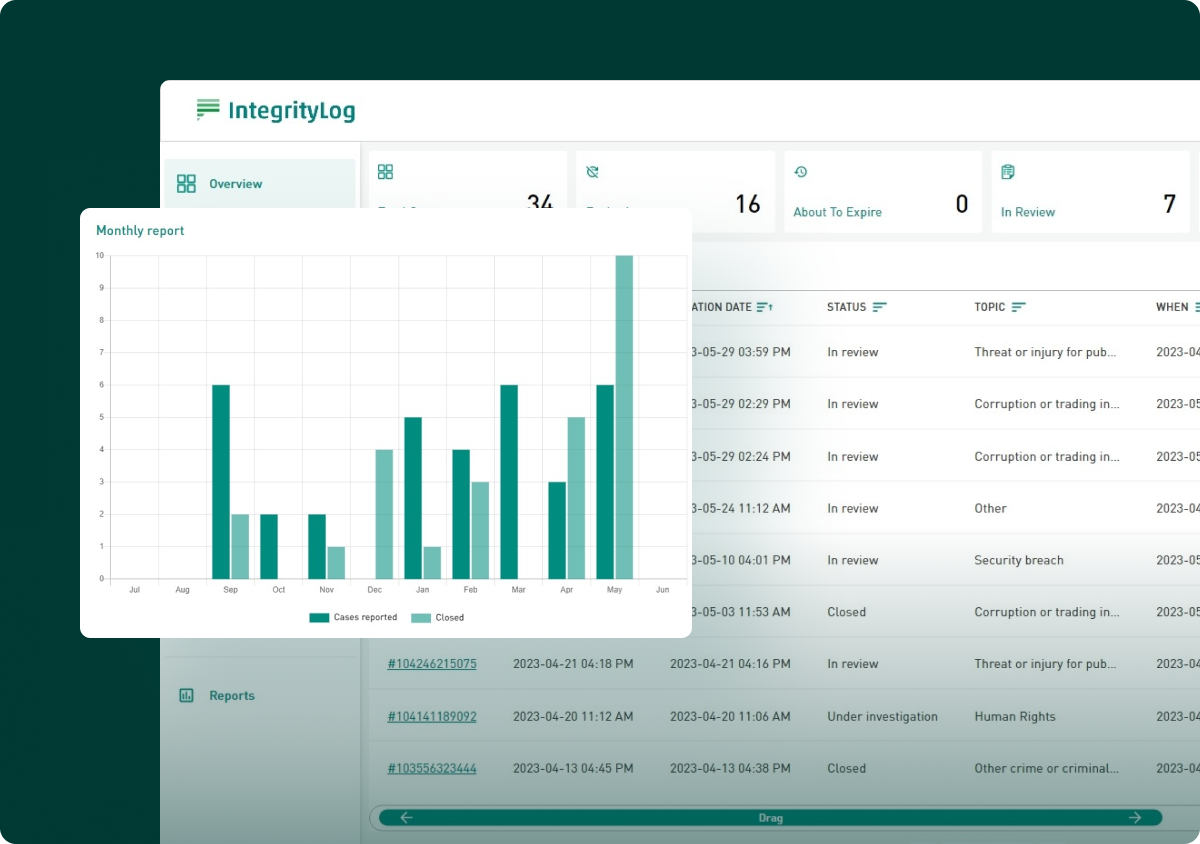
IntegrityLog is an online whistleblower platform that allows for both confidential and anonymous reporting, as well as allowing investigators to maintain open dialogue with reporting persons. This enables them to uncover additional information about the case to better understand the situation. It keeps teams on track with deadlines for investigations and allows whistleblowers to safely log cases in line with the EU Whistleblowing Directive.
Request a demo of IntegrityLog today.
References and further reading
- EU whistleblowing monitor