









.png)






.svg)
.svg)
.svg)







.png)
.png)







.jpg)

%20F%20(1).jpeg)







.webp)






 Login
Login
Regulators around the world are keen to prevent market abuse from creating distrust in the financial system. This endeavour has led to various pieces of legislation within different territories that place obligations on market participants. As well as financial services organisations needing to be alert to misconduct carried out by clients, there are also considerable risks relating to personal account dealing (PAD) by employees.
In the United Kingdom, the Financial Conduct Authority (FCA) expressed concerns in 2019 about “how often we are seeing apparent breaches of PAD policies and the issues which have come to light as a result.” Following this statement, the authority has conducted reviews and investigations into the PAD processes at a range of financial firms and issued guidance on best practices for businesses that fall within the scope of the various pieces of relevant legislation currently enacted in the UK.
This article explores the obligations of UK investment firms, stock brokers and other financial institutions with regard to monitoring employees’ personal account dealing.
1. FCA’s definition of Personal Account Dealing (PAD)
Personal Account Dealing, or employee personal trading, is defined by the FCA as “where employees of an authorised firm trade for themselves rather than for clients.” This includes anyone who works for “the designated investment business of a firm in relation to activities carried on from an establishment in the United Kingdom.”
The reason for highlighting the risks posed by anyone working at an investment firm, or at the investment arm of another business or group, is that they are in a unique position to commit certain types of market abuse or misconduct when carrying out their duties.
PAD refers to the actions taken around the employee’s personal portfolio and ensuring that they do not infringe on their professional duties.
2. Why is FCA oversight becoming stricter?
As financial markets are becoming more complex, with digital communication leading to ever-faster distribution of information, the potential for conflicts of interest and unethical behaviour increases.
The FCA has been increasing its oversight on PAD to ensure that financial professionals don’t engage in actions that could negatively impact market integrity or consumer trust. The authority says that its rules on employee trade monitoring “create a control framework for firms to minimise the risk that such trading:
- conflicts with the interest of their clients
- results in market abuse including front-running client orders
- or creates a conflict between employees’ personal interest and their regulatory obligations to report suspicious transactions or orders.”
For example, if an employee was providing advice to a client about investments, without adequate controls, they could provide suboptimal information if the best investment for the client might negatively impact the employee’s own investments.
In addition, the knowledge that a client was going to make a large investment could lead an employee to buy stock in the target issuer, anticipating that its value would increase after the client’s investment. This and other forms of insider dealing, once exposed, can lead to a loss of trust in the markets and that is why the FCA is keen to prevent it.
3. Legislation that relates to PAD
| Legislation | Explanation |
|---|---|
| COBS 11.7 and COBS 11.7A | The FCA’s Conduct of Business Sourcebook collates the relevant compliance information required by companies that sell activities relating to long-term insurance or that are designated investment businesses. The sections COBS 11.7 and COBS 11.7A outline obligations relating to personal account dealing. |
| FCA Principles for Business | A number of the FCA’s Principles of Business apply to investment firms and Personal Account Dealing. These include the requirements that “a firm must conduct its business with integrity,” “a firm must pay due regard to the interests of its customers and treat them fairly” and “a firm must manage conflicts of interest fairly.” |
| APER 4.1 Statement of Principle 1 | The first statement of principle for approved persons – those who meet the FCA requirements to carry out what are called ‘controlled activities’ – states that “an approved person must act with integrity in carrying out his accountable functions.” This includes not misleading clients, falsifying documents, and other examples of misconduct. |
| APER 4.2 Statement of Principle 2 | The second statement of principle is concerned with the requirement that “an approved person must act with due skill, care and diligence in carrying out his accountable functions.” This forbids approved persons from failing to inform clients of material information and encompasses failing to disclose a conflict of interest. |
| Market Abuse Regulation (MAR) | The UK onshored the Market Abuse Regulation following its exit from the EU. UK MAR prohibits insider dealing and the misuse of inside information. |
| Markets in Financial Instruments Directive (MiFID II) | The MiFID II was also onshored after Brexit. It states that investment firms must ensure employees do not make personal transactions that use inside information or form a conflict of interest. |
4. FCA’s latest updates
Market Watch is the FCA’s newsletter on market conduct and transaction reporting issues.
- Market Watch 62 – The FCA reported on its analysis of suspicious transaction and order reports (STORs), expressing concern at the breaches of companies’ PAD policies resulting from both ignorance and wilful misconduct.
The update made it clear to firms that they should ensure their employees understood their employee personal trading policy through training.
- Market Watch 69 – The FCA reported concern that some investment firms were failing to manage potential employee trading concerns effectively because they did not calibrate their risk alert scenarios for specific risks.
5. How to manage Personal Account Dealing
5.1 Create PAD and conflict of interest policies
Help your employees understand what is expected of them and why the company puts in place certain restrictions on their personal trades. You should be clear about your expectations on both PADs and what happens in the event of a conflict of interest.
Upload these documents to a shared workspace so they are always accessible.
5.2 Break down your risks
The FCA found that some firms only assessed the risk level of market abuse as a whole. Insider trading and market manipulation are broad categories; within them are offences such as wash trading, front-running, layering and spoofing. Firms must understand their risk of non-compliance for each type of activity.
5.3 Extend lookback periods
The FCA discovered that some companies only implemented a ‘lookback period’ of 24 hours before the release of inside information. By extending the lookback period, you gain a clearer picture of whether insider dealing is occurring.
5.4 Submit STOR without delay
It is a requirement of UK MAR that companies issue a STOR as soon as they spot a suspicious transaction. Article 16 states that notification should occur when there is a "reasonable suspicion."
5.5 Establish a pre-clearance process
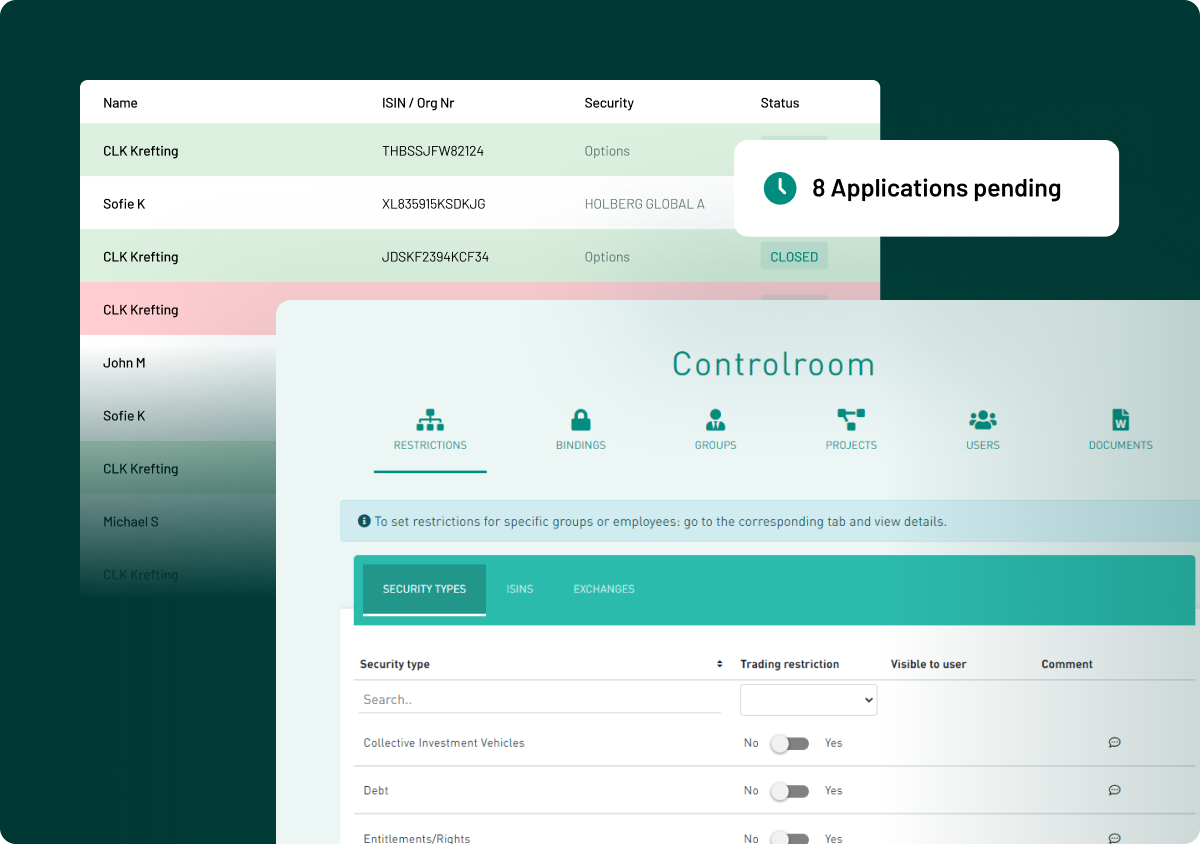
Obliging employees to run their prospective personal trades through a pre-clearance process helps the company monitor trading. Using a tool such as TradeLog, you set parameters to restrict trading in certain products due to conflicts of interest or potential insider dealing.
5.6 Invest in employee training
Practical training sessions ensure employees are more likely to remember key requirements than they would by simply reading a policy. Training should cover how to spot suspicious trades and how to report them.
5.7 Create a speak-up culture
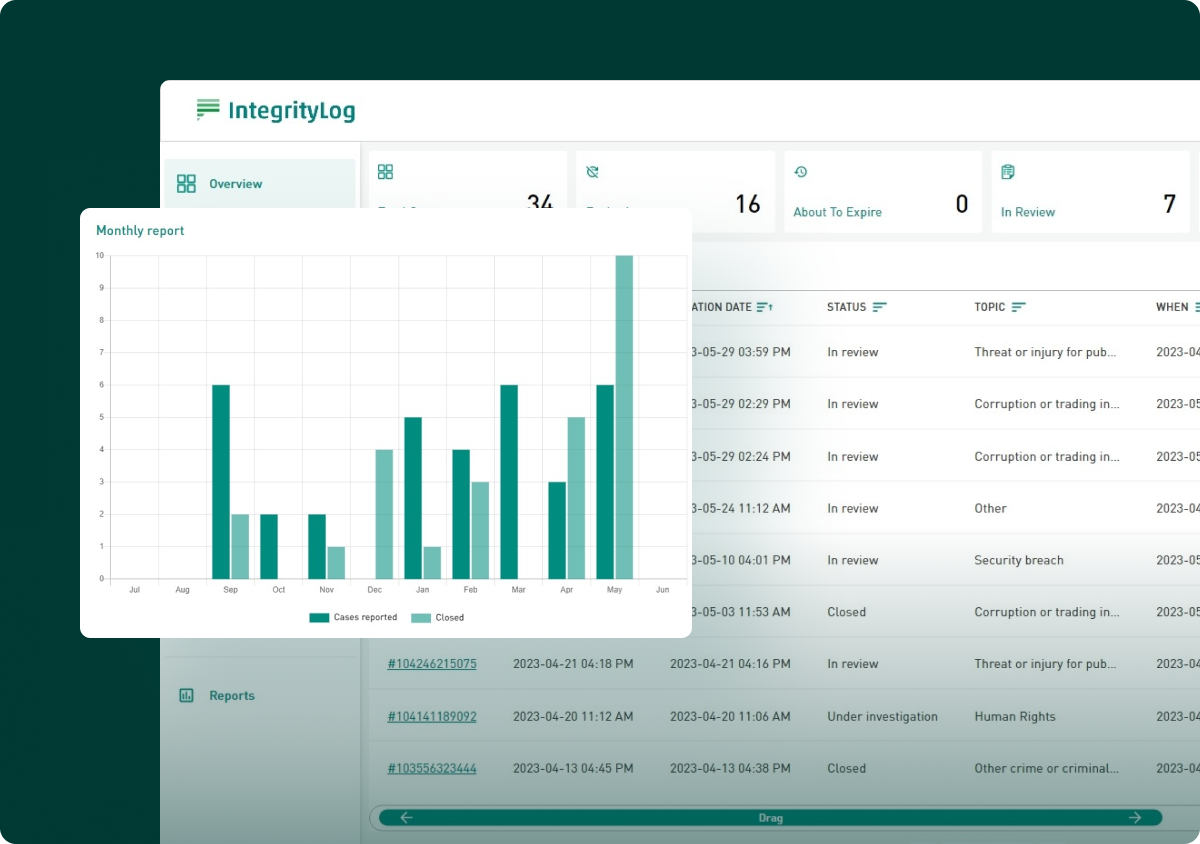
You should show buy-in from the top for a speak-up culture. Implement a confidential whistleblowing reporting channel that allows employees to make reports safely.
6. FAQs
6.1 What are the penalties for non-compliance with Personal Account Dealing rules?
Non-compliance can result in severe sanctions from the FCA, including fines, revocation of licences, and imprisonment for individuals. Firms may face hefty fines and reputational damage.
6.2 How often should personal account dealing policies be reviewed and updated?
Policies should be reviewed at least annually, or more frequently if there are significant regulatory or organizational changes. Continuous monitoring is essential.
6.3 What is the role of technology in improving Personal Account Dealing compliance?
Modern compliance solutions can automate monitoring tasks, employ AI to detect unusual trading patterns, and provide digital pre-clearance through systems like TradeLog.
7. Conclusion
Personal Account Dealing is a major risk within financial firms. Implementing a pre-clearance process through TradeLog helps compliance teams streamline detection and record-keeping. Request a demo of TradeLog today.
8. References and further reading
Related Articles
See all postsRegulatory Disclosure: Transparency Directive & MAR Article 17
15-06-25
How and When to Use Permanent Insider Lists (Best Practices)
19-05-25
Managing Insider Lists as an Advisor: 5 Challenges and Solutions
12-05-25
The Ultimate Guide to MiFID II Compliance for Your Team
08-05-25
How to Prevent Financial Misconduct at Your Organisation
24-03-25