









.png)





.svg)
.svg)
.svg)







.png)
.png)







.jpg)

%20F%20(1).jpeg)







.webp)






 Login
Login
Having a robust trade pre-clearance system is essential for investment firms with regard to compliance with the Market Abuse Regulation (MAR) and Markets in Financial Instruments Directive II (MiFID II). It can prevent your employees from making trades using inside information and from creating conflicts of interest with either your organisation or your clients.
| Violation | Fine for a Natural Person | Fine for a Legal Person |
| Failing to disclose potential conflicts of interest when making investment recommendations | Up to €500,000 | Up to €1,000,000 |
| Insider dealing | Up to €5,000,000 | Up to €15,000,000 or 15% of the annual turnover from the last available accounts |
1. Why use a trade pre-clearance system?
By running employee personal trades through a pre-clearance system that can flag potential problems before the purchase or sale is made, you can help avoid market abuse fines and other penalties.
A pre-trade clearance system helps you reduce the administrative burden by centralising all information about each stakeholder’s trading while securing your compliance with all relevant legislation on financial crime.
In this article, we go through the features your trade pre-clearance system should possess to help you stay compliant.
2. Who should submit trade pre-clearance requests?
The leadership team within an issuer often has access to sensitive information that could give them an advantage over the market if they were to use it to inform their personal trades. Your persons discharging managerial responsibilities (PDMRs) should request permission for their trading activity to reduce the chances of committing market abuse.
3. Benefits of a trade pre-clearance system
3.1 Saves time
Using a trade pre-clearance system brings together all personal trading information in one, central location, rather than having it spread across fragmented email chains, for example. This means that the Chief Compliance Officer (CCO) and their team can allow or deny the trade immediately, with full oversight over that PDMR’s trading activity.
3.2 Eliminates paper
An online platform eliminates the need for a paper-based process that can lead to requests going missing or being filed in the incorrect place. By entering the details of the proposed trade into a digital tool, the employee knows that their request is in the system and has been registered.
This also acts as an audit trail. The process captures all actions taken, from the initial request to the approval or denial.. Everything is recorded and easily accessible from your dashboard so that you can immediately find proof that you acted in a compliant manner and took the relevant actions when needed. With a paper process, this requires a lot more manual work to maintain and provides a much greater risk of misplacing key evidence.
3.3 Easy for PDMRs
A digital solution for personal trade approval is easy for PDMRs to use and understand. The system guides them through the process and gives them timely answers. It is also a chance to communicate with the compliance team and gain a better understanding of what would constitute prohibited trades. It acts as a central database of everything they need to know and understand about their personal trading.
3.4 Simplifies compliance
Using a tool that tracks PDMRs’ trades in the company’s own securities also helps you monitor their trading against the thresholds for reporting transactions to the authorities. Failing to make such reports is a contravention of MAR and a pre-clearance system will help you understand when they meet this figure.
4. The 4 essential features of a trade pre-clearance system
The perfect trade pre-clearance system should contain the following features to ensure ease of use and compliance with the regulations.
4.1 Analytical dashboard
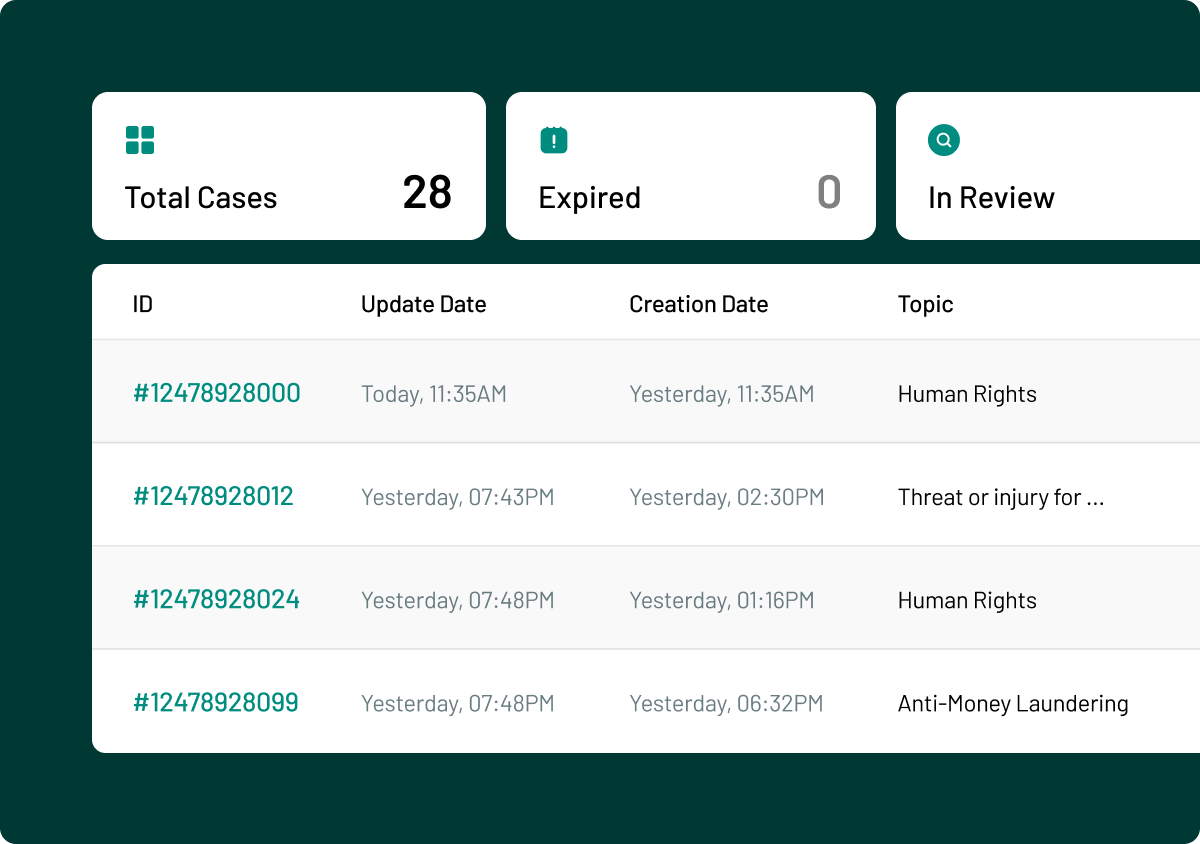
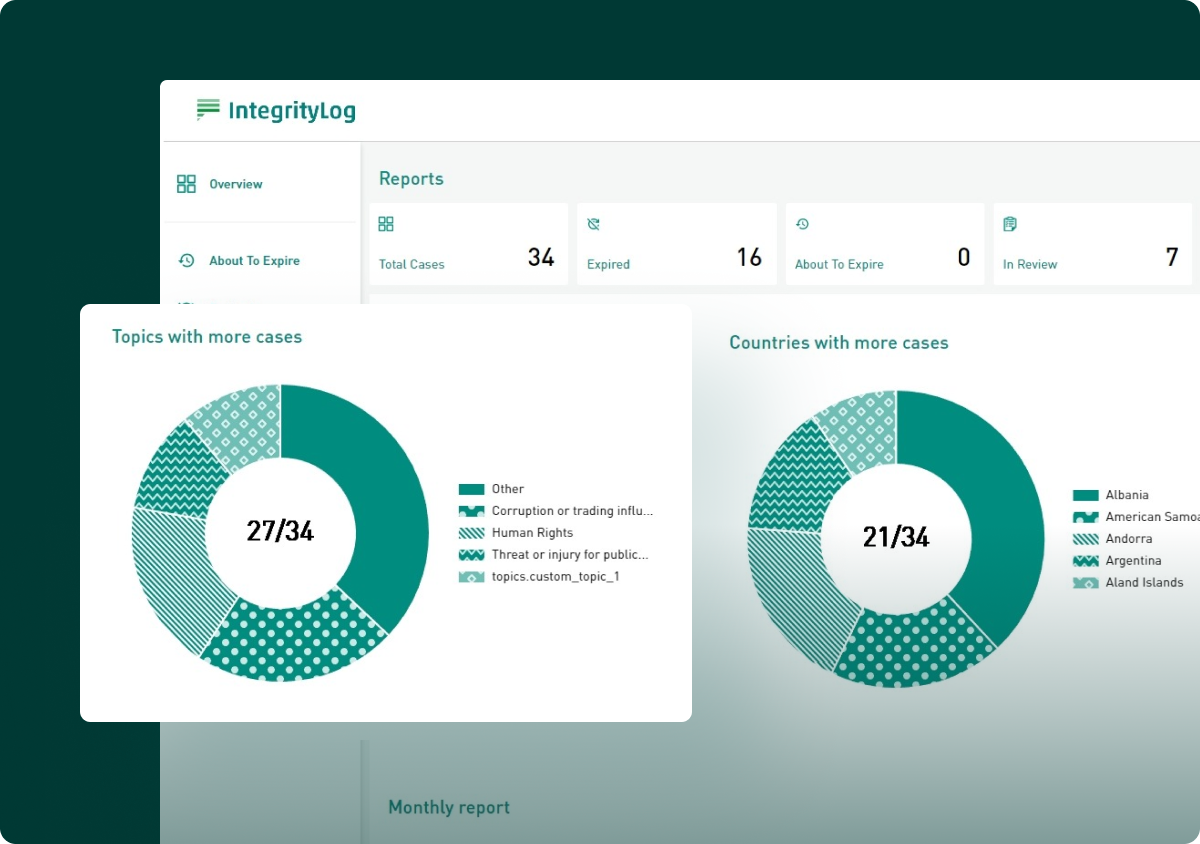
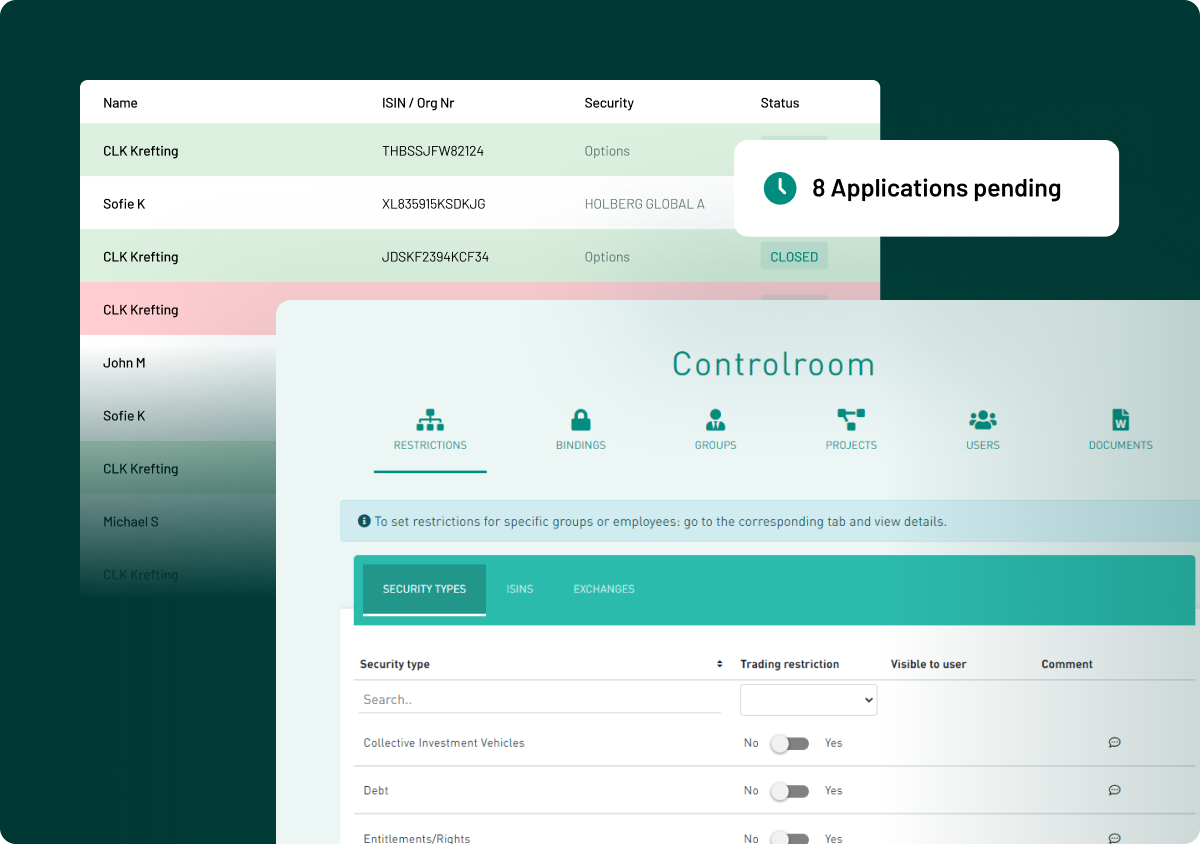
An analytical dashboard is an essential tool to help you visualise your personal trading compliance efforts. The figures and charts on the dashboard tell you the status of your cases, including:
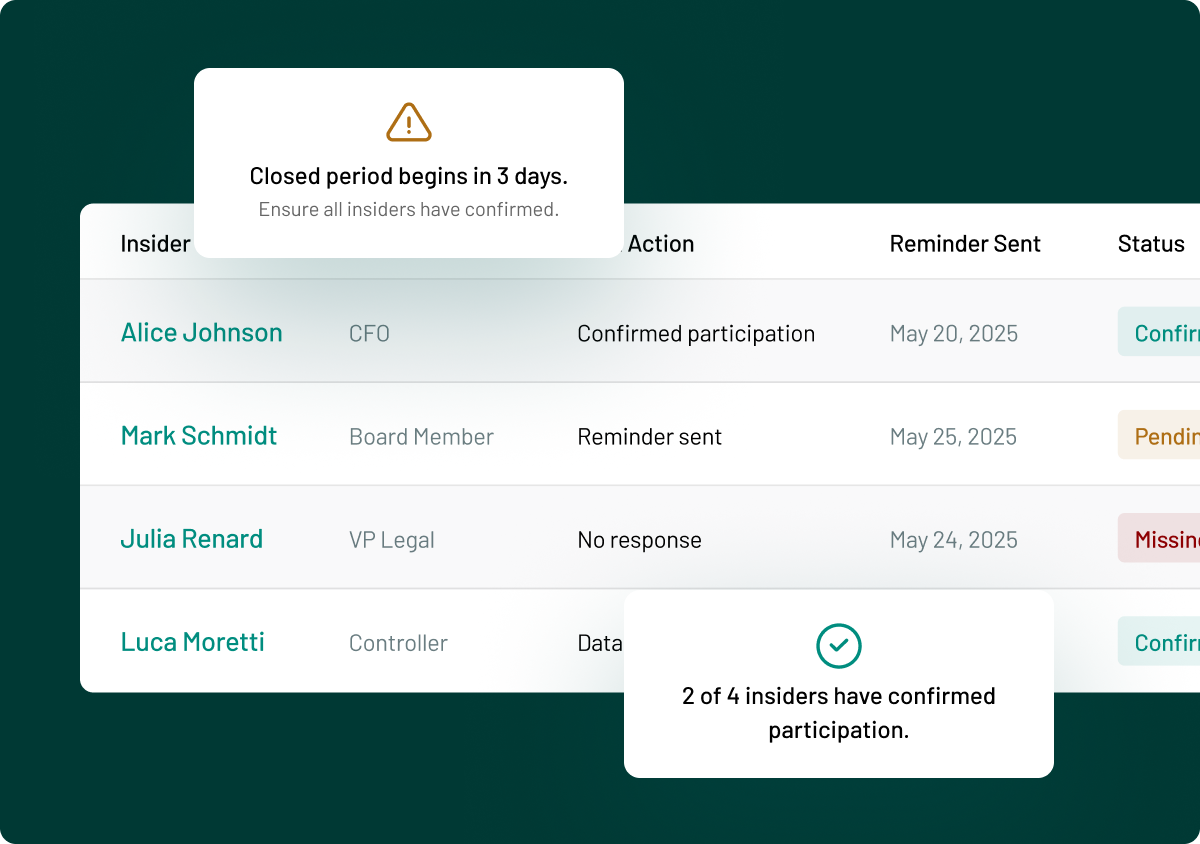
- Any applications pending that require additional input from employees or other stakeholders. You can rectify an ‘incomplete’ pre-clearance request with ease.
- Any unresolved violations of your trading policies. In this case, you can prioritise correcting them, using the documentation held within the system.
- Any missing consents from relevant persons.
- Any pending messages from employees which you should reply to. This provides transparency and opens lines of communication between employees and the compliance team.
4.2 Compliant with local legislation
The reason that MiFID II and MAR in the EU and UK, and the Investment Adviser Codes of Ethics in the US, exist is to instil confidence in the financial markets. As such, you need to ensure you are compliant with the legislation in your territory.
The ideal pre-clearance system would allow you to configure the rules to meet the legislation in your country and provide the evidence that you need as part of the audit trail should there be an investigation by the national competent authority (NCA).
4.3 Compliance reporting
Reporting is essential to ensure that your compliance regime is robust enough to help you work within the law. In a paper process, this requires many different forms to be filled in, checked and rechecked again. You must draw multiple data points from your archives of current and historical pre-clearances and analyse them to make certain that all is in order.
With an online pre-clearance tool like the Employee Trade Center in InsiderLog, you can generate standard compliance reports using the information stored within the platform at a moment’s notice. If you want to delve further into how your processes are working, the platform will also allow you to customise your reports.
This enables you to make changes, if necessary, and to provide the necessary evidence to prove you are making every possible effort to be compliant.
4.4 Security
Data security is key when working with digital tools, especially those dealing with financial transactions. Employees should be confident that their privacy is not invaded and that only authorised professionals have access to information on the trades that they make or wish to make.
Check the security credentials of any tool that you use for reviewing employee pre-clearance requests, as all parties need to trust the solution that you use in order for the process to work as it should.
5. FAQs
5.1 Do you need a personal trading policy?
It is advisable to have a personal trading policy for your high-risk groups, such as PDMRs. As there are many pitfalls of not having a robust policy in place, it is important that there is a set process for dealing with pre-clearance trade requests.
5.2 What is an example of a personal trading policy?
Consultancy firm Mindtree sets out a personal trading policy in Clause 8 of its Code of Conduct for Prevention of Insider Trading in the Securities of Mindtree Limited.
5.3 What happens if clearance is not obtained for a trade?
If a PDMR does not seek clearance for a trade, they might find themselves in contravention of the company’s policies at the very least. At worst, they could make a trade that contravenes the laws on insider dealing. This can lead to financial penalties and reputational damage.
6. Conclusion
Your trade pre-clearance system should work for you in order to strengthen your compliance efforts while making life easier for your compliance department.
Centralising trade request data and paperless working should be coupled with advanced security to protect your organisation’s sensitive information.
Digital trade pre-clearance systems also give employees the ability to raise reports within minutes, allowing them to make their trades swiftly, safe in the knowledge that they are within acceptable rules when it comes to the relevant legislation. At the same time, the collected data save compliance officers a lot of precious hours.
Book a consultation to find out more about how InsiderLog streamlines pre-clearance.
7. References and further reading
Related Articles
See all posts