










.png)
.png)













.png)
.png)














.webp)






 Login
Login
In December 2022, the European Commission (EC) presented three proposals for facilitating an easier and less burdensome route onto the EU’s public markets for businesses, particularly small and medium enterprises (SMEs). These linked suggestions for adjustments to existing laws in the union were packaged together under the title of the EU Listing Act.
The act is primarily concerned with helping companies through the IPO and post-IPO landscape, but the changes affect a great deal of EU legislation, including the Market Abuse Regulation (MAR). Following formal adoption in late 2024, the package is currently in a staggered implementation phase throughout 2025 and 2026.
This article explores the law changes within the finalized EU Listing Act. In particular, it explores what these mean for compliance surrounding inside information and insider lists.
1. What is the EU Listing Act?
The Listing Act is a package of legislative reforms designed to make EU public capital markets more attractive by simplifying listing rules and reducing administrative costs. The core goal is to diversify funding sources for companies, especially SMEs, reducing their reliance on bank lending.
The EU Listing Act package consists of three main components:
| Legal Instrument | What it includes |
|---|---|
| Regulation (EU) 2024/2809 (The Listing Regulation) | Amends the Prospectus Regulation, MAR, and MiFIR. Key changes include raising prospectus exemption thresholds for secondary issuances, standardizing prospectus formats, and reducing the disclosure burden regarding intermediate steps in protracted processes. |
| Directive (EU) 2024/2811 (The Listing Directive) | Amends MiFID II and repeals the 2001 Listing Directive. It allows firms to choose between joint or separate payments for investment research and execution (re-bundling) and reduces minimum free float requirements from 25% to 10%. |
| Directive (EU) 2024/2810 (Multiple-Vote Shares) | A new directive on multiple-vote share structures. It ensures that companies seeking a first-time admission to a multilateral trading facility (MTF) can adopt structures that allow founders to retain control while raising external capital. |
2. The changes the EU Listing Act brings to MAR
2.1 Clarification as to what information needs to be disclosed and when
A major shift in the amended MAR concerns "protracted processes" (such as long-term M&A negotiations). Previously, companies often struggled with whether intermediate steps in these processes constituted inside information requiring immediate disclosure.
Effective from 5 June 2026, issuers are only required to disclose the "final event" of a protracted process. While intermediate steps may still qualify as inside information (triggering the duty to maintain insider lists and prohibit trading), the public disclosure obligation is narrowed to reduce the risk of providing premature or misleading information to the market.
2.2 Clarification of the conditions under which issuers may delay disclosure of inside information
The criteria for delaying disclosure have been narrowed to provide more legal certainty. Under the amended MAR, a delay is generally considered "not misleading" if the information:
- Does not differ materially from the issuer's previous public announcements on the matter.
- Is not in contrast with market expectations based on the issuer's prior communications (e.g., roadshows, interviews, or financial objectives).
Importantly, from 5 June 2026, issuers must notify their National Competent Authority (NCA) of their decision to delay disclosure at the time the decision is made, rather than waiting until the information is eventually made public.
2.3 Simplification of the insider lists regime
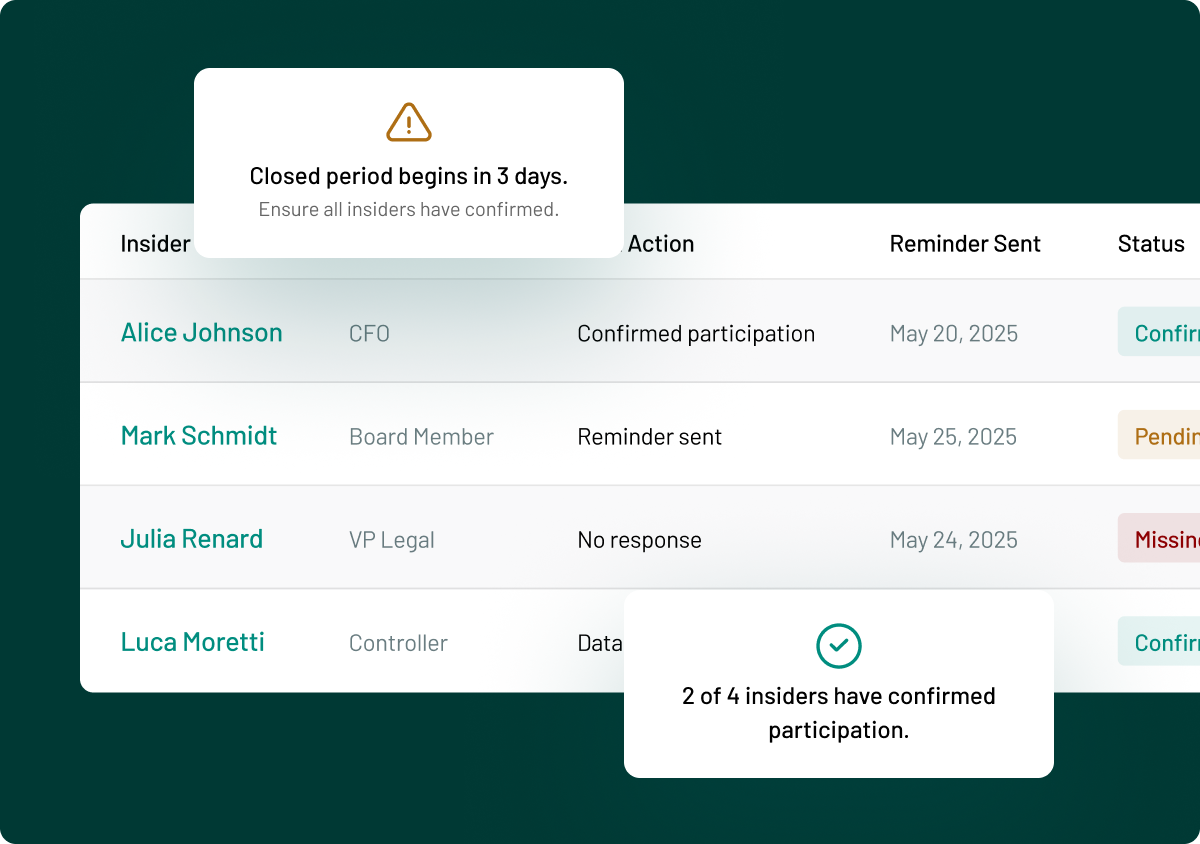
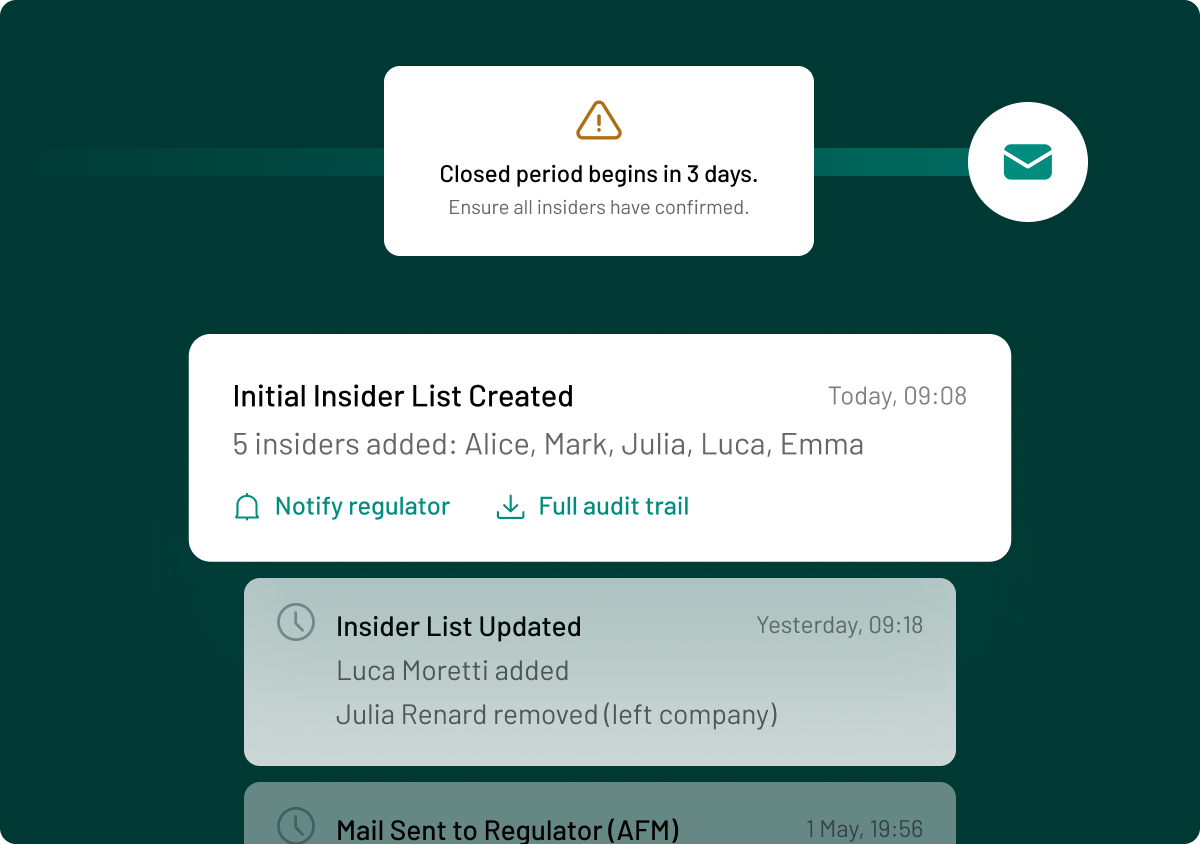
The Listing Act significantly alleviates the insider list burden. All issuers are now permitted to use an alleviated format for insider lists. For most companies, the requirement moves toward maintaining a list of "permanent insiders" (persons who have regular access to all inside information) rather than creating complex, event-based lists for every individual project or milestone. However, issuers must still ensure that anyone with access to inside information is aware of their legal duties and the sanctions for insider dealing.
2.4 Increased threshold for management transaction notices
The reporting threshold for transactions by persons discharging managerial responsibilities (PDMR) and their closely associated persons (PCA) has been permanently raised. The base threshold is now €20,000 per calendar year, up from €5,000. National regulators (NCAs) have the discretion to increase this further up to €50,000 or lower it to €10,000 depending on local market conditions.
2.5 Expansion of exempted management transactions during closed periods
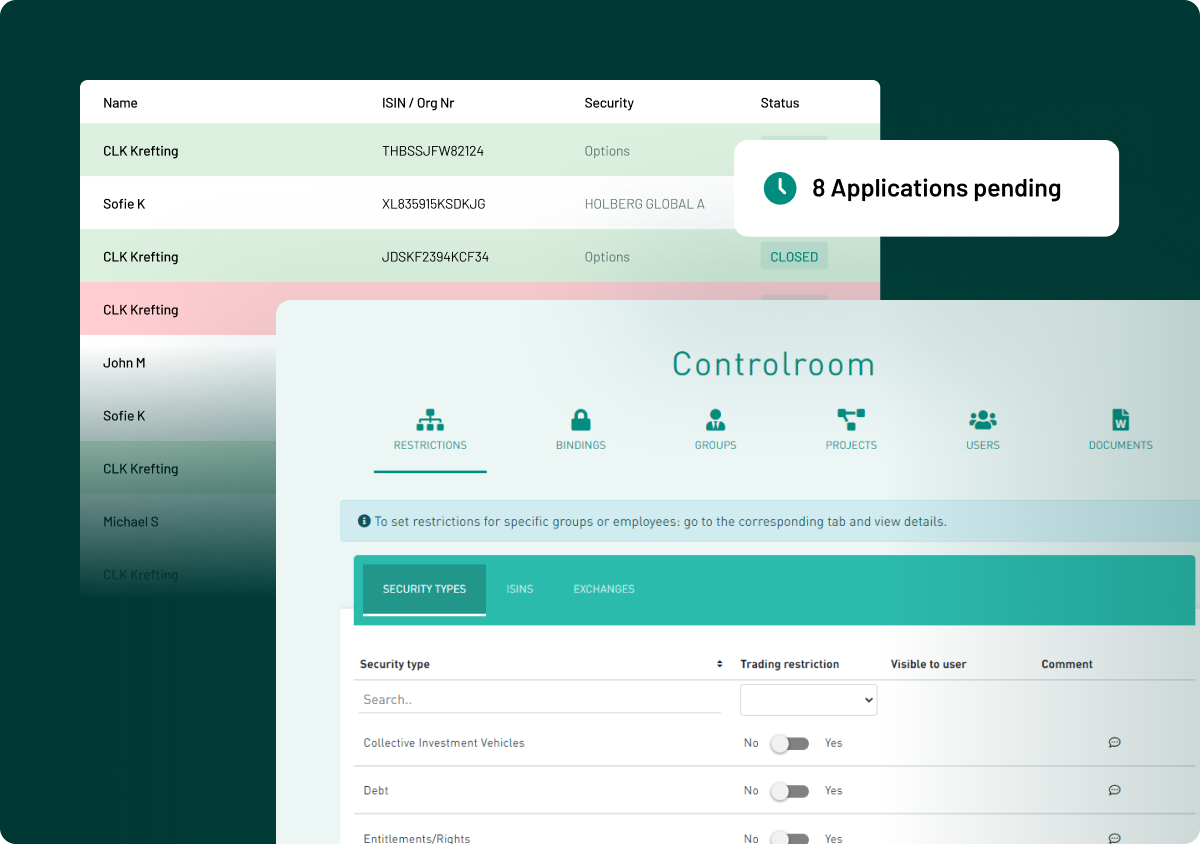
Rules regarding the 30-day closed period before financial reports have been broadened. PDMRs may now be authorized to trade during these periods if the transaction does not involve an active investment decision (e.g., converting instruments) or results from external third-party actions, provided pre-determined terms are met.
2.6 Clarification of the safe-harbour nature of the market-sounding procedure
The "safe harbour" for market soundings has been clarified to confirm it is an optional framework. While following the procedure provides full protection against allegations of unlawful disclosure, failure to follow it does not automatically create a presumption of a breach, provided the disclosure otherwise complies with MAR.
2.7 Clarifications to exceptions for buy-back programmes and stabilisation
The reporting process for share buy-backs is now more streamlined. Issuers only need to report to the NCA of the trading venue where their shares are most liquid. For the public, issuers now only need to disclose aggregated information rather than transaction-by-transaction details, significantly reducing the volume of public filings.
3. Other changes the EU Listing Act proposes
The broader package introduces several critical shifts to help the Capital Markets Union (CMU) thrive:
3.1 Multiple-vote shares in MTFs
The new directive harmonizes rules for multiple-vote share structures. This allows founders of SMEs to list on MTFs (like Euronext Growth) and raise capital without losing majority control. This makes public listing much more attractive for family-owned businesses and startups.
3.2 Investment Research (MiFID II)
To increase the visibility of SMEs, the Listing Act amends MiFID II to allow the "re-bundling" of payments for research and execution. This makes it easier for brokers to provide coverage for smaller companies, improving secondary market liquidity.
3.3 Simplified Prospectus Regime
The finalized Act introduces several standardized documents:
- A maximum page limit for equity prospectuses (300 pages).
- A new EU Growth Issuance Document for SMEs.
- An EU Follow-on Prospectus for secondary issuances, which is significantly shorter than the standard IPO prospectus.
EU Listing Act implementation timeline
The Act entered into force on 4 December 2024. While many administrative simplifications applied immediately, major structural changes to MAR disclosure and the new prospectus exemptions have a transitional period. Most significant MAR amendments (protracted processes and delay notifications) will become fully applicable on 5 June 2026.
4. FAQs
4.1 How does the EU Listing Act impact issuers?
It significantly lowers compliance costs by standardizing reporting formats and narrowing the scope of "inside information" that requires immediate public disclosure. It also makes secondary capital raising faster by removing the need for full prospectuses in many cases.
4.2 How does the EU Listing Act impact banks?
Banks and credit institutions gain broader exemptions for certain transactions during closed periods. The act also facilitates the "re-bundling" of research costs, which may change how investment banks charge for SME coverage.
4.3 How does the EU Listing Act impact advisors?
Legal and financial advisors must adapt to the new "alleviated" insider list formats. While the burden is lower, advisors must still maintain internal systems to track access to information, especially since issuers are no longer required to include external advisors on their own event-based lists as a matter of course.
4.4 How does the Act change the publication and approval process of prospectuses?
It creates a "one-stop-shop" approval process and introduces electronic-only delivery for prospectuses, removing the outdated requirement to provide paper copies to investors upon request.
5. Conclusion
The EU Listing Act marks the most significant reform of EU capital markets in a decade. For compliance professionals, the transition period through June 2026 requires updating internal policies—particularly those governing protracted processes, PDMR reporting thresholds, and the format of insider lists.
For a straightforward solution to maintaining insider lists that are always compliant with the amended MAR, use InsiderLog. It automates the responsibility to inform insiders of their duties and creates an audit trail that satisfies NCA requirements. Request a demo of InsiderLog today.
6. References and Further Reading
Related Articles
See all postsRegulatory Disclosure: Transparency Directive & MAR Article 17
15-06-25
How and When to Use Permanent Insider Lists (Best Practices)
19-05-25
Managing Insider Lists as an Advisor: 5 Challenges and Solutions
12-05-25
The Ultimate Guide to MiFID II Compliance for Your Team
08-05-25
How to Prevent Financial Misconduct at Your Organisation
24-03-25