









.png)




.svg)
.svg)
.svg)







.png)
.png)






.jpg)

%20F%20(1).jpeg)







.webp)






 Login
Login
You are holding it together - should not be the plan
Company secretaries tend to know, better than most, exactly where the fragility in governance processes sits. They have been the person chasing a director for a trading reports two days before results. They have manually cross-referenced a PDMR list against an HR system that was last updated a month ago. They have sent the closed period reminder and then wondered, quietly, whether everyone actually received it.
The work gets done. But in many organisations, it gets done because someone is quietly absorbing an enormous amount of coordination — and that person is usually the company secretary.
When that coordination involves insider controls, the stakes are higher than most governance process gaps. These are not just admin workflows. They are regulatory obligations where the evidence of compliance matters as much as the compliance itself.
Where governance frameworks meet operational reality
Take the question of keeping insider lists accurate. Personnel changes — board appointments, departures, committee memberships, role transitions — need to flow through into lists, notifications and trading restrictions. If that connection is manual, each change is a potential gap. The governance framework might be perfectly sound; the execution is where it breaks.
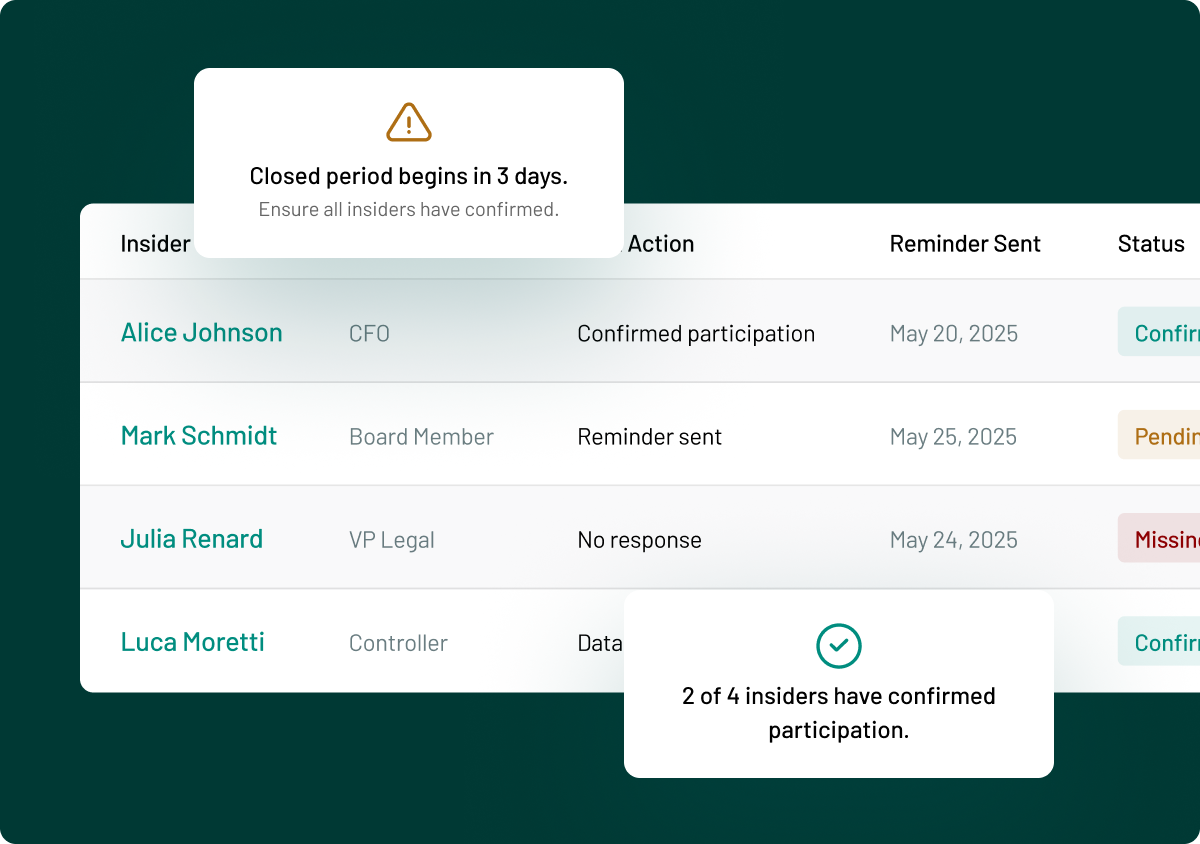
Closed periods are a similar story. The rule itself is well-understood: a 30-calendar-day restriction window before the announcement of interim and year-end financial results. But the governance challenge is not knowing the rule — it is applying it consistently across a changing population, capturing confirmations, managing exceptions cleanly and being able to show all of that clearly if someone asks. One wrongly included name or one missed alert can escalate quickly from admin error to governance failure.
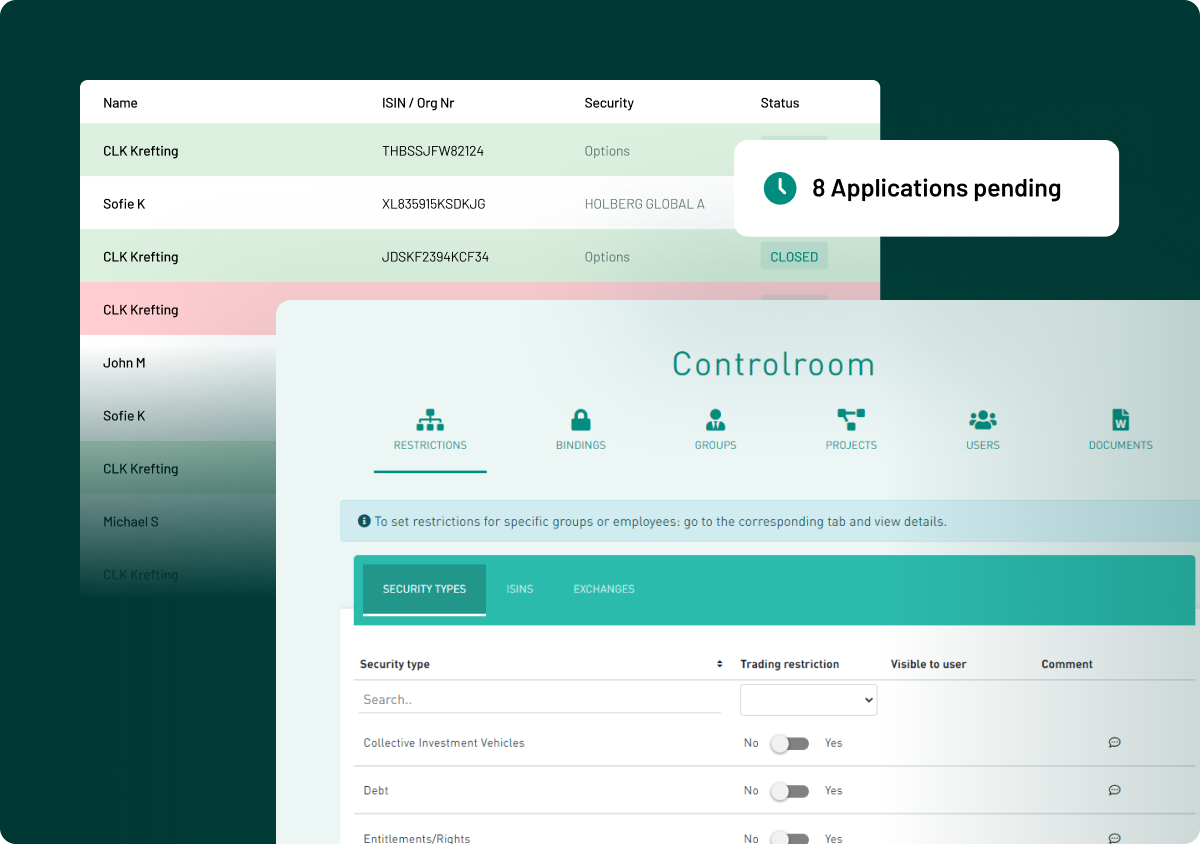
PDMR transaction management tends to be the most visible pressure point. When pre-clearance and approval processes run through email, there is no central view of what is pending. Approvals become hard to reconstruct. Threshold tracking — particularly year-to-date aggregation across a population that changes — is inconsistently maintained. With the general annual notification threshold now set at €20,000, and national regulators able to adjust it in either direction, manual tracking carries real risk.
The 'human integration layer' problem
In organisations where these processes are fragmented, the company secretary often becomes the connective tissue between compliance, legal and finance. Each team does its own part; the company secretary makes sure the parts add up. It is a role that emerges naturally, but it is not sustainable — and it concentrates process risk in a way that is hard to manage.
The specific risk is what might be called handoff risk: the organisation cannot evidence a complete, joined-up control chain, even though every individual function could point to having done their part. That is exactly what regulators look for when governance is being tested.
One system of record, not one more tool
The value of a genuinely integrated workflow surrounding the Market Abuse Regulation is not that it reduces admin — though it does. It is that it gives the company secretary (and the board) a single, reliable system of record, rather than a set of workarounds held together by individual effort.
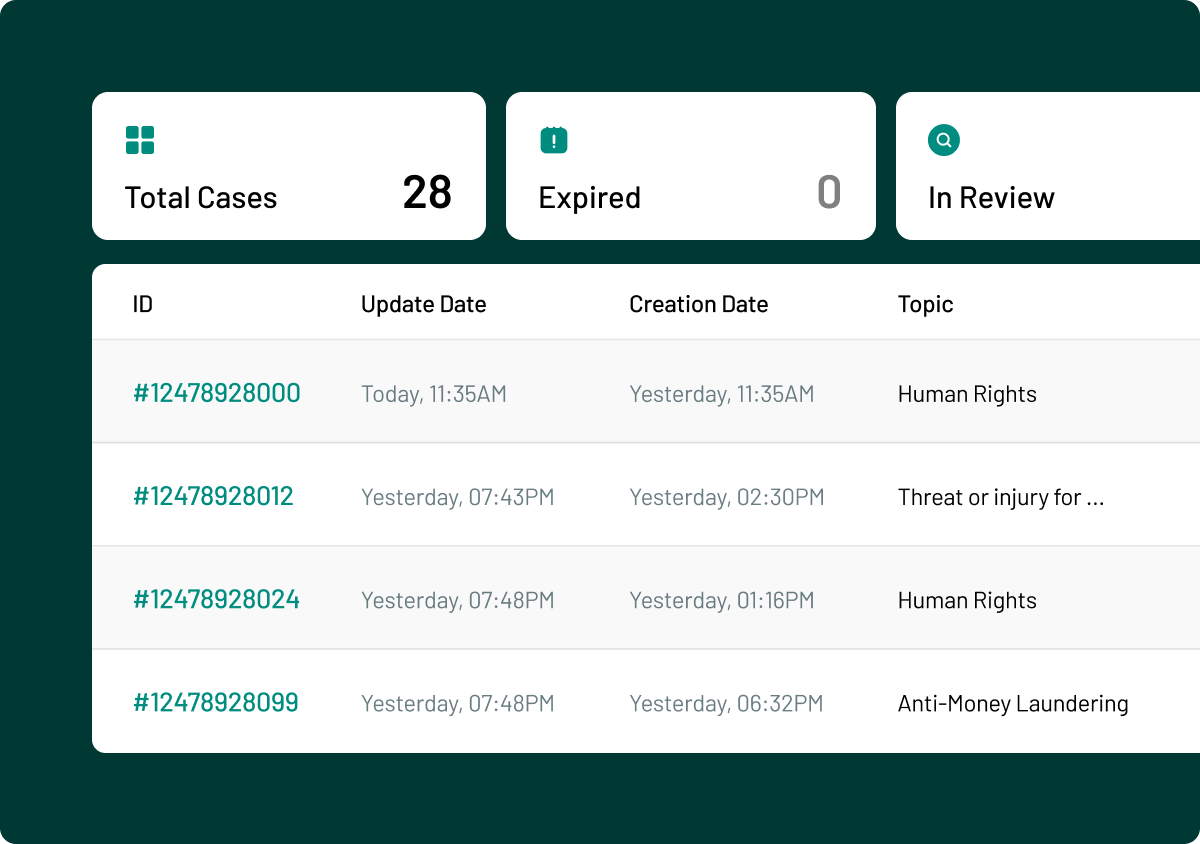
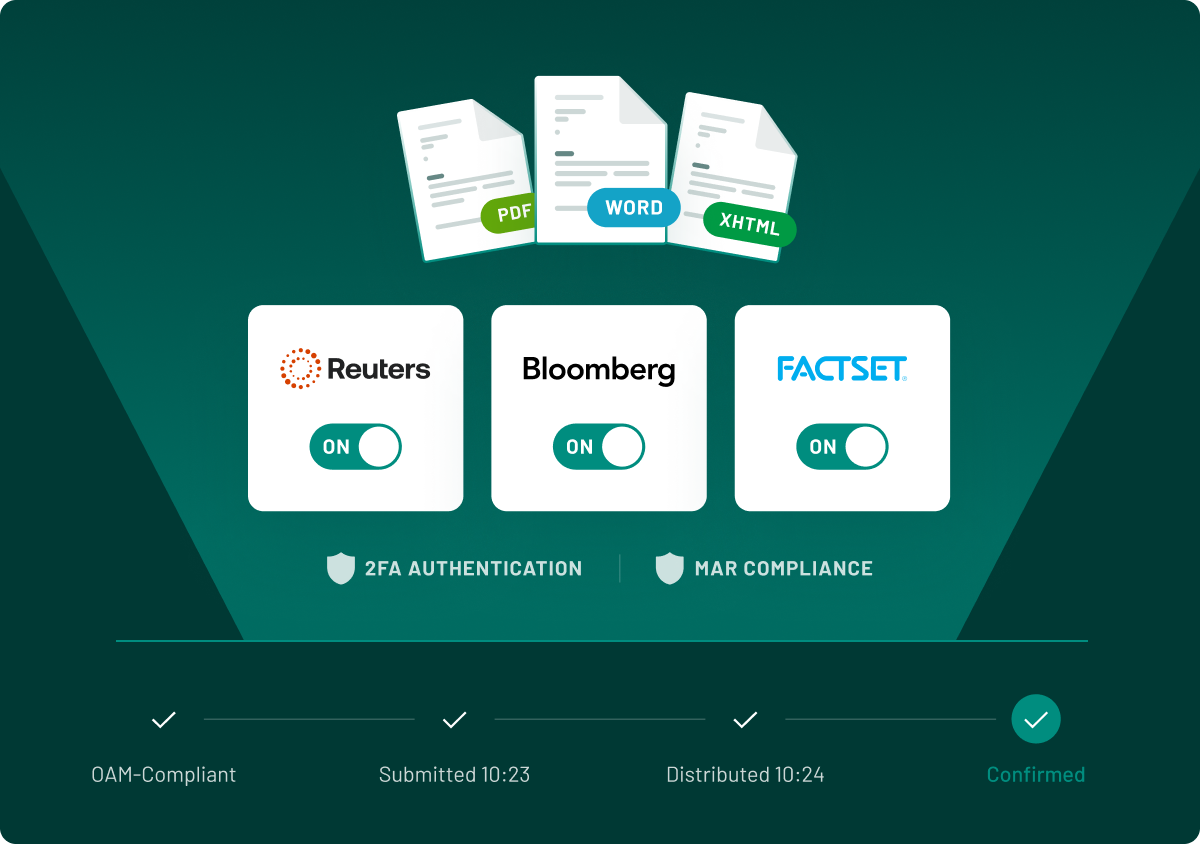
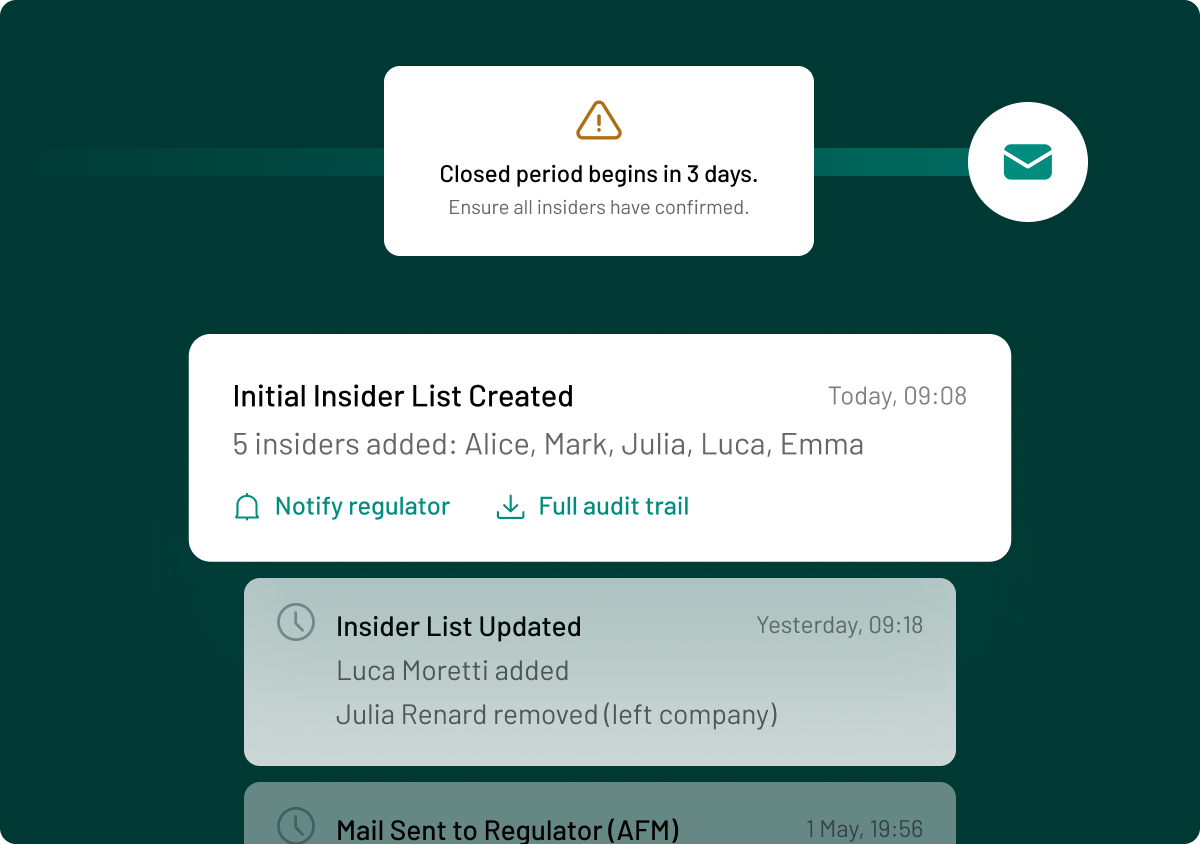
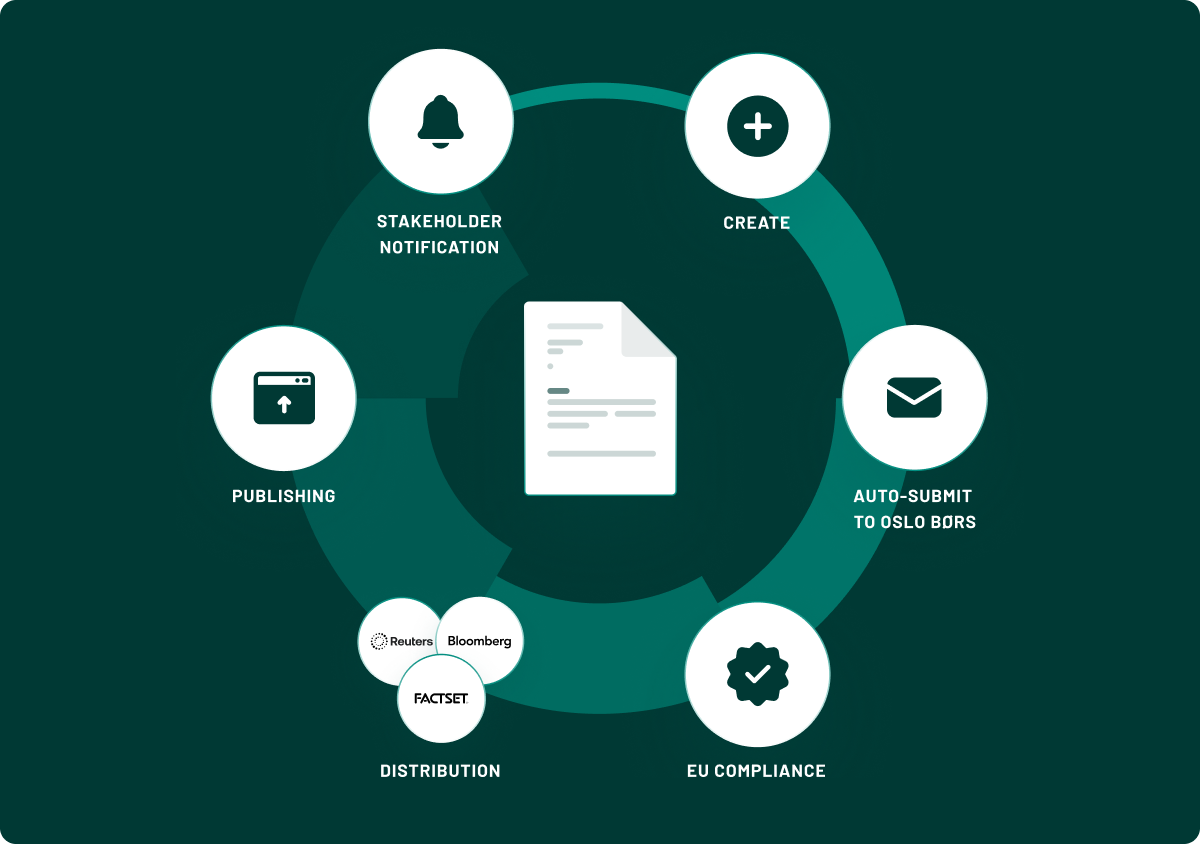
InsiderLog brings insider list management, closed period controls, PDMR transaction compliance and delayed disclosure documentation into one connected workflow. Lists are maintained in the ESMA-mandated format, with clear oversight of list status and membership. Notifications go out automatically and confirmations are captured. Closed period alerts reach the right people. Delayed disclosure decisions are documented in a structured, retrievable format. Senior leader transactions are handled end-to-end, with dashboards and regulatory submission PDFs built in.
The governance outcome is simpler than it sounds: fewer avoidable escalations, fewer surprises near results and faster answers to the questions that boards and regulators tend to ask at the most inconvenient moments.
Schedule a consultation with a compliance specialist to see how InsiderLog can replace fragmented coordination with a single governance workflow.