










.png)
.png)














.png)
.png)














.webp)






 Login
Login
Your company’s compliance obligations register helps you visualise your responsibilities both from external sources, such as the law, and internally, resulting from your company’s policies and procedures.
It is a key tool in ensuring you avoid regulatory and reputational damage and uphold your standards of quality throughout the organisation. When carrying out a gap analysis, the compliance obligations register acts as the benchmark for a comprehensive approach to compliance, allowing you to understand where you need to improve and strengthen your current approach.
In October 2025, the European Securities and Markets Authority (ESMA) published data on the consolidated compliance sanctions in the previous year. It found that:
- There were 975 administrative sanctions issued across the EU
- The largest fine was valued at €12,975,000
- The total value of all fines issued in 2024 was €100,186,062.
The scale of sanctions issued illustrates the importance of understanding where your compliance gaps are and mitigating them in a timely manner. This article helps you build your legal obligations register management system, with tips to aid in identifying those requirements that relate to your organisation.
|
Table of Contents
|
Key takeaways
- A compliance obligations register gives organisations a single view of all external and internal requirements, making it easier to plan and manage compliance, as well as improving risk management.
- Using the register as the foundation for a gap analysis helps identify weaknesses and prioritise improvements before risks turn into breaches.
- Recent ESMA data on sanctions highlights how costly non-compliance can be, reinforcing the need for clear oversight of obligations.
- A well-structured register clarifies ownership, deadlines and evidence, which strengthens governance and simplifies internal and external audits.
- Mapping legislation, standards, contracts and internal policies ensures no obligation is overlooked when building the compliance register.
- Consistent monitoring of regulatory updates helps organisations stay ahead of new or amended requirements and maintain continuous compliance.
Why every organisation needs a compliance obligations register
- Centralises all compliance requirements so that you can visualise the relevant standards, policies and laws in one place. This management system helps you avoid regulatory obligations being managed in siloes and encourages a more complete and strategic approach to maintaining overall compliance.
- Prevents missed deadlines or breaches by allowing one single source of truth to be used for managing your compliance planning. If all obligations sit in the same environment, the workflow is visible to all stakeholders.
- Clarifies ownership and accountability because your compliance lead can understand which tasks must take place to achieve total compliance and can assign them accordingly in a transparent manner. Having this resource means there is no confusion over who is responsible for which aspect of compliance and when they need to complete it.
- Simplifies audits and evidence tracking, as your register shows what needed to happen, who was responsible and the progress that they made. This gives clear lines of responsibility to follow up if anything goes wrong and helps to establish which steps the company takes to maintain compliance for external audits.
- Strengthens overall governance by providing a clear reporting structure that helps senior leaders better understand the risks pertinent to the organisation and clear routes to mitigate them and protect the company.
- Having a register is a requirement of many ISO management standards. This includes ISO 14001 (Environmental Management), ISO 45001 (Occupational Health and Safety) and ISO 27001 (Information Security).
How to identify obligations
1. Review legislation and regulations
The first step is to examine all of the laws that apply to your organisation so you can dive more deeply into the legislation and understand what it requires of your business. Look at EU-level legislation and for national laws in any of the territories in which you operate.
Regulators publish official guidance, such as this article on adherence to the Market Abuse Regulation, that helps you drill down into what is required of you on a practical level, including your reporting obligations.
Understand the scope of the legislation so you know which teams or processes it affects and when the regulatory obligations will apply to your company, whether that is immediately or later, as part of a phased implementation. For example, the Corporate Sustainability Reporting Directive will roll out over three years.
2. Map all relevant industry standards
Aside from legal requirements, you might often be subject to industry standards relating to quality, safety or ethical behaviour, amongst other outcomes. Mapping these obligations shows how your organisation should operate beyond the basic legal framework.
List the standards that apply to your sector and identify to which aspects of your work they relate. Many standards are mandatory, but you should also consider voluntary standards that you may wish to adhere to that will help meet the expectations of your stakeholders.
Use the standards to help you benchmark your processes and identify gaps that need remediation.
3. Analyse contracts and agreements
You might also find that many of the contracts and agreements into which the company has entered feature binding requirements. Compliance is not just about legislation; it can also derive from clauses negotiated with clients, partners and suppliers.
These might include:
- Confidentiality, including non-disclosure agreements (NDA)
- Data handling
- Service level agreements
- Reporting requirements
- Quality control standards.
Make sure you regularly review contracts to ensure you are not overlooking any binding agreements so that you avoid risks and maintain a good working relationship with the other stakeholder. It also helps you design standard procedures for producing and adhering to contracts that reduce the likelihood of surprise clauses.
4. Carry out internal policy management
Your internal documents set out how work should be carried out and who is responsible for it. Your policies and procedures should also highlight who checks the work and signs it off as in accordance with the internal rules.
By capturing all policies in one place and carrying out policy management procedures, you can assess whether they still make sense for your workflows and whether they are still fit for purpose in benefiting the company. You can see where your commitments come from and where the gaps are, which are outdated and where there are duplications.
Review what you have committed to with your internal policies, such as approval rules and reporting lines, then make sure each has an owner who is tasked with monitoring the process and creating evidence of compliance.
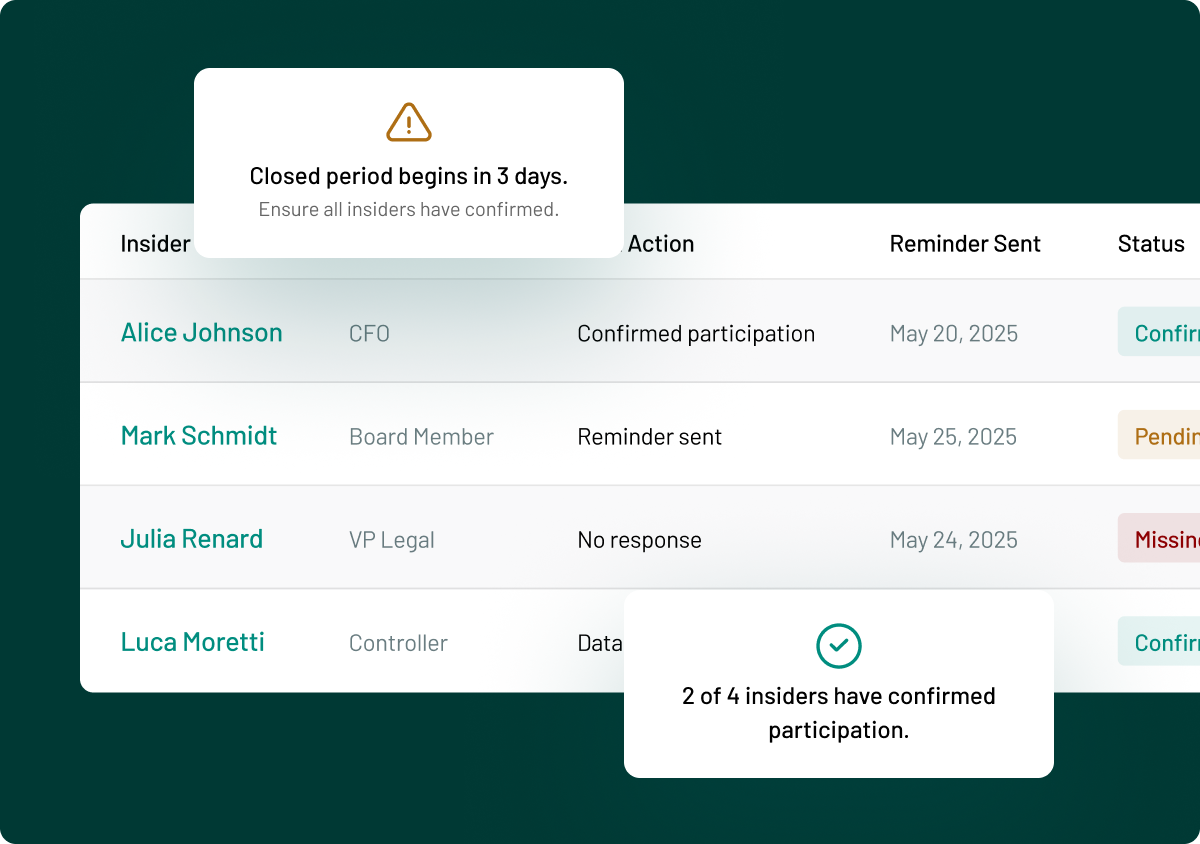
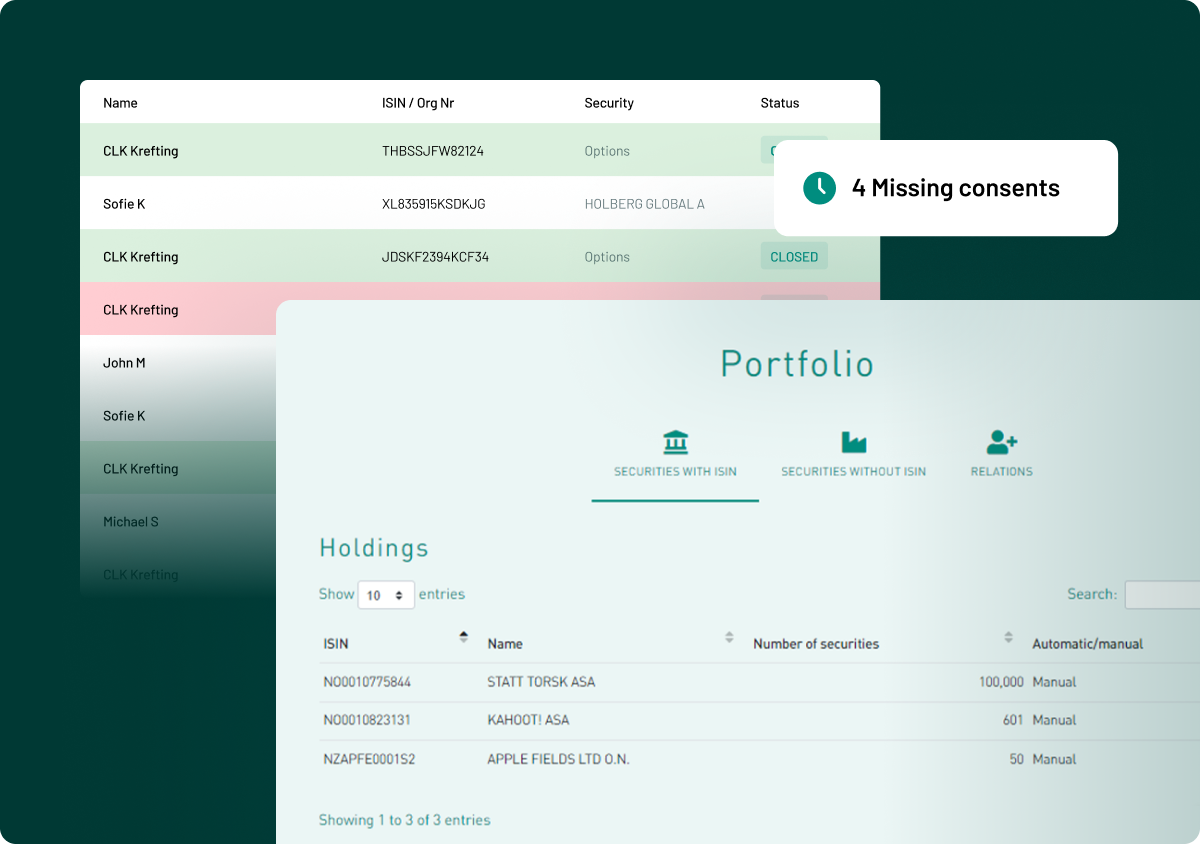
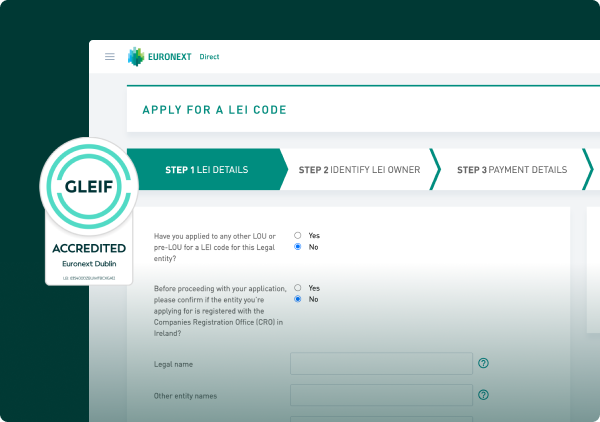
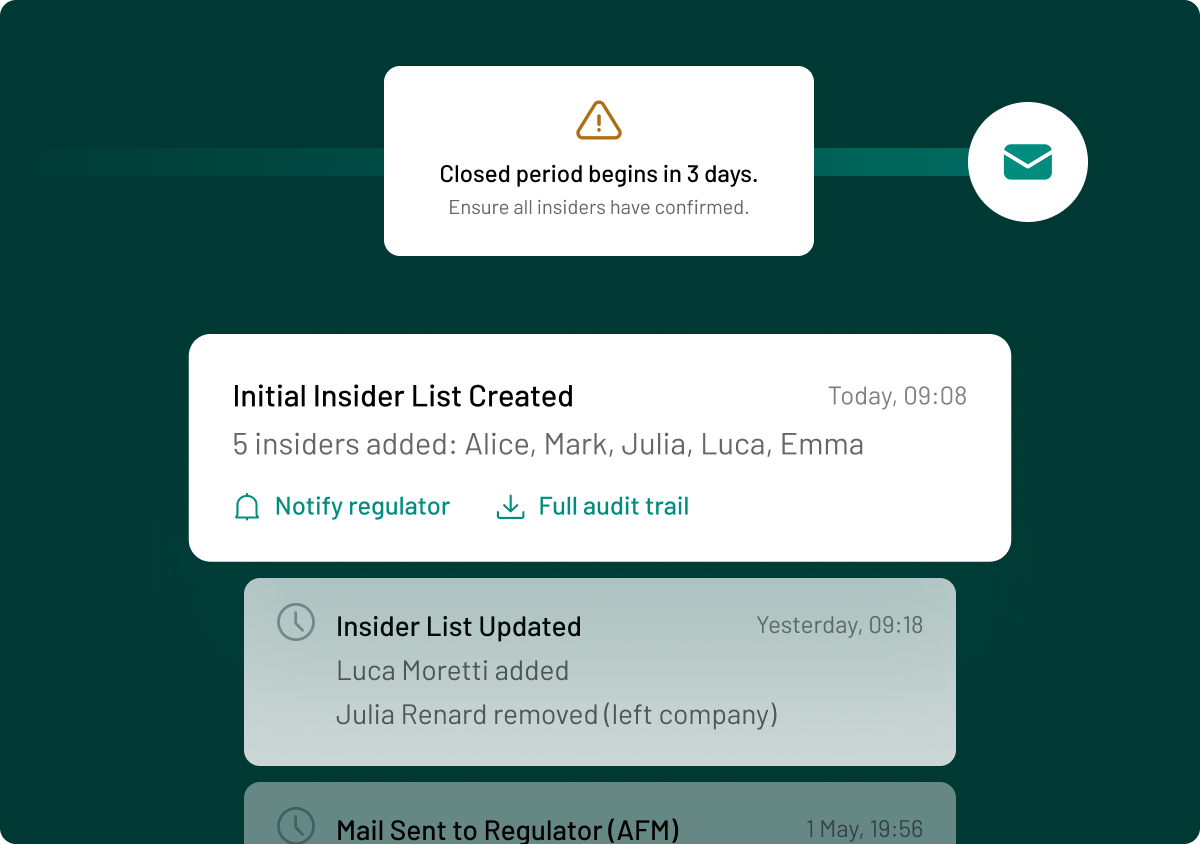
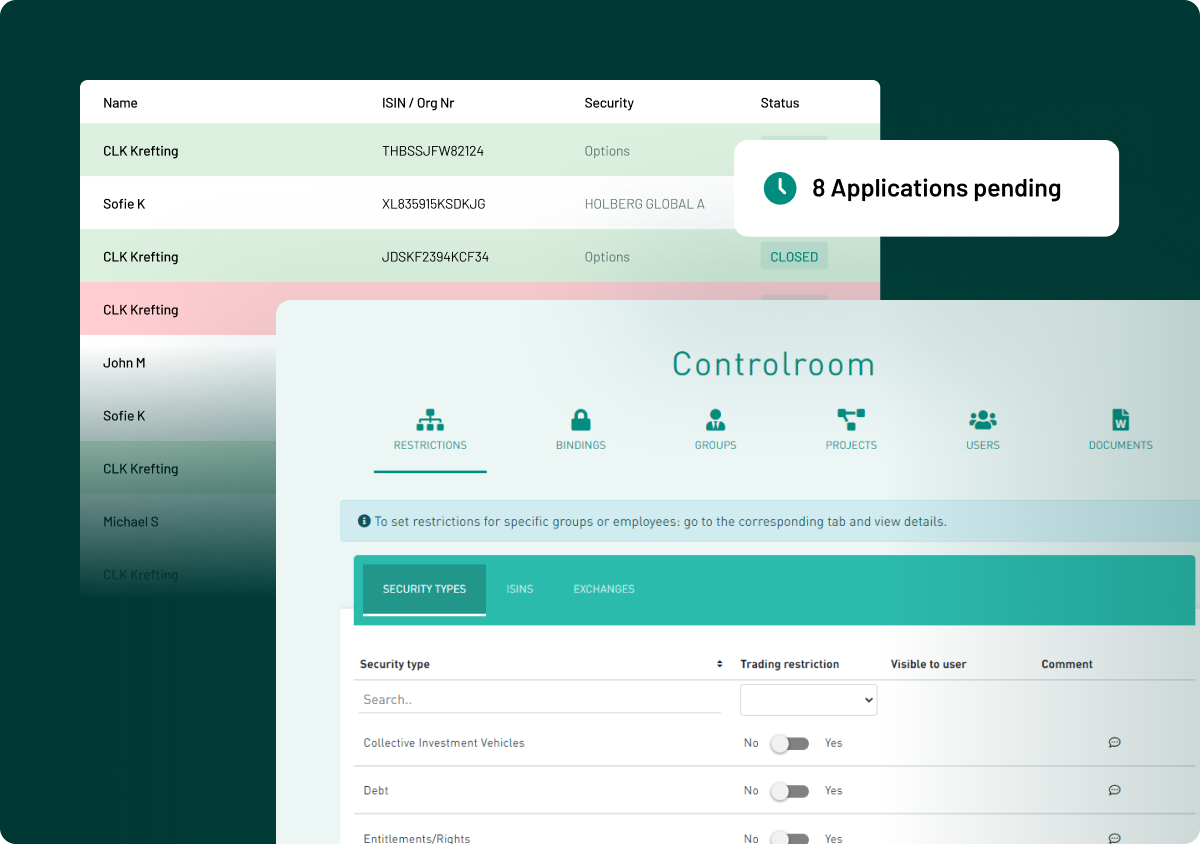
Align your internal rules with your external obligations to create a more cohesive approach to compliance. Euronext Corporate Solutions’ suite of compliance solutions allows you to create an intuitive digital workflow that provides robust oversight of your processes. From LEI management to the creation and maintenance of insider lists, it digitises manual workflows while strengthening oversight.
5. Consult subject matter experts for overlooked requirements
Compliance is a wide-ranging field, covering a multitude of pieces of legislation and it would be unlikely that your team will hold all of the experience and knowledge you need to cover all aspects in a satisfactory manner. By engaging subject matter experts, you can take advantage of their detailed knowledge of specialised areas within the umbrella of compliance.
Consulting an external expert helps you identify gaps, understand complex rules and highlight risks that you might not previously have considered. They can also help you prepare for new legislation by informing you how it might impact your organisation.
6. Carry out regulatory horizon scanning
New legislation is continually being formulated and adjustments made to existing laws. The EU Listings Act has updated some of the requirements within legislation, such as MAR and the Markets in Financial Instruments Directive (MiFID II), for example.
This requires a proactive approach through regulatory horizon scanning, allowing you to understand what obligations you will need to undertake in the middle to long term. If you monitor updates on the websites of EU and national government regulators, you can be prepared for new laws that affect your organisation. Sign up for regulatory alerts and keep track of the progress of consultations and other proposed changes.
Being aware of new legislation early allows you to assess the impact on your processes and create workflows and training programmes that allow you to meet new regulatory requirements.
Key components of a compliance obligations register
|
Component |
What it entails |
|
Obligation description |
A clear explanation of the rule, duty or requirement, written in plain language so anyone can understand what must be done and why it matters. |
|
Source of obligation |
The origin of the requirement, such as legislation, standards, contracts or internal policies. Include enough detail to trace it back to its official location. |
|
Owner or responsible party |
The individual or team accountable for meeting the obligation, ensuring there is a named contact who understands and manages the requirement. |
|
Frequency and deadlines |
How often the obligation must be met and any specific due dates, helping teams schedule work and avoid last-minute pressure or missed tasks. |
|
Compliance evidence |
The documents, records or data that prove the obligation has been met. This is essential for informing audits and reviews. |
|
Monitoring status |
A simple indicator showing whether the obligation is on track, overdue, in progress or requires follow-up. |
|
Risk rating |
An assessment of the impact and likelihood of non-compliance, helping prioritise which obligations need closer attention or stronger controls. |
Common challenges and how to solve them
-
Overly complex registers: Analyse the entries on the compliance register to identify duplications, removing them as necessary. Use plain language to ensure all users understand what is required and expected. Group related obligations together, by legislation, owner or any other logical category, to make it easier to navigate and maintain the register.
-
Lack of ownership: Assign a clear owner for every obligation. Record who holds responsibility in the obligation register so that you build accountability from the start. Have the assignee confirm in writing that they understand what their responsibilities are in relation to the obligation.
-
Inconsistent updates: Set a fixed cycle for reviewing and updating the register, which could be monthly or quarterly, depending on your business and industry. Automate reminders to keep you on track and make sure that the updates happen when they should.
-
Poor visibility across departments: Use a shared management system platform that centralises your requirements and allows all teams to access and understand their roles and responsibilities. This visibility helps breed a compliance culture across different company functions.
FAQ
1. How can organisations ensure continuous compliance amidst rapidly changing regulations?
Organisations can stay continuously compliant by monitoring regulatory updates directly from regulators, reviewing regulatory obligations regularly and adjusting policies, processes and training as rules evolve. Bring in external experts to help gain insight on future compliance obligations.
2. What strategies can improve collaboration across departments to maintain an effective compliance register?
Collaboration improves when departments share a central register that lists who owns which tasks. This creates transparency across functions. Agree on clear responsibilities and use regular check-ins to make sure everyone understands the role that each party must take on.
3. How do compliance obligations vary across different jurisdictions and industries?
Regulatory requirements differ because jurisdictions set their own laws and industries face specific standards linked to risk, safety or consumer expectations. This is why it is important to carry out your own checks to ensure you meet the specific demands on your business. Consider all the territories in which you work and the sector-specific standards you must meet.
4. What are effective methods for tracking and demonstrating compliance during audits
Tracking and demonstrating compliance is easier when you keep clear evidence of the processes involved in meeting your obligations. Keep clear records of actions and prepare audit trails that map out the processes you undertake.
Conclusion
It is essential to build a compliance obligations register for your organisation. This helps you carry out a gap analysis by showing you what you need to do to be compliant and comparing it with your current controls and policies. The cost, financially and reputationally, of failing to meet both internal and external standards can be damaging to your company and this register is a key element of building a strong compliance strategy.
Euronext Corporate Solutions provides a range of tools that meet the varied compliance obligations facing companies today and in the future. To help you create secure digital workflows that save time and manual effort, take a look at our compliance management solution.
Request a demo today to find out how to reduce compliance risk |
References and further reading
Related Articles
See all postsHow to Implement Proactive Risk Management + Examples
28-01-26
The 8 Most Effective Compliance Risk Assessment Methodologies
07-01-26
Measure Conduct Risk: 7 Key Risk Indicators To Track
31-01-24
How To Create A Compliance Risk Assessment Questionnaire
31-01-24
Why And How To Develop A Compliance Risk Management Framework
26-04-23