









.png)
.png)













.png)
.png)














.webp)






 Login
Login
Deloitte counts compliance risk assessments as one of five key pillars of high-performing compliance programmes. The prevailing concept is that you cannot mitigate a risk if you do not know it exists.
The compliance landscape is fraught with risk factors for businesses, as regulators seek to create fair and ethical markets across the European Union. The European Securities and Markets Authority (ESMA)’s consolidated report on sanctions and measures imposed in Member States in 2024 shows that the number of infractions stayed steady between 2023 and 2024, but the aggregate value of sanctions rose in the same period to more than €100 million.
To understand how to avoid regulatory contraventions, it is important to carry out a pre-emptive, structured process to identify, evaluate and prioritise potential negative outcomes associated with failing to comply with laws and regulations. This article presents a range of effective compliance risk assessment methodologies to help you with this procedure.
|
Table of Contents
|
Key takeaways
- Effective compliance starts with a structured risk assessment that identifies, evaluates and prioritises risks so you can target controls where they matter most.
- ESMA’s 2024 sanctions report shows fines exceeding €100m across EU compliance breaches, underscoring the need to strengthen compliance risk management programmes.
- Monitor the compliance landscape to understand when your regulatory requirements will change and what you need to add to your risk management strategy to stay compliant.
- Use qualitative and quantitative methods together: stakeholder insights reveal context, while KRIs, incidents and audit data make scoring comparable and defensible.
- Control self-assessments and risk scoring models empower your business functions to own their risks and produce ranked, actionable mitigation plans.
- Automation, AI and peer benchmarking improve detection speed, reduce blind spots and calibrate maturity against industry practice, but require clear governance and oversight.
What are the most effective compliance risk assessment methodologies?
1. Qualitative risk assessment
Qualitative risk assessments incorporate the views and insights of both internal and external stakeholders to identify and analyse the types of compliance risk to which you are exposed and to what extent.
Carry out a range of activities to gather qualitative information, including:
- Group discussions with employees across different functions to highlight any risks they encounter in their work.
- One-to-one interviews with first managers and members of compliance, legal and IT teams to drill down on emerging risks and control gaps.
- Event walkthroughs to understand how responses to the creation of inside information, for example, flow and where the risks may lie. This tests your current internal controls and decision paths.
- Anonymous surveys with questions about culture, conduct risk and how confident employees are about speaking up to gain clear oversight of issues that might exist when stakeholders do not fear retaliation.
2. Quantitative risk assessment
With a quantitative risk assessment, you translate the data that you hold to understand how effective your compliance controls are and where the main risks of non-compliance arise.
Look at information in these quantitative risk assessments, such as:
- Incidents that caused loss or could have caused loss, including fines received, breaches of legislation and near misses.
- Surveillance outputs, such as alerts to employees’ conflicts of interest and declined employee personal trade pre-clearance requests.
- HR indicators, like how many employees have completed their mandatory training or the volume of whistleblowing reports received by the business.
- Data breaches and the time to detect, notify and resolve these incidents.
Combine the data with statistical models and probability analysis to understand the likelihood of current processes leading to compliance contraventions and the impact they would have if they happened.
3. Hybrid (semi-quantitative) methodology
This risk management approach blends expert judgement from your stakeholders with measurable data to provide robust, balanced outcomes that give you insight into the compliance risks that affect your business.
Take the elements that employees highlight in conversation and then score the likelihood of them happening and their potential impact using key risk indicators (KRI) and incident reports. Weigh them with reference to your risk appetite and the strength of your current controls and you can create heat maps of where the risks are truly most likely to affect your organisation.
This requires less work than a full statistical modelling approach, but is more objective than purely relying on qualitative data.
4. Scenario analysis and stress testing
Your compliance risk assessment should take into account how adverse events would affect your approach to compliance and how well equipped you are to deal with them. This takes the form of stress testing and scenario analysis. This is how these risk management processes work:
| Process | Explanation |
|---|---|
| Stress testing | Asks the question “What if this extreme thing happens?” and concentrates on a specific, single variable to see if your company can withstand it. This tests short-term measures. |
| Scenario analysis | Explores multiple potential outcomes, such as changes to legislation and shifting economic conditions to test the company’s approach over the long term. |
Here are examples of how you might run these risk management strategy processes:
- Implement a stress test to see how you would react if news that one of your company’s key products had been banned from sale was leaked before you had a chance to make it public. This would test detection and escalation measures, the resilience of your insider list regime, whether your employee personal trading controls are working and whether you are keeping records in accordance with laws like the Market Abuse Regulation.
- Play out a scenario analysis regarding geopolitical disruption in areas from which you source materials. This requires contingency planning, which you may want to keep confidential. However, you must check at each stage whether these conversations constitute inside information. This will help you map how you implement insider lists internally and the provisions you make for suppliers and advisors who access your inside information.
5. Control self-assessment (CSA)
CSA is a collaborative approach to understanding how effective your internal controls are and which areas have the most compliance risk exposure. Each function in the business takes responsibility for evaluating its own compliance protections, bringing them to light so that the company as a whole can generate risk management actions to correct or improve them.
As a proactive compliance risk assessment methodology, it can help prevent potentially costly or damaging outcomes. CSA also empowers employees to gain ownership of their approach to compliance, feeling more engaged with the whole process and helping to feed a positive compliance culture.
6. Risk scoring models
Once you have undergone risk identification to find those issues relevant for your business, you need to understand how they might manifest and in which order to tackle them. Risk scoring requires you to rank your risks in order of severity to provide a roadmap for mitigation.
This can feed into a compliance risk matrix, which not only takes into account the potential impact of the risk but its probability too. For each risk, consider whether it is probable, possible or improbable and also whether the impact would be acceptable, tolerable, unacceptable or intolerable. Plot this in the matrix and work from the probable and intolerable risks down to the tolerable and possible, or even further, depending on your risk appetite.
7. Automated assessment
Using automation and artificial intelligence (AI), you can implement risk assessment rules, machine learning and natural language processing to scan transactions and communications in real time. This allows you to identify the patterns that humans miss and where breaches happen.
This is helpful for assessing the risks in your compliance efforts, but requires you to ensure the data used is clean and that there is human oversight to review any alerts for false positives. Create a clear governance framework for implementing AI for this purpose and consider how you will use the outputs to inform fixes in your processes.
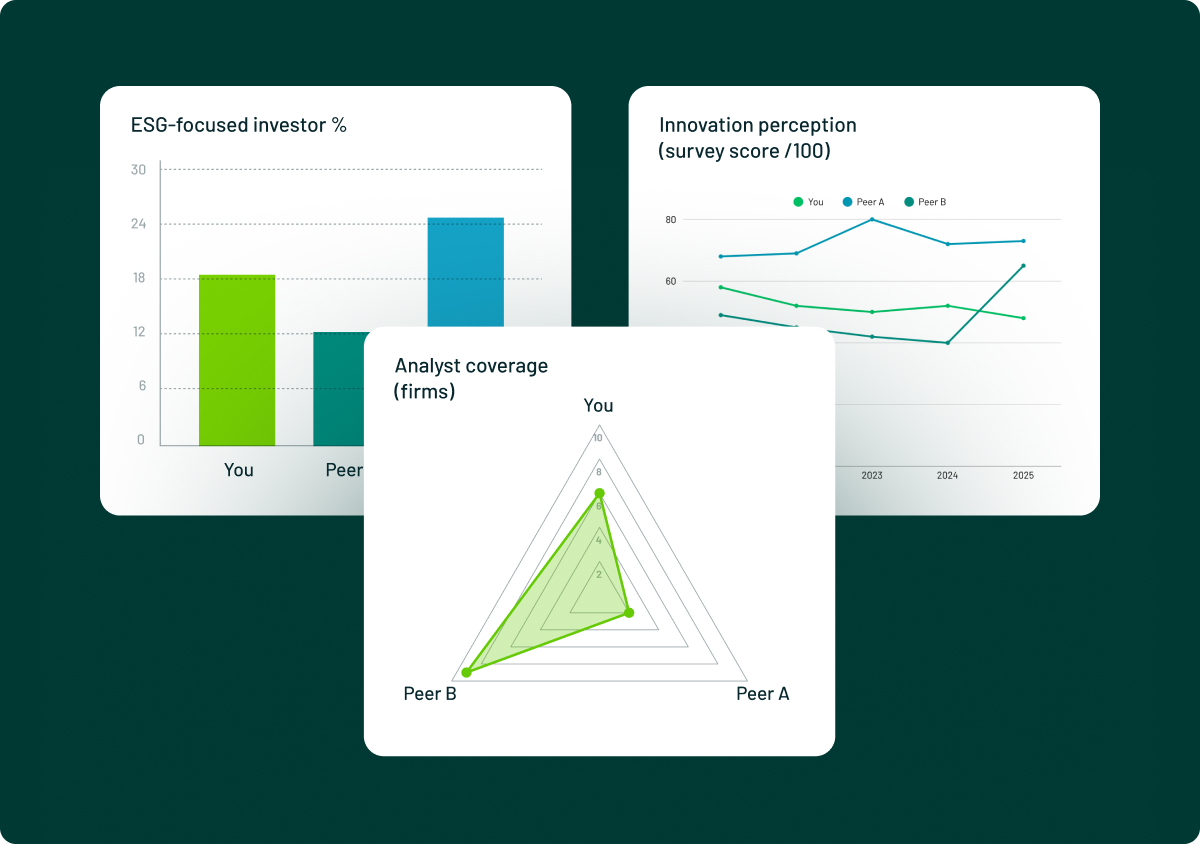
8. Benchmarking against peers
Compare your compliance risk management approach with industry standards and similar businesses to spot your gaps and to understand which targets are realistic for your business. Consider case studies of non-compliance to understand how mature your risk management systems are.
When you understand where you are overexposed, you can create a plan to fill these gaps, with clear deadlines and owners who take accountability for fixing issues. Carry out peer benchmarking every year and after major regulatory changes to ensure you keep up with the sector.
Manage regulatory demands with confidenceAs the regulatory demands on company’s become more complex, your compliance risk assessments become vital to understanding where your mitigation gaps are. Euronext Corporate Solutions’ package of secure regulatory compliance solutions will help you fill those gaps and digitise manual processes for a more robust approach to compliance. Request a demo today. |
How to conduct a compliance risk assessment
Take these steps to create an effective compliance risk assessment process:
- Identify the relevant risks
- Map risks to possible outcomes so that you understand the wider repercussions of failing to mitigate them.
- Prioritise the most severe risks with a risk matrix
- Track changes to the regulatory horizon
- Implement security controls
- Validate through testing
- Re-evaluate risks as regulations and your business evolve.
Find out more in-depth information about conducting a compliance risk assessment in our dedicated article.
Challenges in compliance risk assessment
- Data silos and fragmented systems can lead to blind spots in compliance risk management that no one realises until it is too late. You also risk errors of version control when there is no centralisation, which affects the integrity of your audit trail.
- Inconsistent risk scoring can hinder your ability to prioritise risks accurately. If you cannot compare the severity of risks across departments, it can leave the business exposed.
- Changes to regulatory requirements, such as the adjustments to MAR in the EU Listing Act, can change your obligations and, with that, the nature of the risks that affect your business.
- Resource constraints when tackling individual risks can lead to patchy or insufficient coverage that might fail to prevent non-compliant activity.
FAQ
1. What are the key principles of effective compliance risk management?
The key principles of effective compliance risk management are:
- Proportionality to ensure you have the correct measures in place for your needs
- Accountability to take ownership of compliance risks from the board down
- Transparency so that stakeholders understand how you manage risks
- Continuous improvement, involving monitoring, reviewing and enhancing controls over time.
2. In what way does compliance risk impact a company’s reputation?
Breaches can trigger sanctions and headlines that erode investor and customer trust, increasing the cost of capital and damaging brand value. ESMA’s sanctions reports show persistent enforcement under MAR and MiFID II, while OECD guidance links good governance and transparency to long-term trust. This shows the importance of robust risk assessment processes.
3. How often should organisations conduct a compliance risk assessment?
Run risk assessment processes on a regular cycle and whenever there is a material change, such as new regulations, products or markets, to keep the risk picture current.
ConclusionThese compliance risk assessment methodologies will help you understand the compliance risks that could affect your business, communicate them to your team and allow you to develop mitigation strategies that will protect your company from regulatory, financial and reputational damage in the future. To help businesses tackle compliance challenges, Euronext Corporate Solutions has developed an advanced regulatory compliance package of solutions that you can implement to mitigate risk and safeguard your business operations. Request a demo today to find out how to reduce compliance risk. |
References and further reading
Related Articles
See all postsBuild a Compliance Obligations Register Before Your Gap Analysis
17-02-26
How to Implement Proactive Risk Management + Examples
28-01-26
Measure Conduct Risk: 7 Key Risk Indicators To Track
31-01-24
How To Create A Compliance Risk Assessment Questionnaire
31-01-24
Why And How To Develop A Compliance Risk Management Framework
26-04-23