









.png)




.svg)
.svg)
.svg)







.png)
.png)





.jpg)

%20F%20(1).jpeg)







.webp)






 Login
Login
clean room
What is a Clean Room?
A clean room is a highly restricted area within a virtual data room (VDR) used during mergers and acquisitions (M&A), due diligence and other sensitive corporate transactions. Companies use clean rooms to share commercially sensitive information with a limited group of authorised individuals without exposing that data more widely across the deal team.
Clean rooms are important in transactions such as those involving competitors, in highly regulated sectors and during complex cross-border deals. They allow parties to carry out thorough due diligence without breaching competition laws or failing to maintain confidentiality.
Why are clean rooms used?
In many M&A transactions, buyers need access to information that could create serious competition problems if shared too widely. This might include:
- Customer pricing data
- Supplier terms
- Product roadmaps
- Trade secrets
- Market strategy documents
- Customer-level profitability information
A company could participate in an M&A process as a potential buyer and gain access to highly sensitive information about a competitor, such as pricing, customers, margins or future strategy, even if the deal never completes.
Competition regulators worry that this information could then influence the buyer’s commercial behaviour in the market, intentionally or unintentionally. Clean rooms reduce this risk by limiting access during due diligence to independent advisors or tightly controlled “clean teams”, rather than allowing unrestricted access across the buyer’s commercial management team.
How does a clean room work?
Clean rooms, also known as white boxes or black rooms, sit inside the wider VDR environment but have much tighter controls. Only selected individuals, often called a “clean team”, can enter the area and review documents.
These users are usually:
- External lawyers
- Financial advisors
- Accountants
- Consultants
- A small number of other approved internal specialists
Commercial teams and senior executives involved in competitive decision-making are often excluded from direct access.
The clean room typically includes:
|
Clean room feature |
Purpose |
|
Restricted permissions |
Limits access to approved individuals only |
|
Segregated folders |
Separates highly sensitive information from standard due diligence files |
|
Audit trails |
Tracks who viewed or downloaded documents and when |
|
Redaction tools |
Removes unnecessary sensitive information |
|
Time-limited access |
Automatically removes permissions when no longer needed |
Clean rooms and compliance
Clean rooms are not only used where there is a risk of contravening antitrust laws, but they also support compliance with broader regulatory requirements.
Under GDPR, companies must limit access to personal data and apply data minimisation principles during due diligence. A clean room allows you to restrict sensitive employee, supplier and customer information to authorised reviewers only.
For listed companies, clean rooms can also support compliance with the EU Market Abuse Regulation (MAR) by helping control access to inside information during a live transaction.
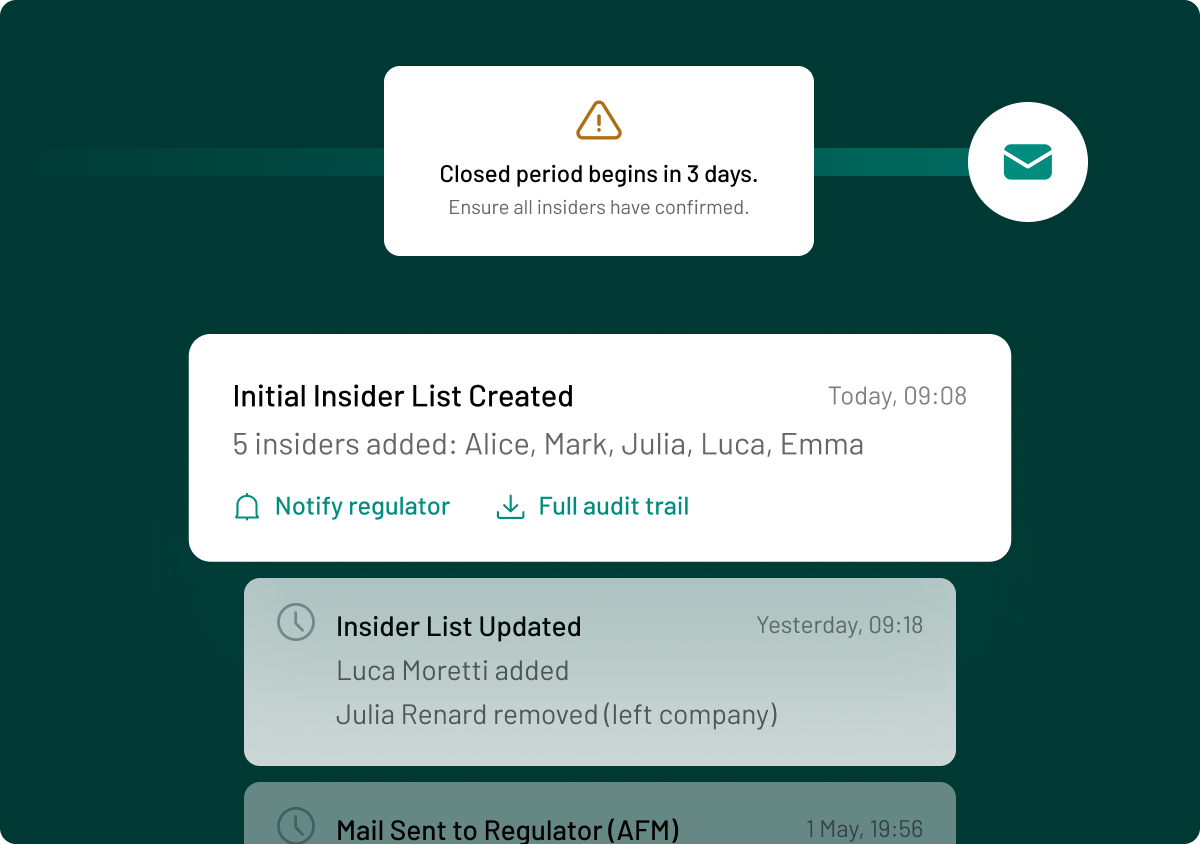
The audit trails generated within a clean room create evidence of:
- Who accessed information
- What documents they reviewed
- When access took place
- How disclosure was controlled
This can become important if regulators later review the transaction.
Why not just use cloud storage?
Generic cloud storage platforms are not designed for high-stakes due diligence. While they may allow file sharing, they often lack the governance and control features needed for regulated transactions.
A purpose-built VDR with clean room functionality provides:
- Granular permissions
- Structured workflows
- Detailed audit logs
- Controlled Q&A
- Secure redaction
- Better oversight of sensitive information
This helps reduce risk while allowing the deal to progress efficiently.
What is the difference between a clean room and a VDR?
A VDR manages the overall due diligence process, while a clean room is a highly restricted section within the VDR used for especially sensitive information.
Related terms
View all termsDefinition of Insider Trading
Insider trading is when a person in possession of confidential information uses ...
Market Abuse Regulation (MAR) Outlined
The Market Abuse Regulation (MAR) came into effect in 2016 to ensure a uniform ...
Definition of Market Manipulation
Market manipulation, a form of market abuse, is the illegal act of artificially ...