









.png)





.svg)
.svg)
.svg)








.png)
.png)






.jpg)

%20F%20(1).jpeg)







.webp)






 Login
Login
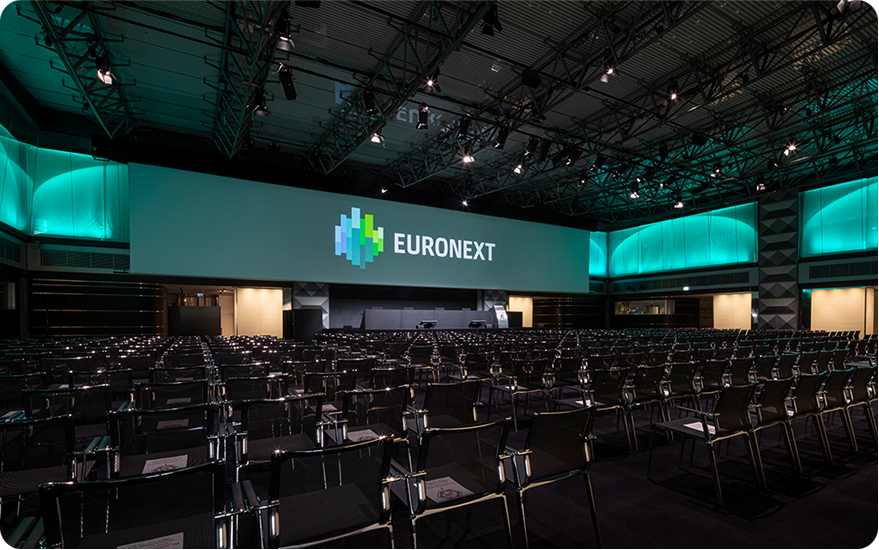
When findings from a board evaluation concern the chair's own leadership, the matter falls to the nomination committee, which should address the issue without the chair's involvement. This is one structural reason most major corporate governance codes recommend that the chair does not sit on the nomination committee. An external consultant or facilitator significantly strengthens the process by adding objectivity and benchmarks that depersonalise difficult conversations. The panel at The Decisive Board webinar, hosted by Euronext Corporate Solutions, addressed this scenario directly.
- The nomination committee is the appropriate forum to address findings that concern the chair, with the chair excluded from committee deliberations.
- An external consultant or facilitator provides the objectivity that internal-only processes cannot, especially on sensitive findings.
- Benchmarks are critical: it is far easier to discuss expectations of a chair against objective data points than against subjective board opinions alone.
- The chair must be evaluated on a defined set of leadership behaviours: information stewardship, agenda discipline, neutrality in debate, and championing the evaluation itself.
- Confidentiality and anonymity are non-negotiable; without them, directors will not flag concerns about the chair, regardless of how serious those concerns are.
Why this scenario is structurally difficult
Evaluating a chair is harder than evaluating any other director, for two interlocking reasons. First, the chair often proposed the appointment of the directors who must now critique their performance; criticising the chair feels disloyal even when it is justified. Second, the chair typically owns the evaluation process itself, which means directors are being asked to deliver feedback to the very person they are evaluating, with no buffer.
Caroline Ruellan, President of SONJ Conseil and a board member herself, framed the discomfort plainly during the webinar panel. It is uncomfortable for a director to say, in effect, "I was nominated by this chair, but I do not believe they are doing the job well." That discomfort, untreated, becomes silence. Silence becomes drift. Drift is precisely what good governance is supposed to prevent.
The fix is procedural, not personal. The board needs a structure that makes it easier for directors to say what they think than to say what is comfortable.
The nomination committee's role
When evaluation findings raise concerns about the chair, those findings should be routed to the nomination committee. This is the body responsible for board composition, succession, and (in most governance codes) the chair's appointment and reappointment. The committee's independence from the chair, who should not sit on it, is precisely what allows it to address these findings without conflict of interest.
"The chairman is not supposed to be on the nomination committee. That provides the committee with a big independence. So when this kind of issue arises, it will be the job of the committee to address it."
The committee chair takes ownership. They decide what level of action the findings warrant: a private feedback conversation, a documented improvement plan, an external coaching engagement, or in serious cases, a discussion of succession. The corporate secretary supports the process by ensuring that the relevant evaluation data and any benchmarks are accessible to committee members in a confidential, structured form.
A board portal that supports document-level access controls is useful here. Sensitive evaluation outputs concerning the chair should be visible to nomination committee members but not to the broader board, and certainly not to the chair until the committee has agreed how to handle them. Admincontrol Board Portal provides this kind of granular access control by design.
Why an external facilitator is essential here
Florence Priouret, Chair of the SFAF Board of Directors, made the point during the webinar: it is significantly easier to deliver findings concerning the chair when an external facilitator is involved. The external party provides three things that an internal-only process cannot.
The first is anonymity. Directors will speak more openly to an external interviewer than to the corporate secretary or the lead independent director, particularly on sensitive subjects. Anonymity must be more than nominal; it must be operationally guaranteed, with feedback aggregated and individual responses never traceable.
The second is methodology. External facilitators have evaluated many chairs across many companies. They know which questions surface the right issues, how to weight conflicting views, and how to distinguish a difficult chair from a difficult board. This pattern recognition is hard to replicate internally.
The third is delivery. An external party can present uncomfortable findings to the chair, with the nomination committee, in a way that frames the conversation as developmental rather than punitive. This framing matters. The aim is to improve performance, not to humiliate the incumbent.
The role of benchmarks in difficult conversations
Beatrice Richez-Baum, Director General of ecoDa, made the case for benchmarks repeatedly during the panel. Directors should not take decisions based only on opinions; they should make the effort to collect facts. The same logic applies when the topic is the chair's performance.
It is far easier for a nomination committee to say "the chair's stewardship of information flow is below the benchmark we see in comparable companies" than to say "several directors think the chair is not doing a good job." The first statement is a fact-based observation that points toward an improvement target. The second is opinion that puts the directors who voiced it at risk.
Benchmarks come from two sources. Year-over-year benchmarks compare the current chair to their own performance over time, which is the most actionable comparison. Peer benchmarks compare to chairs of similar companies, drawing on databases such as those maintained by major governance research providers. Both are useful; year-over-year is the more reliable trigger for action.
| Step | Owner | Output |
|---|---|---|
| 1. Surface findings under anonymity | External facilitator or evaluation platform | Aggregated, untraceable feedback on chair leadership |
| 2. Triangulate against benchmarks | External consultant + corporate secretary | Year-over-year and peer comparison |
| 3. Route to nomination committee | Lead independent director | Confidential committee briefing pack |
| 4. Decide response level | Nomination committee chair | Feedback session, improvement plan, or succession discussion |
| 5. Deliver feedback to the chair | External facilitator + nomination committee chair | Documented expectations and milestones |
| 6. Track progress in next evaluation | Lead independent director | Year-over-year comparison; closure or escalation |
What to evaluate in a chair
The chair's role is leadership. The evaluation should probe specific dimensions of that leadership rather than asking directors for general impressions. Caroline Ruellan framed the chair's responsibilities as guiding the process without dominating it: making sure each director has a say, recognising that the chair is "primus inter pares" (first among equals), and never trying to influence the outcome of the wording.
"The chair has to keep in mind that he is primus inter pares. So it is only one voice among many. The chair should not try to influence the outcome."
Concretely, an evaluation of the chair should cover at least:
- Information stewardship. Are board packs complete, timely, and unbiased? Are follow-up questions answered?
- Agenda discipline. Is enough time spent on strategic priorities versus operational detail?
- Neutrality in debate. Does the chair allow all directors to speak, including those whose views diverge from management?
- Championship of evaluation. Does the chair sell the evaluation as a positive, developmental exercise, or treat it as a chore?
- Relationship with management. Does the chair maintain appropriate distance from the CEO, or has the relationship become collusive?
- Crisis response. When the company has faced a strategic shock, did the chair lead the board's response effectively?
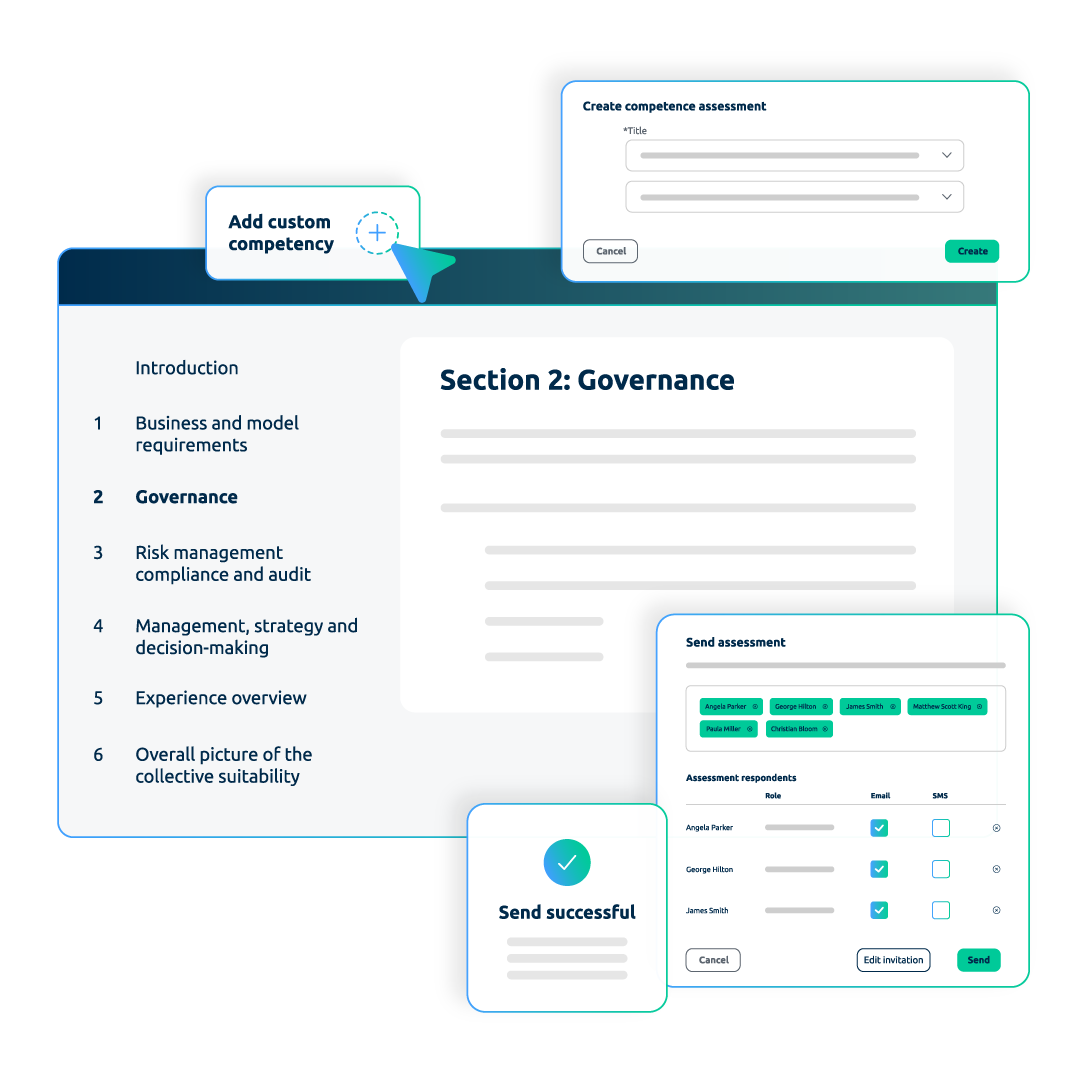
These dimensions can be scored confidentially by directors and management, and benchmarked year over year. Admincontrol Board Evaluation includes chair-specific evaluation modules built around exactly this kind of framework.
Frequently Asked Questions
No. Most major corporate governance codes recommend that the chair does not sit on the nomination committee precisely because the committee may need to evaluate the chair's own performance. Excluding the chair preserves the committee's independence on this and other succession matters.
A unanimous concern is a serious signal. The lead independent director typically takes the lead on consolidating the feedback (with external support if needed) and convening the nomination committee. In rare cases, the committee may recommend that the chair step down or not seek reappointment.
Yes. The chair's performance should be assessed in every annual evaluation, not only when concerns arise. Routine assessment normalises the process and removes the discomfort that comes from singling out the chair only when there is a problem.
Persistent minor findings should be addressed through an improvement plan with milestones, owned by the nomination committee. The plan should be reviewed in the following year's evaluation. If the issues recur without progress, the committee should consider escalation to a coaching engagement or a frank succession discussion.
Detailed findings about an individual chair are confidential. Shareholders should, however, be informed at a high level about how the board evaluation process is conducted and how findings are followed up. ecoDa explicitly encourages more shareholder engagement on the quality of the evaluation process and its outcomes.
A clear procedural path, anonymous data, benchmarks, and external facilitation make difficult conversations possible. Admincontrol Board Evaluation supports each step.
Request a demo