









.png)




.svg)
.svg)
.svg)







.png)
.png)






.jpg)

%20F%20(1).jpeg)







.webp)






 Login
Login
Investor reporting is the process of maintaining regular communication with shareholders over financial and non-financial performance, operational updates, strategic progress and other matters related to the company.
The importance of shareholder engagement cannot be overstated, with 70% of institutional investors stating that they are “more likely to invest in a company with a clear and consistent communication strategy.” Shareholders rank investor-focused communication as an important driver of decision-making, with 64% using it in their considerations.
An open and transparent issuer garners trust within the investment community and maintains an engaged shareholding that is more likely to favour two-way communication over mounting activist campaigns that can take companies by surprise.
This article explores the benefits of comprehensive investor reporting, helps you understand what shareholders want from that reporting and best practices for presenting your messaging in a clear and transparent manner.
Key takeaways
- Investors reward clear, consistent communication with 64% using it in investment decisions over asset allocation.
- Use a repeatable structure and clear message hierarchy so every update is quick to produce and easy to digest.
- Prioritise decision-useful KPIs that help shareholders understand how your performance is helping them reach their investment goals.
- Link performance and ESG actions to strategy, risk and value, avoiding vanity metrics that add noise.
- When results disappoint, be frank. State what did not go as planned, why and how you will fix it to cut uncertainty and rumours.
- Keep engagement high without overload by mixing formats: results calls, CMDs, targeted briefings, pre-close updates and an always-on video hub on your investor portal or IR website.
Why investor reporting matters
- Build investor trust through regular, clear updates that show your business is reliable and open with what is happening internally. A robust reporting strategy shows a commitment to transparency that encourages shareholders to remain invested, safe in the knowledge that the company is committed to full disclosure.
- Strengthen market credibility by showing that you are able to meet reporting standards and stick to the essential deadlines. Where there is a free flow of financial and operational information that meets your obligations, the market takes your guidance more seriously.
- Support valuation by being transparent with your financial numbers, mission and strategy. Sharing reports on progress towards your goals provides confidence to the market that your shares are priced appropriately. Better insights lead to a fairer, more accurate valuation of your financial instruments.
- Reduce uncertainty and prevent misinformation by presenting facts in a timely manner, reducing the space for rumours and guesswork to percolate. Where you introduce certainty into your communications, there is less volatility around your stock, which provides confidence.
- Attract long-term shareholders, who prefer the companies in which they invest to present clear plans for the future and provide regular updates on their progress. Being able to promise a steady investor reporting strategy is a key driver of investment from this type of shareholder.
- Enable better capital access from banks and investors, who are more likely to fund companies that they can understand and where they feel fully informed of the value being created through their investments. Strong disclosure lowers the perceived risk of investing in your company and can reduce the cost of capital in the future.
- Strengthen engagement by committing to a dialogue with your investors. This keeps you at the forefront of shareholders’ minds and satisfies them that you will take the time to listen and respond to their concerns or questions.
- Show accountability by reporting your targets and results, proving that your leadership will own the outcomes, whether they are positive or negative. This provides confidence that the board understands the importance of building on successes and rectifying underperformance.
Investor reporting formats
Create an investor reporting system using a mixture of formats, such as:
Format | Purpose | When to use |
Earnings calls and webcasts | Live results discussion with Q&A and on-demand replay. Allows you to engage all shareholders at once, no matter where they are based. | On results days and for major updates. |
Capital Markets Days (CMD) | Deep dive on strategy, targets and medium-term KPIs. | Annually or every 18 to 24 months. |
Virtual or hybrid AGMs | Formal shareholder meeting with compliant access and scalability to allow for greater attendance than a purely in-person event. | Annually, plus any EGMs. |
Investor presentations | Structured overview of results or themes with synced slides to tell the story and interactive features to keep attendees engaged | Around results and roadshows. |
Analyst and investor briefings | Targeted small-group sessions on a topic. | Post-results or ahead of milestones. |
IR portal video hub | Central home for all live and on-demand content, including AGMs, EGMs, roadshows and other briefings. | Always on. |
Regulatory announcements and filings | Official disclosures and documents with industry-standard reports. | As required by law and listing rules. |
Pre-close trading updates | Brief performance snapshot before results. | Weeks before half-year and full-year. |
ESG or sustainability briefings | Progress on targets, CSRD reporting and actions. | Linked to report release or CMD. |
Thought leadership fireside chats and panels | Informal interviews to widen reach, provide information to shareholders and engage them on pertinent topics. | When appropriate. |
Site visits and virtual tours | Show operations and answer questions, displaying transparency | Ad hoc or tied to a CMD. |
Podcasts or CEO letters | Narrative context in plain language. | Quarterly or after milestones. |
On-demand micro-videos and explainers | Short clips on products, KPIs or strategy. | Drip-fed between major events. |
Investor email updates and newsletters | Curated links to news, events and materials. | Monthly or after key events. |
Answers investors look for
What has changed since the last period?
Be open with investors and tell them what has happened, how it affects them and why it happened. This could be financial numbers, requiring you to take control of the narrative and explain rises and falls, along with the next moves. It could also mean a change of strategy, meaning you must be open about what it will involve and the reasons for making the adjustment.
What management is prioritising now?
As well as looking back, investors want to be able to look forwards and understand why they should maintain their stake in your organisation. This means that they need to know where the focus will be for the coming period. Be clear and present short, medium and long-term priorities, along with who owns them, the target date and what the success metrics look like.
What is driving growth vs protecting margins?
Be clear about new products or markets that will help grow the business in the future, with timelines and projections so investors can understand the potential. Explain any cost levers or efficiency measures you are using to protect your margins, quantifying when you will use them and the impact you expect them to have, linking them to gross margin and operating costs.
What risks could change the outlook?
Share your risk heatmap with your investors to show that you have a robust risk framework in place to identify and avoid or mitigate upcoming risks. Show how you will manage risks and present leading indicators and scenarios for what happens if you do or do not manage them effectively. Give shareholders confidence that you are proactive in this regard.
What makes guidance credible?
Share your key assumptions with your investors, as well as the sensitivity ranges you have in place. Provide historical data comparing previous guidance vs results and put your projected performance in context of the market and your peers to show why your targets are achievable. This helps manage investors’ expectations.
Best practices for clarity, readability and transparency
Lead with a clear message hierarchy
Structure your messaging so that busy investors understand exactly what you are talking about from the start and can make an informed decision as to whether the communication is important to them. If you are not clear from the start, your shareholders might miss vital information or feel that you are covering something up by talking around the point.
Consider a structure, such as:
Position | Element | Explanation | Example |
1 | Headline | The one sentence that states the single most important takeaway that the investor must know | “We’re taking cost out of the business without hurting growth” |
2 | Supporting pillars | Information that supports the headline | “We have made annualised savings of €10 million, whilst productivity is up and customer satisfaction is stable” |
3 | Proof | Data to add solid evidence |
|
4 | What could go wrong and the measures in place to prevent that |
| |
5 | Next steps | What happens now | “Phase 2 will begin in July and we will share our updated margin target at the end of Q3” |
Keep content consistent across every channel
Your message must be the same, no matter which method investors use to engage. Ensure all parties are aligned before they create and release information to shareholders.
Be sure everyone understands the headline information, the evidence and the narrative that you want to project to your shareholding, no matter what format the information is detailed in.
Use a repeatable reporting structure every period
Stick to the same investor reporting template each quarter so investors know where to find the key facts and trends that matter to them. Keep the order consistent across the release, deck and IR website to avoid mixed messages.
Prioritise decision-useful KPIs (not endless metrics)
Focus on a small set of valuable performance metrics that help investors make decisions, like revenue growth, margins, cash flow and customer retention. Define each KPI, show a target, a time scale and the progress that you have made so far. Although it is tempting to add vanity numbers (metrics that make the company look good, but which are not helpful for shareholders), this can clutter your reporting and disengage your audience.
Track changes with version control and audit trails
Use versioned documents with clear change logs so you can show who edited and approved what and when. Keep one source of truth and archive prior versions for reference. Using a cloud-based system means that all people accessing the information get the latest edition and you don’t risk sending outdated or incorrect data to shareholders.
Connect ESG directly to strategy, risk and value creation
Link ESG actions to capex, costs, revenue and risk mitigation, not just policy statements. Report payback periods, timelines and who on the board oversees delivery. Investors want to see that these processes are embedded into your organisation, rather than separate and only managed for show.
Be transparent, especially when results disappoint
Say what did not work, why it happened and what you will do next. Give a timeline for rectifying these situations and who will lead the project. Investors forgive bad news more readily than surprises or spin, especially if you provide context and a route to resolve the situation.
Use visuals to simplify, not to decorate
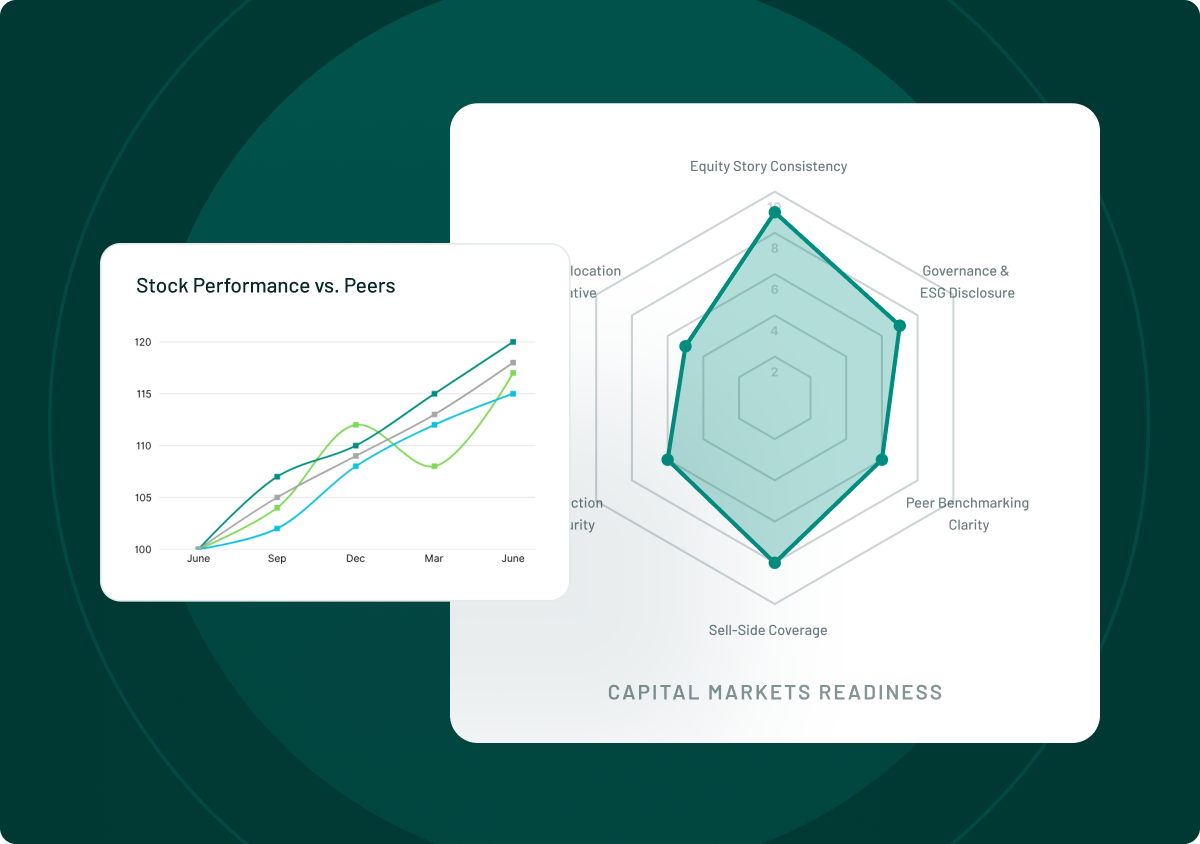
Choose bridge charts, waterfall charts and heat maps to explain drivers and risks at a glance. Keep charts clean, label them clearly and remove any clutter that distracts from the message. The idea is to help investors understand the situation with a graphical representation of the news without having to read walls of text to get the headline. Do not use them merely to add colour to the page.
Design for accessibility and easy scanning
Use clear headings, short paragraphs and summary tables at the top so readers get the point quickly.
Provide tagged PDFs, alt text and high-contrast colours to meet accessibility needs on online documents. For videos and webinars, add closed captions and translations to ensure more investors can engage with your reporting.
Investor reporting plays a key role in engaging shareholders and building transparent and trusting relationships between issuers and the investment community. You need to report with clarity and accuracy, taking accountability and leading the narrative, delivering information that is genuinely valuable to your investors. This means engaging across a range of formats, from email and social media to in-person events and webinars. The benefit of webcasting investor relations events is that you can engage more shareholders at once, especially if you use a secure, interactive and accessible platform.
Euronext Corporate Solutions’ corporate reporting solution provides multiple products to help you improve your investor reporting workflow:
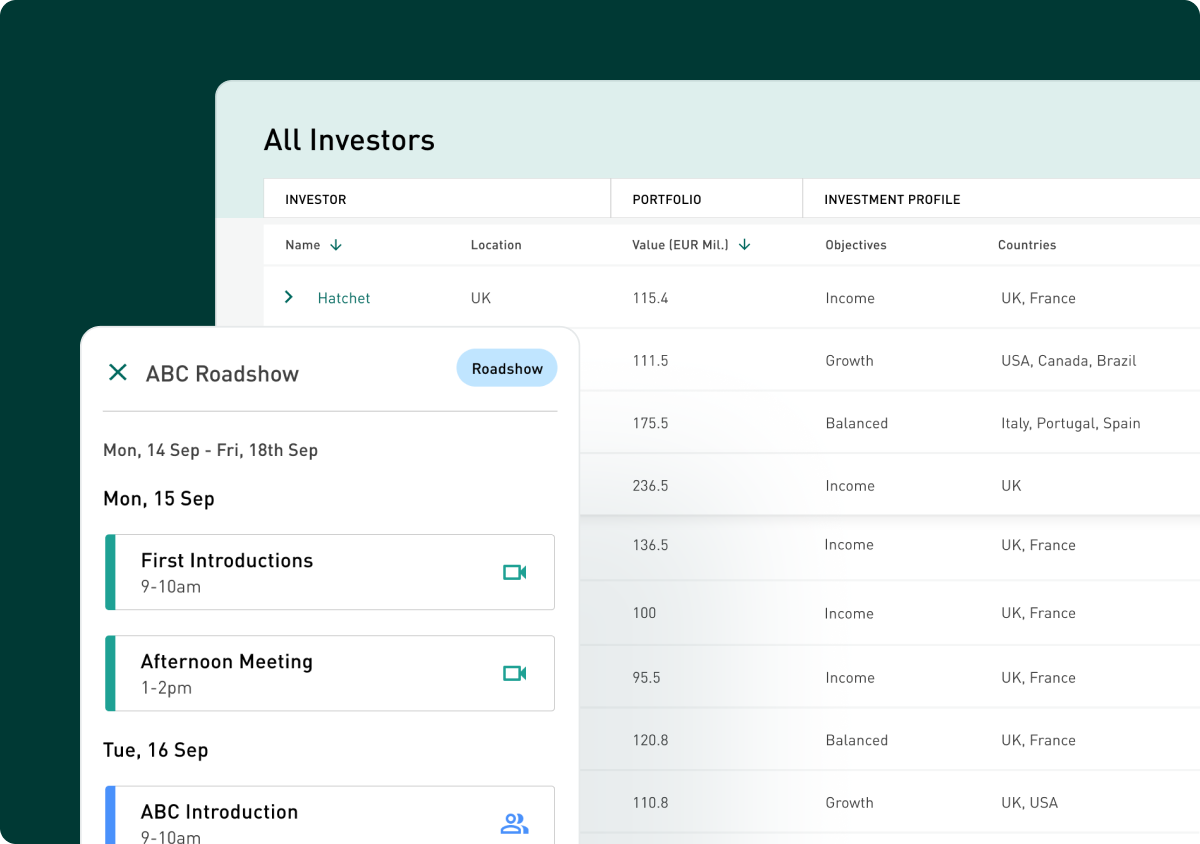
- IR.Manager helps you manage your shareholder mailing lists and document your previous engagements to shape future outreach
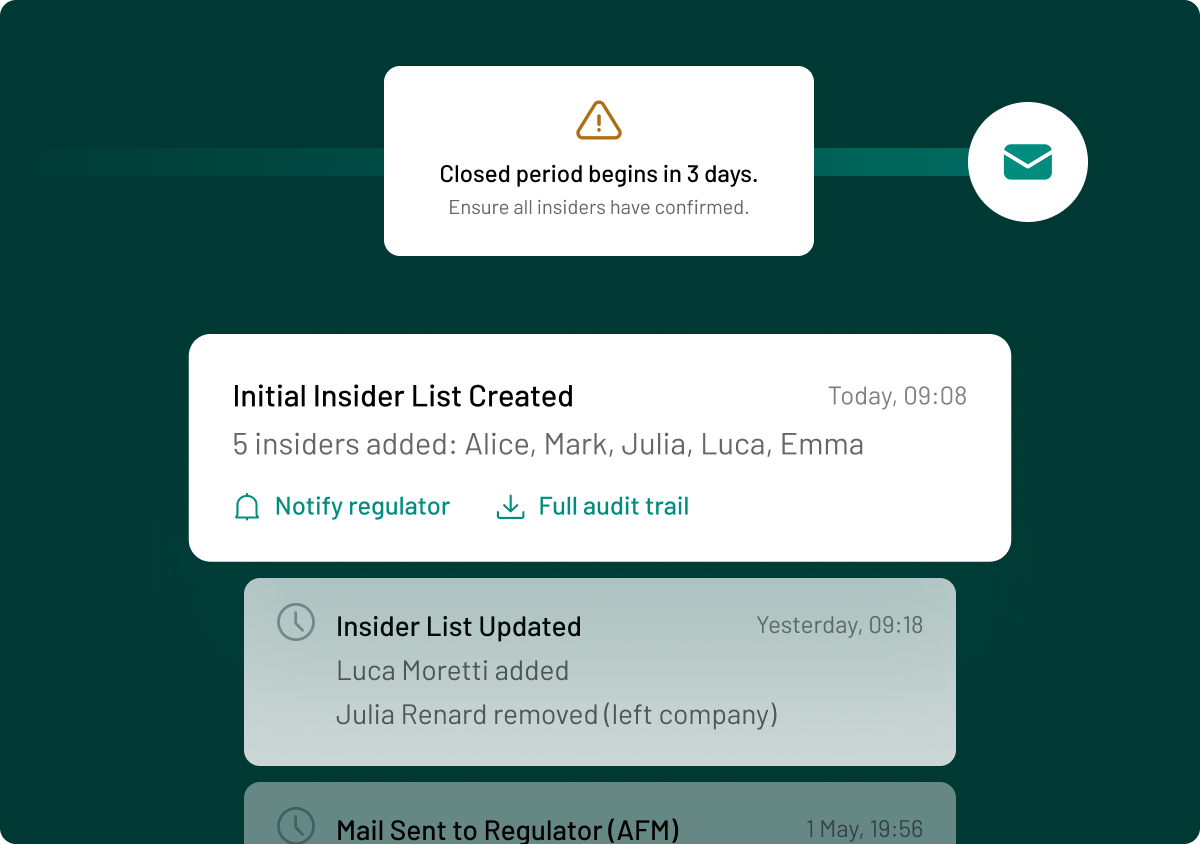
- InsiderLog is an all-in-one MAR compliance tool that, amongst other functionality, streamlines the creation, updating and secure storage of insider lists.
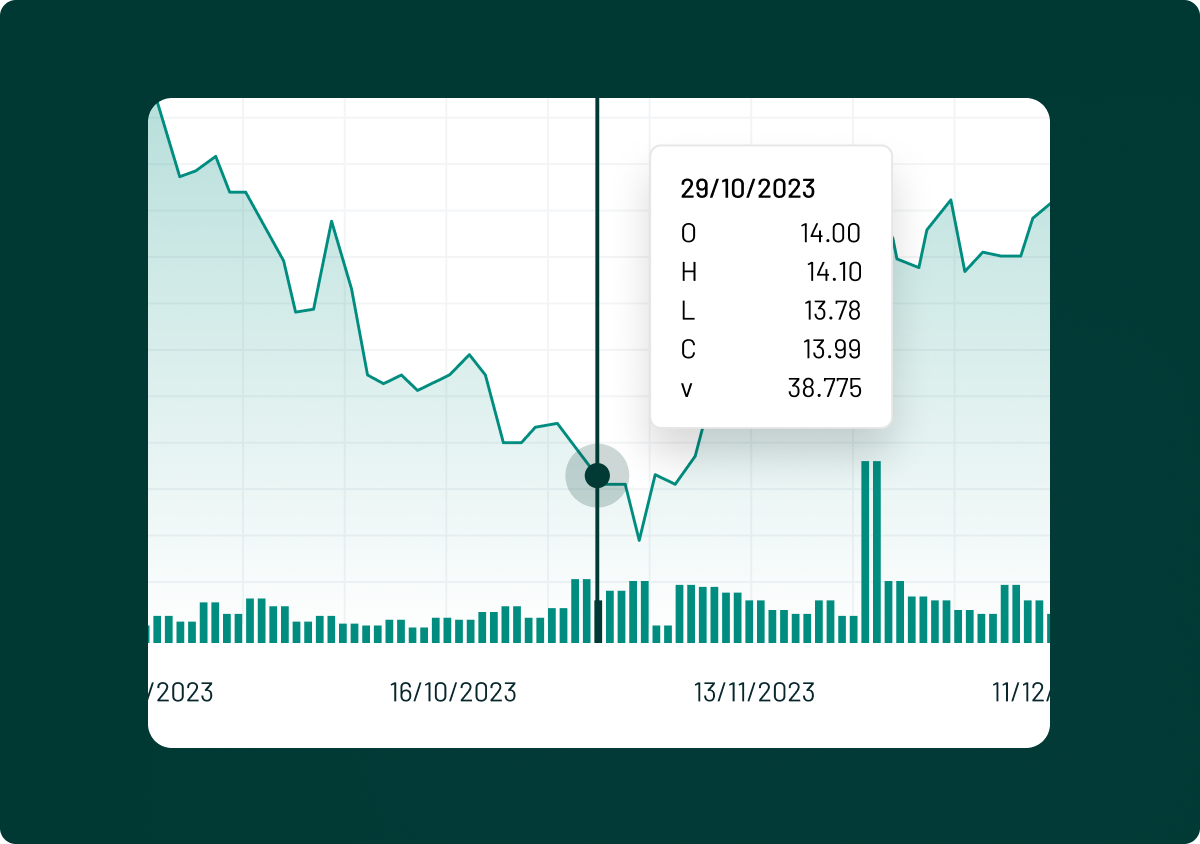
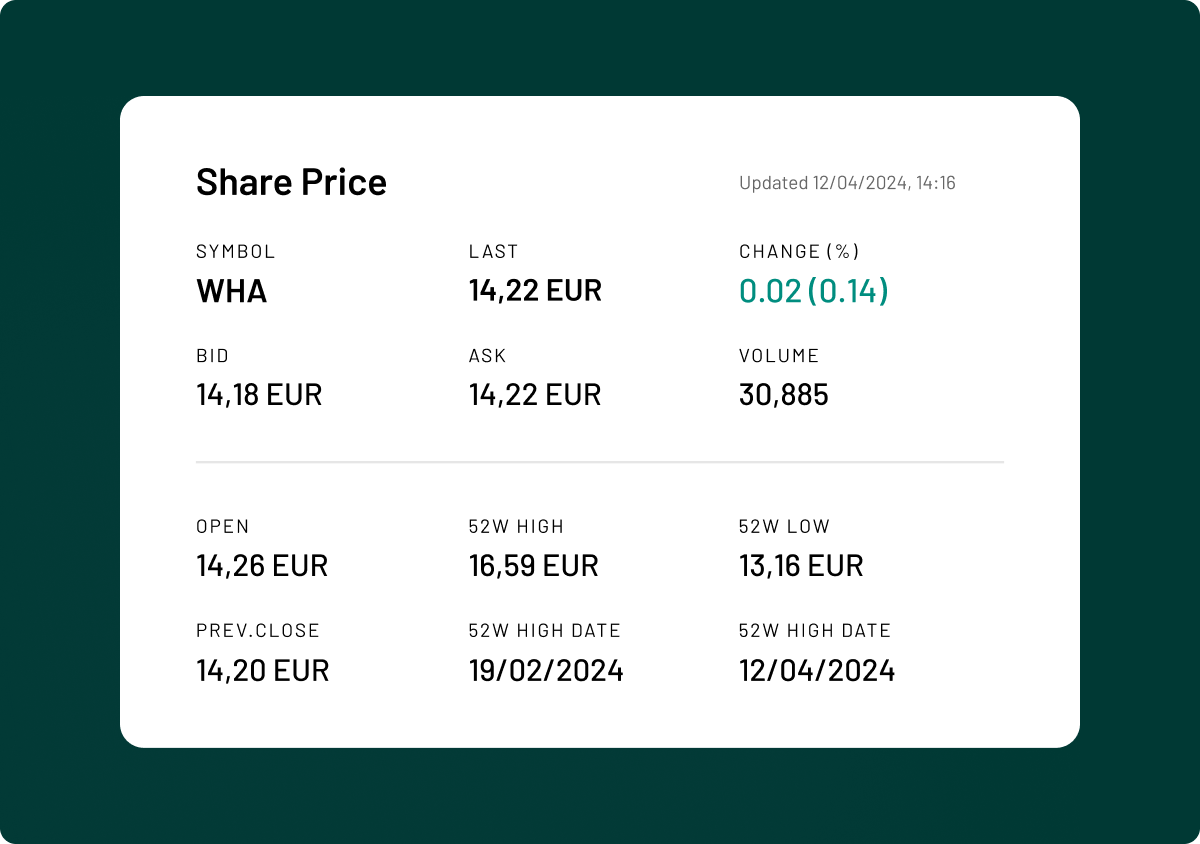
- LiveEquity displays real-time price information and other financial data directly on your website to help you build investor trust.
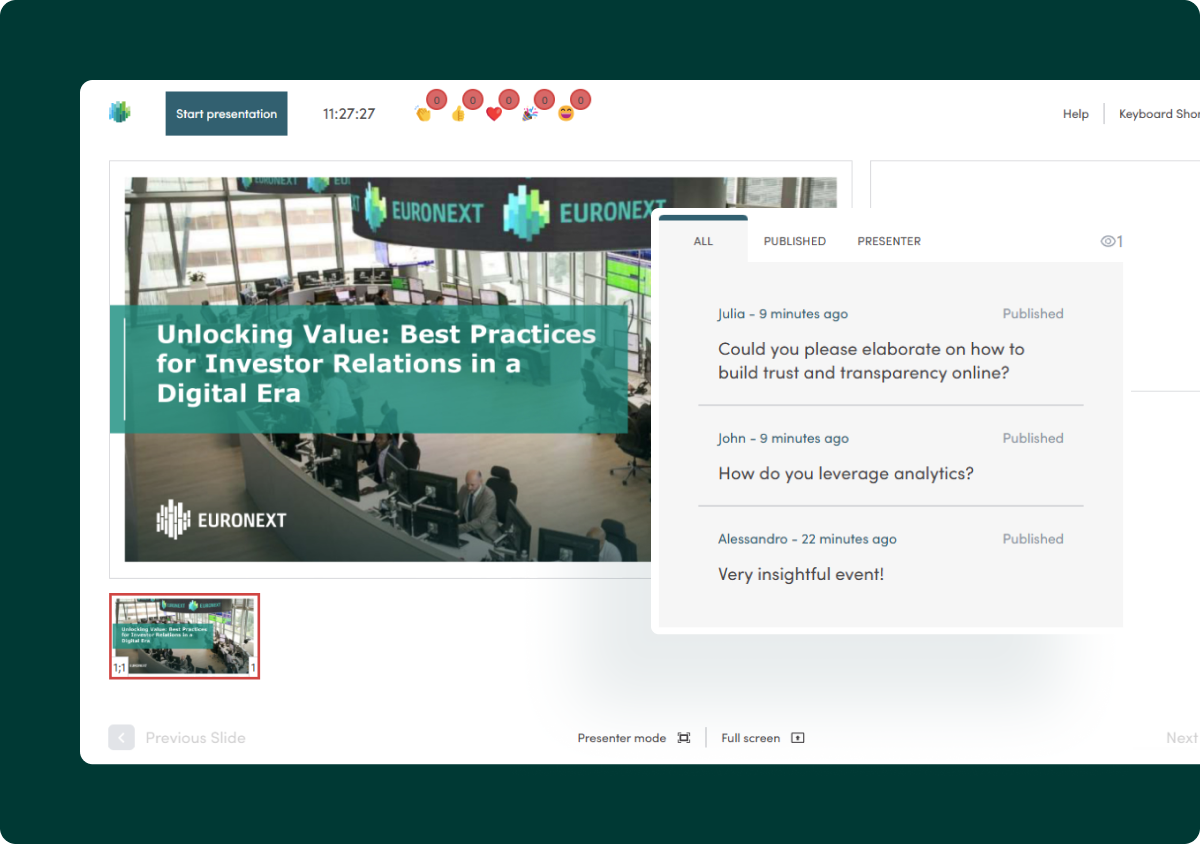
- EngageStream provides a white-glove service to bring professional and engaging webinars to life, helping as many investors as possible connect with your messaging.
FAQ
Financial reporting is your statutory accounts prepared under accounting standards. Disclosure is the legally required, time-critical release of price-sensitive news under market rules. Investor reporting is the broader, ongoing communication (decks, KPIs, calls and other such information) that explains the numbers and outlook.
Investor reports provide context and analysis, while press releases are short, factual announcements used to inform the market quickly. The two must be consistent.
Establish a repeatable structure, set a clear KPI and guidance framework, and keep your IR website, filings and messages perfectly aligned from day one.
At minimum, around each results cycle, plus ad hoc when there is material news. Create regular touchpoints such as calls, roadshows and an occasional Capital Markets Day to maintain engagement.
References and further reading
Related Articles
See all postsGEO for Investor Relations: what AI tells investors about your company
06-08-26
10 Ways AI Is Transforming Investor Relations
11-06-26
Organising IR Events that Drive Engagement
09-06-26
Investor Relations Portal & Software: What Listed Companies Need in 2026
09-06-26
IR Communication Best Practices for Listed Companies
09-06-26