









.png)




.svg)
.svg)
.svg)







.png)
.png)






.jpg)

%20F%20(1).jpeg)







.webp)






 Login
Login
An investor relations calendar organises your interactions with shareholders, ensuring you keep them engaged with the company and meet your regulatory obligations.
Regular communication with your shareholders and potential investors builds a trusting relationship between the parties, as they feel more connected to the company. Adding touchpoints strategically also helps you ensure the required regulatory reporting and disclosure and meeting.
NIRI Research found that 60% of shareholders are dissatisfied with the communication they receive from issuers in which they are invested. However, companies are now attempting to redress the balance by ending what has traditionally been seen as the “off season,” with two-thirds starting to hold shareholder events away from AGM season.
The more events, activities and communications you plan, the better organised you need to be to ensure each is well targeted and crafted to provide value to the investor. This is why an effective IR calendar is so important. This article explains what you should add to your calendar, how to build it and the best practices for maintaining regular and consistent investor communications.
Key takeaways
- An investor relations calendar is the backbone of year-round engagement and helps you hit every regulatory deadline.
- Lock statutory reporting dates, Market Abuse Regulation closed periods and exchange rules first, then build all other activity around them.
- Sequence results, analyst calls and roadshows to avoid information overload whilst leaving space for follow-ups.
- Stress-test capacity and set fall-back dates so delays or market swings do not derail disclosure.
- Investors expect more contact and two-thirds of issuers are now engaging off-season.
Core components of an effective investor relations calendar
Category | Component | Typical timing |
Financial reporting milestones | Financial year end | As per company year end |
Annual results and full-year results | Within four months of year end | |
Interim results | Mid-year, within three months of period end | |
Publication of financial statements, annual report and financial supplement | Around annual results window | |
Governance and shareholder events | Annual General Meeting (AGM) | Typically three to six months after year end |
Extraordinary General Meetings (if applicable) | As required | |
Key shareholder engagement windows | Post-results and within off-season slots | |
Investor and analyst engagement | Analyst conference calls | On results days and ad hoc |
Analysts’ conference and analyst briefings | Once or twice per year | |
Investor Day (Capital Markets Day) | Annually or every 18 to 24 months | |
Investor conference participation | Throughout the year per organiser calendar | |
Media and market communications | Press conference timing | Coincides with full-year or major announcements |
Media conference calls | Results days or major news | |
Coordination with financial publications and press releases | Year-round, tied to milestones |
How to build an investor relations calendar step by step
1. Start with regulatory and exchange requirements
The first step to building an effective and helpful IR calendar is to map the various regulatory and exchange requirements so you can plot all other activity around it and avoid holding events at a time that might lead to non-compliance.
Plan when you need to make your various disclosures for annual and half-year financial reports, for example. Then, build in the Market Abuse Regulation (MAR) 30-day closed periods for people discharging managerial responsibilities (PDMR) before the results announcements.
You may also have internally required blackout periods that need to go on the calendar. Also, check your local exchange for its rules on notice periods and disclosures.
2. Map internal dependencies
Input information on your internal financial close cycles so that it is embedded in your IR calendar. This helps you plan when elements need to be submitted so there is time to add them into investor presentations and other materials. Set out time for drafting, reviewing and signing off the numbers for month-end and quarter-end and plan communications accordingly.
Include time for board and committee approvals on results, dividends, AGM materials and other time-sensitive actions. You can also schedule external audits and advisers so that you can plan when you will be able to share information with shareholders.
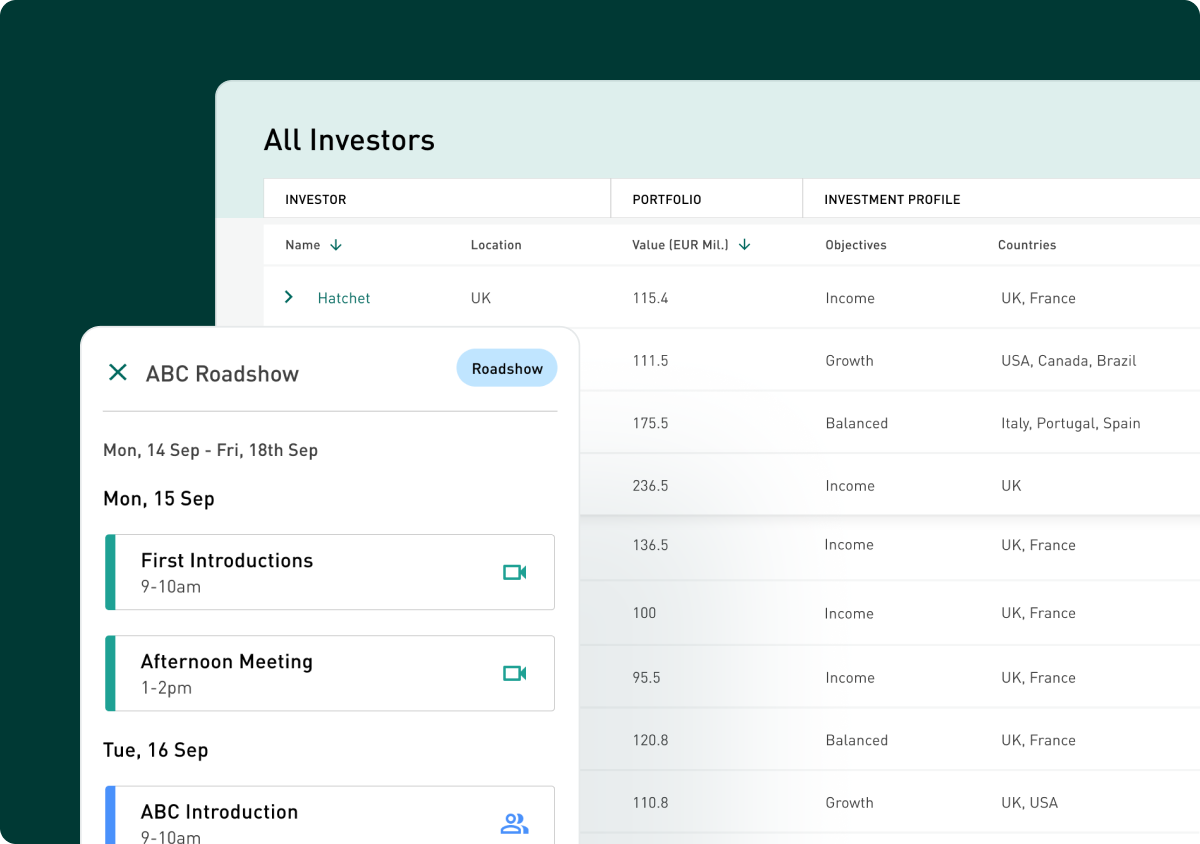
3. Layer in investor-facing events
Investor-facing events are essential to a robust IR strategy, but you must ensure you get the timing right. Too close together and you risk information overload. Too close to the release of results or another major event and you might not give yourself enough time to formulate an effective narrative. But too long after an event and you could be accused of not being transparent.
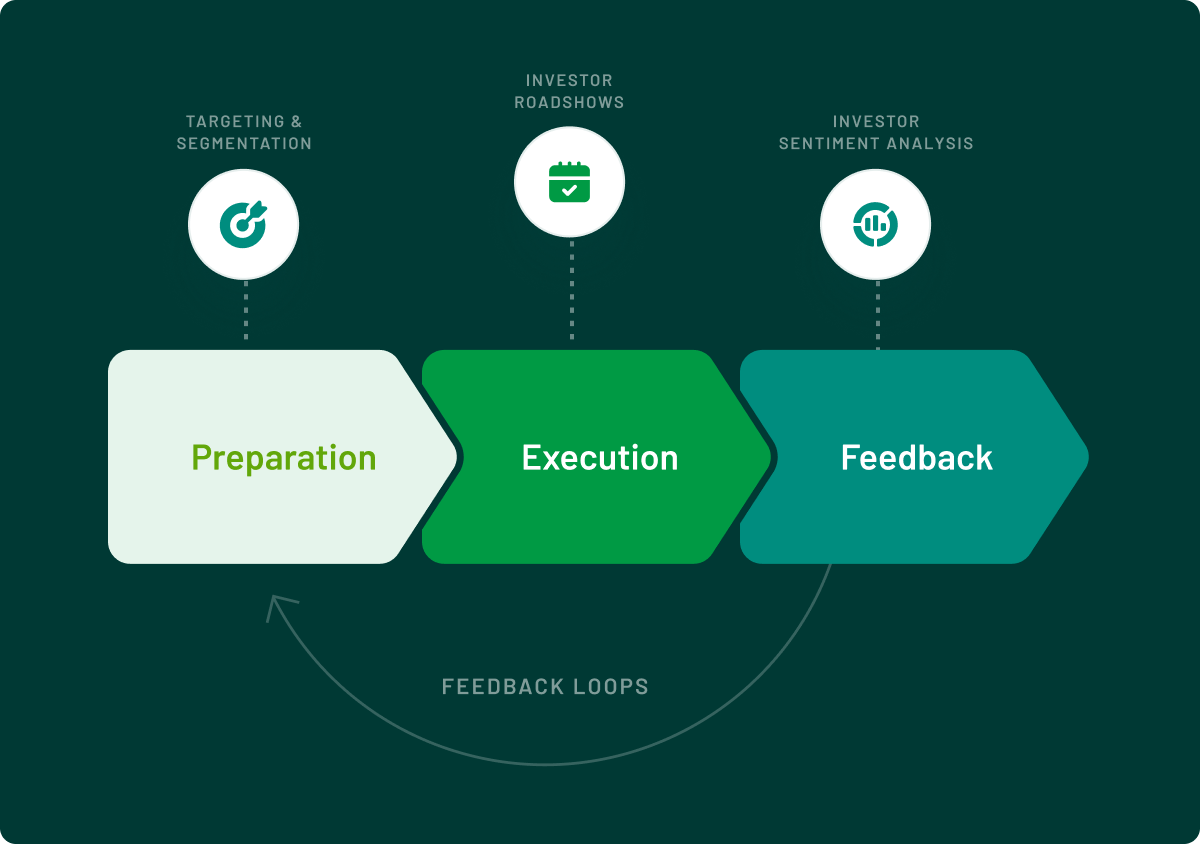
Schedule the events to reflect how you want the story to unfold. For example:
Avoid planning multiple checkpoints for the same week, as this can overwhelm busy investors.
Stress-test the calendar
When you have developed your calendar, you must make sure it actually works for your team. Carry out capacity planning by mapping the workloads of relevant departments, such as financial, legal and IR, as well as checking the availability of external parties needed for IR events, such as auditors, design teams and webcasting solutions.
Carry out scenario planning to see how disruptions like delays or market volatility might affect the planned events and book fall-back dates in case the board needs extra time or you need to adjust the tone of your messaging.
Best practices that set leading IR teams apart
- Consistency and predictability are important for institutional investors who have multiple issuers’ financial instruments in their portfolios and, therefore, many demands on their time. If they can be certain when you will plan IR activity and can trust that you will deliver it reliably, this helps them organise their calendars accordingly.
- Integration across teams is essential to ensure that you develop an IR calendar that works for all internal stakeholders. With input from other functions, you can ensure that you do not overload people at their busiest times, you create an achievable workflow and you give them fair warning of when they will be required to carry out tasks related to the calendar activities.
- Balancing transparency with flexibility is all about achieving a fine balance. You want your IR calendar to be public and to give fair warning of activity to relevant stakeholders, but there is also the risk that dates might have to change according to external conditions. Present your IR calendar early, but with the caveat that it may have to change and that you will endeavour to give as much notice as possible.
Practical examples of investor relations calendars
1) Small-cap vs large-cap issuer calendars
Month | Core IR actions |
Jan–Feb | Publish year-end trading update (if used). Lock audit timetable. |
Mar–Apr | Full-year results release, webcast, Q&A. File annual report. |
May–Jun | AGM. Two or three broker-led non-deal roadshow days. |
Jul–Aug | Half-year close and prep. |
Sep | Half-year results, webcast, transcript. |
Oct–Nov | One or two investor conferences. Targeted follow-ups. |
Dec | Quiet period planning for next year. |
Lower frequency of conferences and updates than a large cap, simpler materials, tighter focus on core holders. One Capital Markets Day every 18 to 24 months is usually enough.
Month | Core IR actions |
Jan | Year-end pre-close call. Sell-side model clinic. |
Feb–Mar | Full-year results day with media and analyst calls. Roadshow for up to two weeks. |
Apr | AGM. Thematic teach-ins for ESG, tech or product. |
May | Major investor conference season. |
Jun | Capital Markets Day with medium-term targets. |
Jul | Half-year pre-close. |
Aug | Half-year results. Two-week roadshow. |
Sep–Nov | Heavy conference circuit and site visits. |
Dec | Index review engagement and stewardship meetings. |
More touchpoints, broader geography, bespoke sessions for different investor styles, regular teach-ins and CMDs.
Month | Pan-EU actions |
Jan–Feb | Pre-close calls in English plus local language media briefings where material. |
Mar | Full-year results. London, Paris, Frankfurt roadshow legs. |
Apr | AGM notice and stewardship outreach across top holders in UK, FR, DE, NL. |
May–Jun | Spring conferences across Europe. |
Jul | Pre-close. Local radio or press for key markets. |
Aug | Half-year results. Dual-language webcasts. |
Sep–Oct | German, Nordics and pan-EU conferences. Plant tours or site visits. |
Nov–Dec | Thematic ESG or product teach-ins. Next-year guidance framework. |
Key disciplines: Tight translation workflow, simultaneous disclosure across markets, time-zone friendly slots and consistent messaging regardless of venue.
3) ESG-led calendars (integrating sustainability)
Month | ESG-centred actions |
Jan | Confirm double materiality topics and assurance scope. |
Feb–Mar | Full-year results include ESG KPIs and targets. |
Apr | Publish Annual Report with ESRS content and ESEF file. |
May | Stewardship meetings on say-on-climate, governance and pay. |
Jun | Capital Markets Day with an ESG session or a standalone Sustainability Day. |
Jul | External frameworks and surveys window. |
Aug | Half-year results with ESG progress snapshot. |
Sep–Oct | ESG conferences and thematic roadshows. |
Nov–Dec | Year-end progress review, target refresh for next year. |
What makes it ESG-led: Regular KPI updates, investor days that tie sustainability to returns, proactive stewardship engagement and clear assurance milestones so the data is decision-useful.
Common mistakes to avoid
- Overloading the calendar with low-impact events makes investors feel like their time is not being used best, leading to them pulling away from attending your activities and potentially missing important matters as a result.
- Poor coordination between results and communications can mean that you either make announcements without taking time to develop the story and the “what next?” or you take too long and risk the impression that you have something to hide.
- Last-minute changes can erode credibility if they happen too often or are deemed to be avoidable. Try to communicate adjustments to your IR calendar as soon as you can to ensure all relevant parties can attend.
- Treating the calendar as a static document means that you are not agile to adjust to changing circumstances. If the market becomes more risk averse, for example, you might need to change your communication process and messaging. If roadshows go well and there is still demand, add more virtual meetings to engage more investors. Be prepared to be flexible.
Your investor relations calendar is a powerful tool for connecting your company with your investors and keeping them engaged throughout the year. It gives you insight into your activities and allows you to meet all legal requirements and spread out other engagement so that you keep your company at the forefront of investors’ minds.
Euronext Corporate Solutions provides an impactful solution to help you plan and execute a robust investor relations programme. From identifying and targeting the right investors to managing stakeholder relationships and refining your capital markets messaging, it helps you run your engagement in a meaningful and measurable manner.
FAQ
Publish at the start of your financial year, signal results and AGM dates six to 12 months ahead, then add other events on a rolling quarterly basis.
A financial calendar lists statutory reporting and meeting dates, while an investor relations calendar also includes roadshows, conferences, earnings calls, webcasts and planned media activity.
Review it monthly and update immediately when dates change or new events are confirmed, keeping market disclosures and your website in sync.
References and further reading
Related Articles
See all postsGEO for Investor Relations: what AI tells investors about your company
06-08-26
10 Ways AI Is Transforming Investor Relations
11-06-26
Organising IR Events that Drive Engagement
09-06-26
Investor Relations Portal & Software: What Listed Companies Need in 2026
09-06-26
IR Communication Best Practices for Listed Companies
09-06-26