









.png)





.svg)
.svg)
.svg)







.png)
.png)






.jpg)

%20F%20(1).jpeg)







.webp)






 Login
Login
The process of carrying out mergers and acquisitions (M&A) is undergoing significant transformation, given the advances in artificial intelligence (AI), an uncertain business environment and greater regulatory scrutiny.
PwC reports that AI impacts the M&A process in three main ways:
- Companies from across the spectrum of sectors are looking to make deals with organisations that can provide them with access to advanced AI solutions that improve analytics and data capabilities.
- Those businesses already in the AI sphere are strategically targeting M&A related to infrastructure, such as data centres and energy generation.
- AI solutions are helping companies target suitable M&A opportunities, improving their due diligence processes.
Elsewhere, geopolitical matters and cost-of-living concerns have injected risk into the process of deal-making. However, the growth in European deal values towards the end of 2025 and heading into 2026 signifies optimism in the market. Additionally, a public consultation into revisions to the European Merger Regulation (EUMR) suggests that the union is looking to help companies better navigate the current landscape.
For corporate teams looking to head into the M&A process, this guide will help you understand who is involved, what the life cycle looks like and how to carry out due diligence to ensure you meet your regulatory and legal obligations when making a deal.
- Mergers and acquisitions are evolving quickly due to AI, increased regulation and changing market conditions across Europe.
- Companies are using M&A to increase market share, find cost synergies and access new technology, infrastructure and innovation faster than building it themselves.
- A successful M&A process follows a structured life cycle, from strategy and target selection through to integration.
- Due diligence is critical to uncover financial, legal, operational and cultural risks before finalising a deal.
- Many stakeholders are involved in M&A, each playing a key role in valuation, compliance, negotiation and execution.
- Secure virtual data rooms are essential for managing sensitive information, collaboration and regulatory obligations during transactions.
What are mergers and acquisitions (M&A)?
Mergers and acquisitions are financial transactions that consolidate the assets of two or more companies. In broad terms, here are the definitions of the two different elements of M&A:
- A merger is when two companies of similar stature join together and create a new organisation as a result.
- For example, energy producer TotalEnergies merged its Upstream business with oil and gas firm NEO NEXT, naming the resulting organisation NEO NEXT+.
- An acquisition happens when an organisation absorbs all or some of the assets of another company into its existing structure.
- For example, Universal Investment Group agreed to acquire Swedish management company FCG Fonder AB to boost its operations in the Nordics.
Within the umbrellas of mergers and acquisitions, there are a number of different potential deals:
- Buying all the assets of another company and folding it into your structure so that company no longer exists.
- Bringing two entities together to form a brand new organisation.
- Buying some of the major assets of another company through an Assets Purchase Agreement (APA) and absorbing them into your business whilst the other company continues at a smaller scale.
- Carrying out a hostile takeover by bypassing management and making tender offers to shareholders for their stock, buying shares on the open market or convincing shareholders to replace the board of directors with a new board that is sympathetic to a takeover from your company. The latter method is sometimes referred to as a proxy fight.
Key stakeholders involved
| Stakeholder | Role in the M&A process |
|---|---|
| Buyers | Acquire the target company, lead negotiations, take care of financing and integration planning. |
| Sellers | Offer the business for sale and provide information required for valuation and due diligence. |
| Board of directors | Oversee the transaction, ensure the process meets governance standards and approve major decisions. |
| Executive management | Support negotiations, provide operational insight and help plan post-deal integration. |
| Shareholders | Approve the transaction where required and ultimately benefit from or fund the deal. |
| Investment bankers | Structure the deal, advise on valuation and help source buyers or financing. |
| M&A advisors | Guide strategy, timelines and negotiations throughout the transaction. |
| Legal advisors | Handle contracts, regulatory filings and legal risk management. |
| Financial advisors | Analyse financial performance, risks and deal structures. |
| Due diligence teams | Review legal, financial and operational information to assess risks and opportunities. |
| Auditors | Verify financial data and ensure accuracy of reported information. |
| Valuation experts | Provide independent assessments of company value drivers and deal fairness. |
| Regulators | Review transactions for legal and compliance requirements. |
| Competition authorities | Assess whether the merger could reduce market competition or create monopolies. |
| Financing providers | Supply loans or capital to fund the acquisition. |
| Private equity sponsors | Invest in or back the transaction, often driving strategy and returns. |
| Integration teams | Combine systems, processes and people after the deal closes to ensure ongoing smooth operations. |
The M&A life cycle
Assessment and preliminary review
The first stage of the M&A process is to define why your company wants to pursue a merger or acquisition. Some of the reasons organisations look to merge with other companies or acquire an entity include:
- Driving rapid growth quickly to increase the organisation’s footprint in the industry
- Expanding into new markets and regions without having to start from scratch
- Acquiring new skills, capabilities or assets that complement your existing offering, including new technologies, patents or intellectual property
- Diversifying your offering to reduce the business risk of being reliant on a limited number of products, services or customer bases
- Acquiring talent from high-performing teams with specialised expertise
- Eliminating competition in the market by acquiring a peer, stabilising prices and growing your competitive positioning.
Understanding the end goal will help you plan whether to aim for a merger or acquisition and establish your risk appetite and financial capacity for the move. This informs your M&A strategy.
Conduct high-level market research to gain insight into market trends, allowing you to focus only on potential deals that are in the long-term best interests of your company.
Screen and shortlist potential targets
Now you have a clear strategic rationale and criteria for your merger or acquisition, you can focus on identifying best-fit targets. Narrow down the field using a range of parameters, including:
- Size of the business
- Location of its operations and customer base
- The products or services it offers
- Who its customers are
- The financial performance of the business.
Look into the companies that meet your criteria and then seek out public information about them, industry reports and insight from your advisor networks to narrow down the search further.
Assess each target against factors like growth potential, cultural fit and the strategic value you would gain from making the move. This should leave you with a collection of strong targets that you can approach.
Make the initial approach
You or your advisors then reach out to your shortlisted targets, either directly or through an intermediary, such as an investment bank.
Initially, this is informal and used to ascertain the selling company’s willingness for a discussion about a deal. If they are open to it, you can ask further questions about their business to test strategic fit and the potential value of pursuing the deal.
This stage is about building a relationship between both entities and understanding whether it is worth both parties moving forwards with discussions.
Sign non-disclosure agreements and start an insider list
Once you move from a vague approach to a more solid and specific move, you should sign a non-disclosure agreement (NDA) to protect the integrity of the confidential and sensitive information that the parties will share. This includes financial information, customer details and strategic plans. This helps build trust before you get into meaningful discussions.
| At this stage, you might also cross the threshold into inside information under the EU’s Market Abuse Regulation. This is: specific, non-public information that, if made public, would move the price of a financial instrument and which a reasonable investor would likely use as part of their investment decision basis. |
|---|
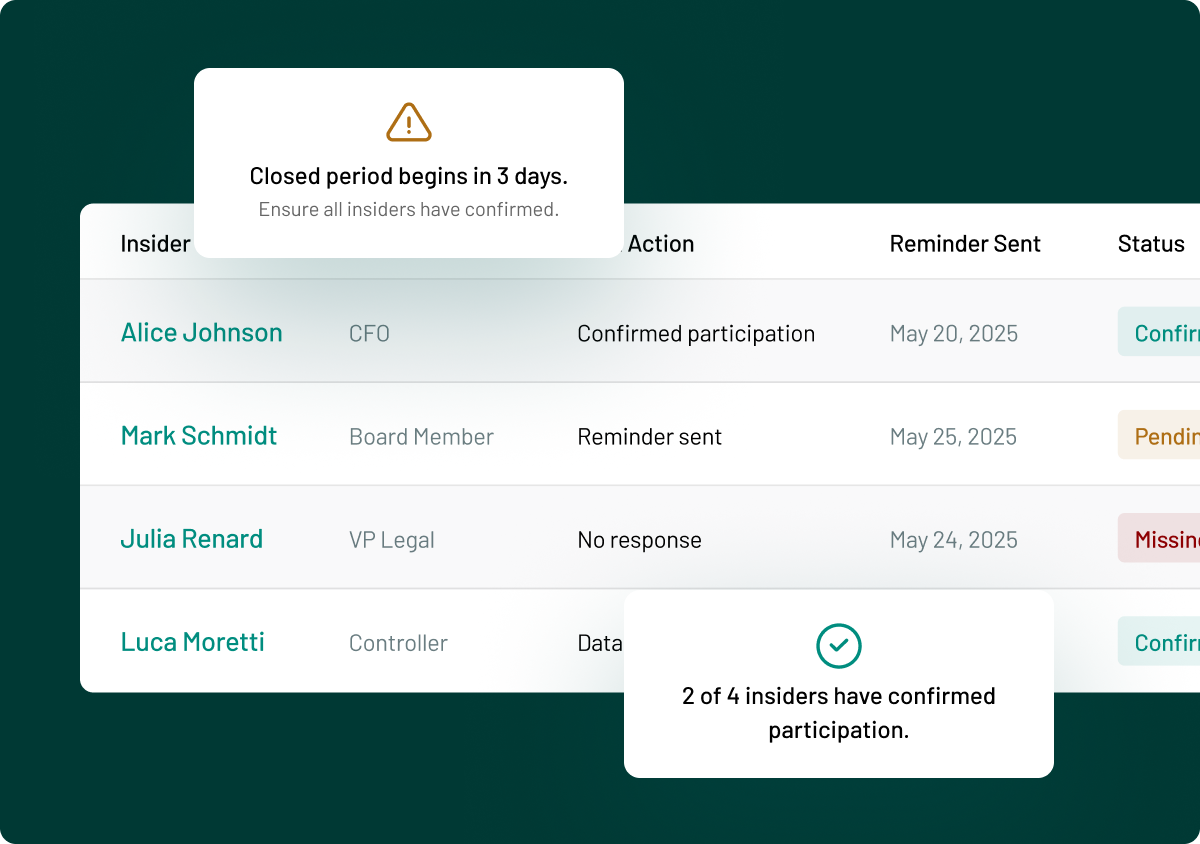
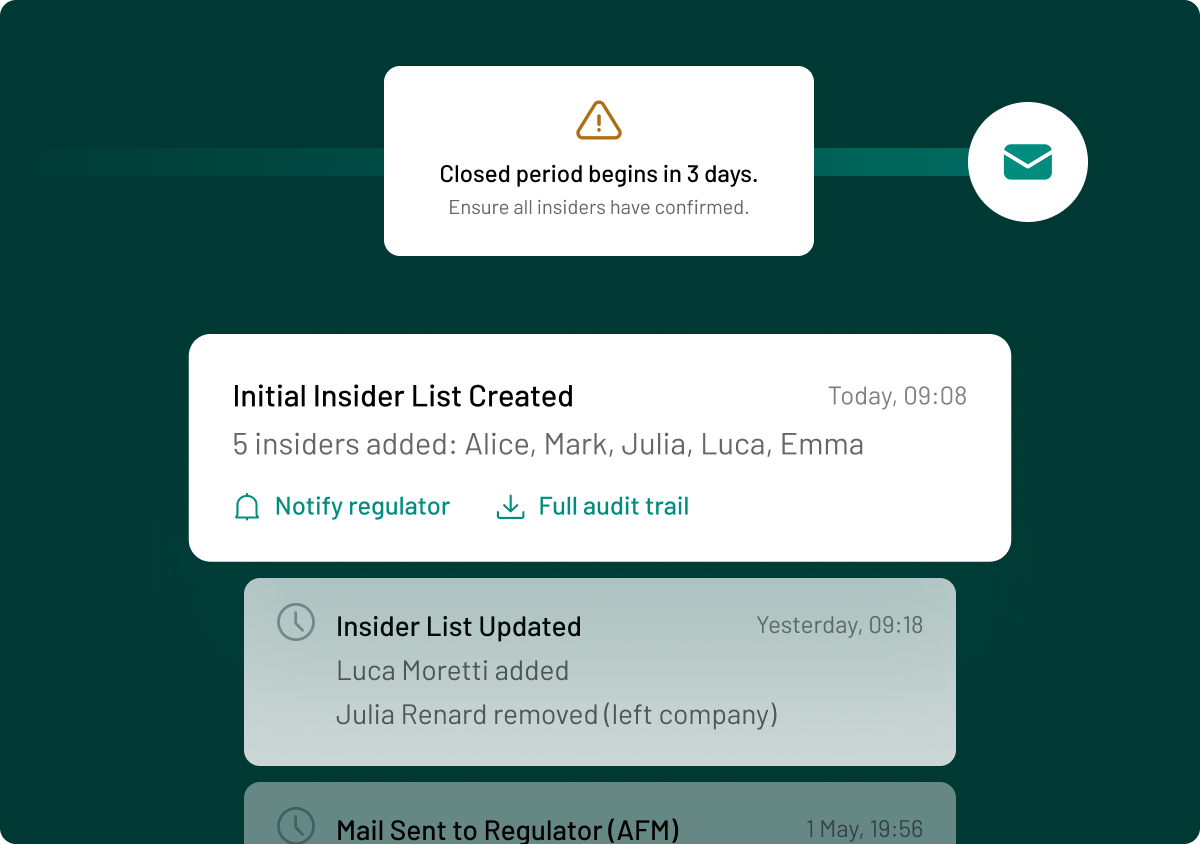
If either company is listed, public knowledge of the potential deal might move share prices, meaning the M&A counts as inside information and requires you to create an insider list. This details all people with knowledge of the deal and is meant to discourage them from using the information to commit insider dealing.
Submit indicative offers
Review the information received from the target and submit an indicative offer in a letter of intent. This is non-binding at this point and tells the target the purchase price range you feel is acceptable, as well as details of the structure of the prospective deal.
You will likely be basing this letter of intent offer on limited information, but it gives the seller an idea of whether it is worth moving forward with the proposal.
Agree on valuation range
The parties should discuss the indicative offers and work together to negotiate a valuation range that both consider reasonable. At this point, you will have access to detailed data regarding financial performance, growth forecasts, market conditions and risks.
Your advisors will also help by providing financial modelling and contextualising the potential deal against similar M&As carried out in the market.
Once you have an agreed range, although it is not finalised, it sets expectations and provides the basis for your due diligence and ongoing negotiations.
Conduct due diligence
During due diligence, you evaluate the risks and opportunities inherent in the deal to understand whether the potential rewards are worth that risk. This is related to the operations, financial position, human resources records, compliance framework, assets and liabilities of the target company.
The selling company provides the buyer with relevant documentation and must be open to answering questions from the buyer over the course of the following weeks as the due diligence process continues.
The seller usually shares these documents in a virtual data room (VDR), which is designed to protect the integrity of high-stakes business information.
Negotiate final terms
You should agree on the final deal structure, purchase price and legal agreements based on the outcome of your due diligence. Include payment terms, liabilities and conditions for closing in the contract, which your lawyers should draft and review.
Each party should feel their interests have been protected and that the purchase price works for them. It may take several rounds of negotiation to reach the ideal final terms for both sides of the deal.
Close the transaction
When both sides are happy, they should sign the agreements. The deal will then need regulatory approval before it can be completed formally. Transfer the funds and publicly announce the transaction has taken place.
At this point, you should disclose the inside information to the regulator, industry press and on your website. Under the EU Listing Act, you only need to disclose insider information on the final event of a protracted process, such as M&A.
Execute post-merger integration
The process doesn’t end when you sign the deal. You need to bring together the organisations, either folding the acquisition into your operations or developing a new, joint entity.
This means aligning systems, processes, cultures and staff responsibilities. For instance, you need to consider how you combine your IT platforms and restructure departments whilst maintaining clear communication with your employees and customers.
Robust integration is the key to making your M&A a success.
How to run M&A due diligence
- Assess financial performance and risks by reviewing the seller’s historical statements, budgets and forecasts. This helps you understand revenue trends and the long-term profitability of the organisation. Look at the debt levels, working capital and any off-balance-sheet liabilities. Analyse the financial risks, such as rising costs or weak margins.
- Review legal and regulatory exposures by examining the company’s key contracts, licences, permits and corporate documents. Check it has a proper structure and adheres to the necessary laws and regulations. Consider whether it meets data protection protocols and industry-specific requirements. If the company does not operate in your jurisdiction, there may be a misalignment of compliance requirements that you will need to address when you close the deal.
- Analyse commercial potential by looking at its market position and customer base. Consider the competitive landscape and assess its prospects for growth. This involves looking into the seller’s major contracts and sales pipelines.
- Look into strategic fit by considering how well the target fits with your long-term strategy, products and the markets in which you work. Uncover any cross-selling opportunities and think about where you can save on costs.
- Evaluate operations and technology, including its supply chains, production processes, IT systems and internal controls. How efficient are the seller’s operations and are they scalable and resilient? Analyse the weaknesses, such as outdated technology, manual processes or heavy reliance on key individuals.
- Examine ESG, culture and people factors to identify compliance issues or reputational risks. Review the workplace culture in the target organisation to gain a picture of leadership styles and employee engagement. This will give you an idea of how well the teams may integrate post-deal. Consider diversity, health and safety and sustainability practices as well as other aspects of employment law. These factors increasingly influence deal value and long-term success, as poor culture can undermine even strong financial performance.
When is the time for M&A?
There are many different reasons to consider M&A, depending on where you are in your corporate journey. Here are some examples of times when considering a merger or acquisition makes sense for a company:
- When you want to accelerate the growth of your business and expand your market share: Buying an existing business opens you up to its current customer base and immediately increases the size of your business and its capabilities. With thorough due diligence, this can prove to be a successful growth strategy.
- Capture capability, cost and revenue synergies: Sharing customers, skills and resources after M&A allows you to make a more efficient process for your operations, reducing duplicated costs and opening up new revenue opportunities.
- Access innovation, technology and know-how: Innovation is the key to building a sustainable, competitive and growing business. Rather than starting from scratch, acquiring or merging with another company that has developed new and efficient technologies gives you faster access to their capabilities and the expertise of those currently using them.
- Reshape and diversify the business portfolio: Relying on a single revenue stream is a risky strategy, making a merger or acquisition tempting to help you enter new markets and sell new products or services. It can be advantageous for long-term stability.
- Defend against disruption and competitive threats: Where there are fast-growing competitors or alternative business models in the market, they can reduce your competitive edge. M&A removes direct competition and helps you scale to compete on price, reach and innovation.
Common challenges to M&A deals
There are many challenges to a successful M&A deal. Here are some of the most common reasons why they might affect the execution of your deal.
| Challenge | Brief explanation |
|---|---|
| Valuation gaps | Buyers and sellers may disagree on the company’s true value, which can slow or block negotiations. |
| Incomplete due diligence | Missing key information can lead to poor decisions and unexpected problems after the deal closes. |
| Hidden liabilities | Undisclosed debts, legal claims or compliance issues can reduce deal value and create future costs. |
| Data quality issues | Inaccurate or poorly organised data makes analysis difficult and increases risk. |
| Deal structure complexity | Complex payment terms, earn-outs or tax structures can cause confusion and disputes. |
| Regulatory approvals | Deals may require approval from regulators, adding time and uncertainty. |
| Antitrust concerns | Authorities may block or restrict deals that reduce market competition. |
| Financing constraints | Limited access to funding can delay or prevent the transaction. |
| Cultural mismatch | Differences in company culture can reduce morale and hinder integration. |
| Management misalignment | Leaders may disagree on strategy, priorities or how the combined business should operate. |
| Integration complexity | Combining systems, processes and teams can take longer and cost more than expected. |
| IT systems incompatibility | Technology platforms may not work well together, requiring costly upgrades or replacements. |
| Talent retention risk | Key employees may leave due to uncertainty or poor communication. |
| Communication breakdown | Lack of clear communication can create confusion among staff, customers and partners. |
| Timing delays | Extended negotiations or approvals can increase costs and lead to deal fatigue. |
| Synergy overestimation | Expected cost savings or revenue growth may not materialise as planned. |
| Post-merger execution risk | Poor planning or leadership can prevent the combined business from achieving its goals. |
Frequently Asked Questions
A merger is when two companies combine to form a new organisation, often as equals. An acquisition is when one company buys and takes control of another.
Advisors guide strategy, valuation, negotiations and regulatory processes to reduce risk and improve deal outcomes. They also help connect buyers and sellers and manage complex stages of the transaction.
Most deals take several months, often ranging from six months to over a year, depending on complexity and approvals. Larger or regulated transactions usually take longer.
Success is measured by whether the deal achieves its strategic goals, such as growth, cost savings or market expansion. Financial performance, smooth integration and how well you retain talent are also key indicators.
The mergers and acquisitions process can be complicated and drawn out, but there are significant opportunities to improve your competitive edge, scale quickly and access new markets, amongst many other benefits. However, it takes patience and precision in your preparation and due diligence to ensure that you target the right companies and that they are the best fit for your strategy and future growth prospects. M&A are business-sensitive workflows and require a secure virtual data room to facilitate ongoing conversations and document sharing between the companies in a manner that maintains their privacy and integrity.
Request a demo