









.png)




.svg)
.svg)
.svg)






.png)
.png)





.jpg)

%20F%20(1).jpeg)







.webp)






 Login
Login
The need for secure data handling has never been so important. The Cyber Security Breaches Survey found that attacks on entities in the EU counted for 46.5% of global targets during H1 2023. For instance, in February 2024, French healthcare payment providers Viamedis and Almerys had their systems breached within a week of each other. This compromised the data of half of the country’s population; 33 million people.
If high-level, sensitive business information is vulnerable to attack, it can lead to a loss of competitive edge, reputational damage and, especially where you are handling other parties’ data, a breakdown of trust.
A recent survey of industry experts found that 81% think organisations that can demonstrate a commitment to improving digital trust will be more successful in the long run. This is especially true when it comes to managing important processes, such as mergers and acquisitions and investor fundraising. In these situations, a secure virtual data room is key to allowing safe document sharing and collaboration between stakeholders involved in major deals.
This article answers the question ‘what is a virtual data room?’ and explains which features you should consider when finding your company’s ideal solution.
Key takeaways
- Cyberattacks are now common, making secure handling of sensitive business information essential for protecting trust, reputation and the outcomes of deals.
- A virtual data room provides a secure, central platform for managing documents and collaboration during high-stakes processes such as M&A, fundraising and audits.
- Strong document security features, such as encryption, access controls and full audit trails, help organisations reduce data leak risks and meet regulatory requirements.
- Virtual data rooms speed up the due diligence process by organising information clearly and reducing manual back and forth between stakeholders.
- Choosing the right VDR means balancing ease of use, predictable pricing and robust security standards to support both compliance and efficient deal execution.
What is a virtual data room?
A VDR or virtual data room is an online platform where you can store, distribute and collaborate on documents relevant to sensitive business activities, such as:
- Mergers and acquisitions
- Fundraising from investors
- Managing intellectual property
- Due diligence relating to a range of corporate transactions
- Auditing company functions.
A VDR is the digital equivalent of historic physical data rooms, where confidential information was held securely in paper form. Taking this concept online can protect information further, thanks to features such as access control, encryption and GDPR-compliant protocols.
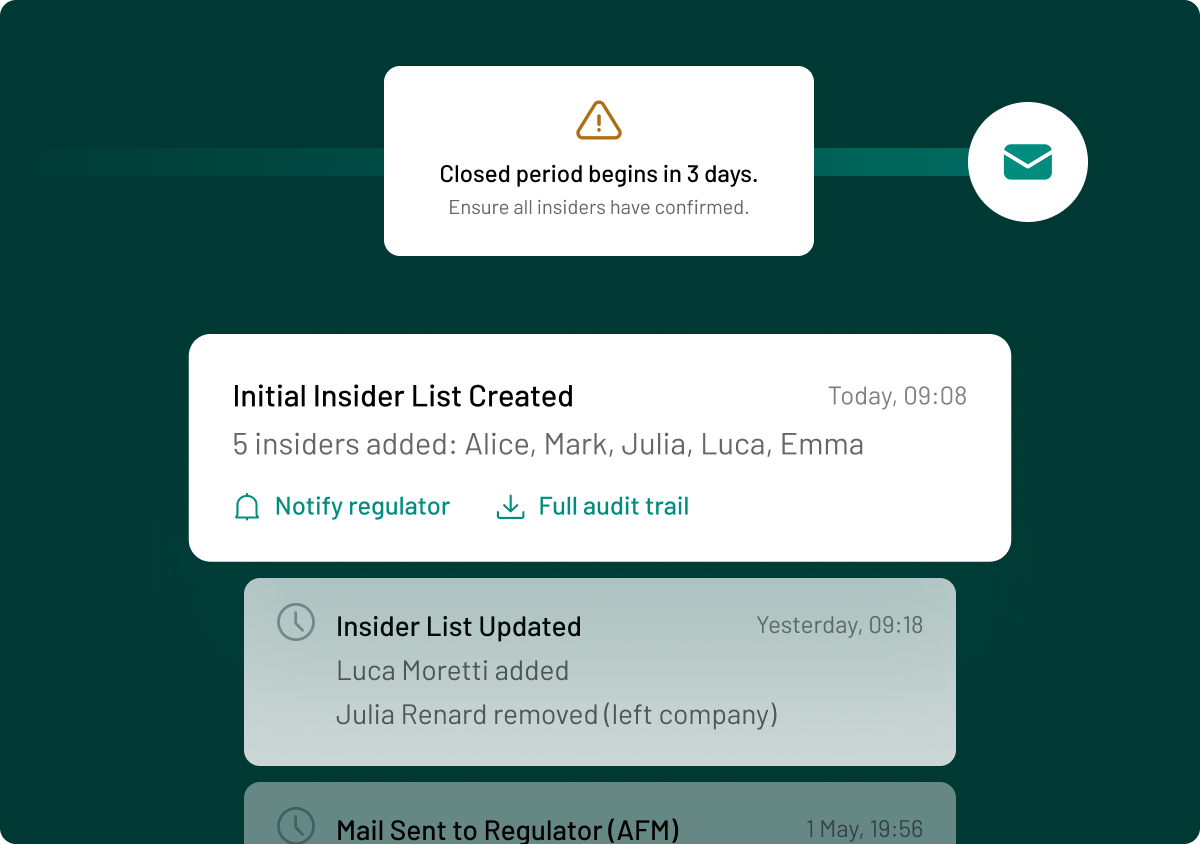
Virtual data room solutions provide an audit trail of who accessed which document and when, as well as the adjustments made to that information. You can manage projects within some data rooms, tracking progress towards the completion of tasks, and users can sometimes work together on confidential documents, writing notes and communicating securely within the VDR.
Why use a virtual data room?
- Enhance secure collaboration. Take advantage of the additional layers of protection provided by a VDR, so that parties involved in the project can discuss important matters in the knowledge conversations are private. This adds more trust into the process and allows for more open conversations.
- Speed up due diligence processes. Set up access control that allows all relevant parties to access the latest information, set out in an organised structure. By implementing action tracking, you cut down on back and forth in long email chains and help the deal move more quickly.
- Centralise all documents. One secure workspace will ensure that all users can find exactly what they need, when they need it. Using a VDR with pre-installed document management templates for use-case folder structures means that you make it intuitive and simple to use for anyone looking to access key details.
- Minimise the risk of data leaks. A secure virtual data room typically conforms to international security standards such as ISO/IEC 27001, the EU’s GDPR and AICPA’s SOC services. This ensures you meet your regulatory requirements and provide confidence for all parties that all information is safe from cyberattacks.
- Achieve greater transparency and compliance. Use a VDR built with multi-jurisdictional legislation in mind. This allows you to trust that all information shared is safe and you can be fully open with other parties without the fear of contravening laws or losing control over sensitive data.
- Achieve cost optimisation and scalability. Everything takes place in one, central location, making workflows more streamlined. A virtual process means there is less need to travel between locations to collaborate, you reduce printing costs and make it easier to manage large volumes of data efficiently. You can add users, data and projects as you need to, without having to invest in additional infrastructure, allowing you to scale operations as your needs require.
Must-have features of a virtual data room
Document organisation with templates and structured folders
One of the key benefits of a virtual data room for M&A, due diligence or any other process is that it creates a clean, central folder structure that makes it easy for all parties to find confidential documents and information they need straight away. This is why the virtual data room solutions you consider should, as a matter of course, provide this functionality.
Look for a platform that offers templates for common folder structures you could use for the processes you want to run in your VDR. Alternatively, choose a solution that can create a folder structure from your existing request lists. This functionality means that you can get up and running in a short timeframe, with a clear and easy-to-navigate structure that all users can understand.
Granular user access and permission controls
Not all users need to access every piece of information within the virtual data room, so the ideal virtual data room for security should allow you to set roles and permissions for each user that reflect their status in the project.
To ensure that the process runs in a secure manner, you should break down users into roles.
| Role | Description |
|---|---|
| Admin | Controls the entire process and can grant and withdraw permissions. |
| Manager | Takes control over some elements of the electronic data room, but not others, depending on the permissions granted. |
| Contributor | Allowed to add, edit and organise various documents. |
| Viewer | Often the external party and for whom you must decide on their level of access. |
Task management
When using a data room for due diligence, there are often a great number of tasks that need to take place in a certain order to allow the process to move forwards smoothly. With so many moving parts, the ability to manage the project and the people responsible for delivery within the VDR is essential.
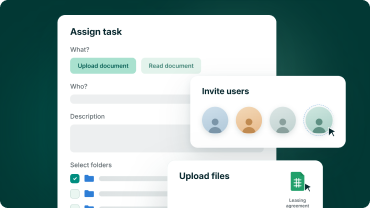
Find a data room with a built-in project management process that allows you to assign tasks and responsibilities within the platform and track stakeholders’ progress towards completing action items. These built-in task workflows keep the project on track.
Built-in Q&A and encrypted internal messaging
Keeping everything within the secure virtual data room makes sense for business-sensitive processes and that includes communication between both internal and external stakeholders. Without this ability, you can slow the process with disjointed messaging across platforms that can lead to important information being missed and you may cause a vulnerability in the project due to the unsecured nature of some third-party communication methods.
Make sure your VDR allows for a Q&A process within the platform, as well as secure messaging with notifications, to keep all users in the loop. This enables better communication with internal teams, advisors, buyers and other parties.
Full audit trails
As with any complex and regulated process, such as M&A and investor fundraising, you must be sure that every step is undertaken in the correct manner. It could be that regulators investigate, either as a spot check or if anything happens later on, and you need to be able to show that your company acted in good faith at all times.
Having the ability to call up an audit trail makes proving compliance much easier, so make sure you choose a VDR that provides this functionality. It should allow any interested party to trace all activities and ensure they were correct and in line with expectations.
User activity tracking
In addition to accessing audit trails, it is important to be able to understand how users have acted within the VDR. You can see how engaged your team has been and which documents they have engaged with. This also allows you to understand how buyers have interacted with the process. You can see which documents they have focused on and what activity they have taken on your key documents.
Ensure your platform allows for the tracking of user activity. This information helps you prioritise the resources you share, address concerns that they might have before they become a big issue and tailor how you communicate with them so you do all you can to close the deal.
Multi-deal and multi-project management
There will be times when you are working on more than one project that requires the use of a secure virtual data room. In this case, you need a solution that allows you to manage multiple active transactions in one central workspace. This makes for a more convenient workflow and avoids confusion.
Redaction
These types of processes often require sharing documents that contain confidential or sensitive information, images or graphics that are not pertinent to the deal itself. Manually redacting all such material across all of the documents can be time consuming and liable to human error, so make sure you find a VDR with the ability to redact such detail by searching instances of a particular term within a document and redacting them all in one go.
Set-up and onboarding
When you require a VDR to manage a deal, you want to make sure that you can set it up quickly and effectively, without friction. This is often a fast-moving situation, and you need to have the data room running in good time to capture the sensitive information that is already being generated. Work with a provider who includes training as part of the partnership and who supports you throughout the onboarding process to help relieve some of the pressure of the situation.
Choose a VDR that provides existing folder structure templates that you can tailor to your needs to speed up the set-up process or that allows you to upload an existing complete structure from zip files. It should also allow you to add users and adjust permissions easily so all authorised parties can get to work straight away.
Training and expert support
The support offered by your VDR of choice is another aspect that requires research. Find one that provides a dedicated client manager who can guide you through the processes required and help you set up the data room according to your particular company’s requirements. Make sure support speaks your language and is fully versed in the obligations of companies in your jurisdiction so that they can provide the best possible service and get you up and running right away.
Virtual data room security
A secure virtual data room protects sensitive business information with multiple layers of protection that prevent unauthorised access and data loss. They use:
- Strong encryption (such as 256-bit encryption for data in transit and at rest)
- Strict, granular access control and role-based permissions
- Detailed audit trails that allow an overview of activity across the project and its documents
- Compliance with standards such as ISO 27001, SOC 2 Type II, Cyber Essentials Plus and GDPR.
Together, these measures ensure that only authorised individuals can access documents and that you prevent vulnerabilities that could threaten the integrity of the data and confidential material held within the data room.
Best virtual data room providers comparison
| Capability | Admincontrol VDR | Ideals VDR | DatasiteDiligence | Intralinks VDRPro™ | OodriveSave | DiliTrust |
|---|---|---|---|---|---|---|
| Local presence | Local language support, offices in Paris, Oslo, London and Glasgow | No confirmed presence in the European Union | Global provider with strong presence in the US; limited local offices in Europe | Global provider with a strong US footprint; less emphasis on local support | Based in France | Headquartered in Paris, with offices across Europe |
| Integrated governance | Seamless integration with Admincontrol Board Portal and full governance suite | No governance tools included | No integrated governance or board management tools | No integrated governance suite; focuses primarily on deal execution | Save does not possessgovernance tools, but Oodriveoffers a digital governance tool | Yes. The data room is part of the larger DiliTrustGovernance Suite. |
| Transparent pricing | Predictable pricing, no hidden fees, no mandatory upsells | No pricing information available publicly | Per-page fees can lead to unexpected expenses | Complex per-page pricing model with additionalcharges | Pricing is not publicly posted and is provided on request | Pricing is not publicly listed |
| Task management | Built-in task manager for tracking the due diligence process | Not available | Advanced task tracking and workflow tools designed for large M&A transactions | Workflow and Q&A tools available, but less intuitive for everyday use | Not available | Not available |
| Redaction | Redaction included in all VDR plans | AI-powered redaction in higher-tier plans only | Advanced redaction tools available, often tied to higher-cost plans | Advanced redaction available, typically as part of premium plans | Not a feature | Not a feature |
| Data centre location | 100% European (Scandinavian) data hosting | Hosted across 9 global regions | Multiple data hosting locations; hosting outside the EU may affect compliance obligations | Global infrastructure with significant hosting presence in the United States | Data is hosted within the EU (France) | Data is stored securely with servers in Europe (France) and globally |
| Ease of use | Simple, intuitive, minimal training required | User-friendly interface with moderate onboarding required | Feature-rich but complex; may require extended onboarding | Feature-rich interface with a steeper learning curve for some users | Straightforward but lacking in functionality | Designed to be user-friendly for secure confidential document sharing, but not necessarily optimised for complex M&A workflows |
| Collaboration tools | Seamless integrated Q&A and messaging | Q&A and collaboration tools available but less tightly integrated than Admincontrol | Collaboration features can be difficult to use | Robust Q&A and collaboration tools, but configuration can be time-consuming | Q&A only available by email | Annotations and activity alerts, but more basic than specialised VDR platforms |
| Permission management | Simple and intuitive | Advanced permission controls with granular settings | Comprehensive permission settings requiring more setup | Permissions can be counter-intuitive; folder management may be inefficient | Backup access controls, but not full granular VDR permissions | Offers granular access controls to manage who can view or share documents |
| Document handling | Smooth, quick file management | Bulk uploads and strong document indexing performance | File uploads can be slow, especially for large documents | Strong document handling, optimised for large, complex transactions | Focuses on automated backup and secure storage rather than active document management | Supports secure upload, structured storage, access controls, versioningand audit trails |
What questions should you ask your VDR provider?
When you start to compare virtual data room providers, you have the opportunity to find out more details about their offerings and how well suited they are to your company’s needs. These questions are key to finding the right platform for your requirements:
- What security measures protect our data, both in transit and at rest?
- What recognised security standards and certifications do you hold, such as ISO 27001 or SOC 2?
- What data centre locations do you use and where will our data be hosted?
- What controls do we have over user access, permissions and document visibility?
- What audit logs and reporting are available to track user activity?
- What tools are included for redaction, watermarking and version control?
- What collaboration features are built in, such as Q&A, messaging or task tracking?
- What is included in the base price and what features cost extra?
- What pricing model do you use and how predictable are the costs as usage grows?
- What onboarding and customer support are included, and what are the response times?
- What integrations are available with other tools we already use?
- What types of projects is your VDR best suited for, such as M&A, fundraising or board work?
- What limits apply to users, storage or data volumes?
- What happens to our data when the project ends or if we switch providers?
Use cases of virtual data rooms
| Use case | How a virtual data room is used |
|---|---|
| M&A | A virtual data room for M&A provides a secure space to share sensitive financial, legal and operational documents with buyers and advisers, speeding up due diligence and keeping control over who sees what. |
| Legal and compliance | It allows organisations to store, manage and share confidential legal documents securely, with full audit trails to demonstrate compliance and support regulatory reviews. |
| Auditing | Auditors can access required documents in one central location, reducing back and forth, improving transparency and creating a clear record of who reviewed which files and when. |
| Fundraising | Companies use a VDR to share pitch decks, financials and legal documents with potential investors, ensuring consistent information and controlled access throughout the process. |
| IP management | A VDR helps protect intellectual property by restricting access to sensitive files, such as patents and designs, while keeping a detailed log of all activity. |
| Clinical trials | It supports secure sharing of trial documentation between sponsors, research teams and regulators, helping maintain data integrity and meet strict compliance requirements. |
VDR vs shared folders
Some organisations might choose to use shared folders instead of implementing a full VDR for these use cases. This table shows why a virtual data room provides a better option than shared folders, such as cloud drives and other commercial file sharing platforms.
| Process | Virtual data room | Shared folders |
|---|---|---|
| M&A | Built for due diligence, with granular permissions, Q&A, audit trails and secure sharing with multiple external parties. | Not designed for deals. Permissions are basic and it is hard to track who viewed or downloaded sensitive files. |
| Legal and compliance | Provides full visibility, access logsand secure document control to support regulatory requirements. | Limited audit trails and a higher risk of accidental access or uncontrolled sharing. |
| Auditing | Centralised access for auditors with read-only permissions and clear records of document review. | Manual document requests and email follow-ups are common, slowing the process. |
| Fundraising | Ensures all investors see the same, up-to-date information with controlled access and activity tracking. | Files can be duplicated or shared outside the folder, creating version and confidentiality risks. |
| IP management | Strong protection for sensitive IP through watermarking, restricted access and detailed monitoring. | High risk of files being copied, downloaded or reshared without visibility. |
| Clinical trials | Supports strict data security, controlled collaboration and compliance with regulatory standards. | Often falls short of regulatory and security expectations for sensitive research data. |
Challenges and concerns
- Cost uncertainty if pricing is based on pages, users or add-ons, which can make budgets harder to control. Choose a provider with a transparent pricing policy.
- Complex setup where feature-heavy platforms require time and training before teams feel confident using them. Make sure the provider offers comprehensive training and support is available when you need it.
- User adoption issues if external parties find the interface confusing or slow to navigate. Consider how the interface works for those without prior experience to ensure you offer a user-friendly experience.
- Over-permissioning risks when access controls are not set up carefully, leading to users seeing more than they should. Ensure you designate a person or department to oversee permissions and ensure they are correctly applied.
- Integration gaps if the VDR does not connect smoothly with existing tools and workflows. Ask providers if their data rooms are compatible with other tools, such as board portals.
- Data residency concerns where documents are hosted outside the EU, creating potential compliance or governance questions. Ask about hosting and what it means for your data before you sign up.
- Performance issues, such as slow uploads or lag when handling very large files. Research performance before making a final decision.
What customers say about Admincontrol’s VDR
“Admincontrol has been a trusted partner for DLA Piper in Norway in several due diligence processes. Their data room solution is easy to use and intuitive, which is crucial for us and our clients. The solution is backed up by excellent Admincontrol Client Managers and support personnel.”
— Christian P.N. Fenner, Partner, DLA Piper
”BDO has chosen Admincontrol as our primary partner as a virtual data room provider for several years. Admincontrol is easy to set up and the customers service works seamlessly. We have found Admincontrol very easy-to-use and it saves both our and our customers' time. The service is also constantly being developed and we are always kept up to date on the new features thanks to our excellent contact person”
— Nora Ritala, Senior Manager, BDO
“Every aspect of the service from the creation of the data room to completion of transactions, the entire team at Admincontrol were professional, efficient and extremely courteous. We would highly recommend any of the services which Adminontrol offers for all of your business needs.”
— Corporate Team, Curle Stewart
FAQ
Virtual data rooms are used by companies, legal teams, advisers, auditors and investors who need to share sensitive information securely during transactions or reviews.
Costs vary by provider and pricing model, with some charging fixed, predictable fees and others charging based on pages, users or usage.
Most providers allow you to export your documents before closure and then securely delete your data in line with their retention and deletion policies.
Yes, most modern virtual data rooms are accessible on mobile and tablet devices through secure browsers or dedicated apps.
In most cases, you can download your files and re-upload them to a new data room, although the ease of migration depends on the tools each provider offers.
The virtual data room you choose should offer you security and ease of use as standard. The measures in place to protect your sensitive information will determine how trusting other parties will be when entering into deals with your company. They also have to be able to find and use the information they need easily and that is why having an intuitive process is also important. Admincontrol’s virtual data room combines usability with strong security features that give peace of mind to all parties and allow your projects to move smoothly. We support you through set-up and onboarding to ensure you are up and running quickly during a fast-moving deal. You can generate an audit trail, understand how buyers interact with your information and manage tasks within the platform with ease.
Request a demoRelated Articles
See all postsIs Your IAS 24 Related Party Register a Compliance Risk?
03-07-26
IAS 24 Related Party Disclosures: A Guide for Issuers
23-06-26
How to Look Up a Company's LEI in the GLEIF Database
15-04-26
What Is the Global Legal Entity Identifier (LEI) System?
15-04-26
How the Global LEI System Works: A Complete Guide
15-04-26