









.png)




.svg)
.svg)
.svg)







.png)
.png)







.jpg)

%20F%20(1).jpeg)







.webp)






 Login
Login
Compliance and Regulation
Definition of a Employee Trading Policy
An employee trading policy is a set of guidelines established by a company to govern the personal trading activities of its employees, particularly those with access to sensitive information.
An employee trading policy is a set of guidelines established by a company to govern the personal trading activities of its employees, particularly those with access to sensitive information.
Key elements
Pre-clearance requirements
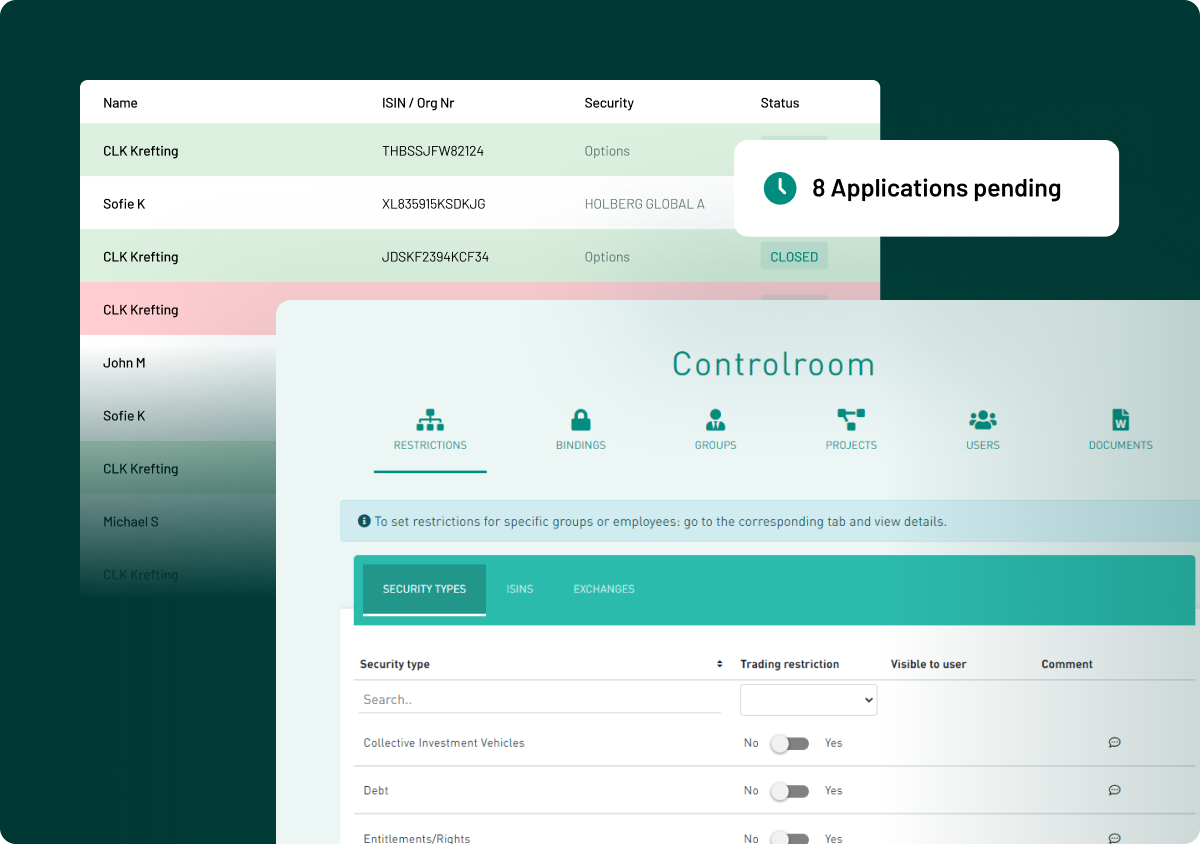
Pre-clearance is the process of requesting permission before making a trade. Each company may set different parameters to dictate acceptable trades and allow or decline specific transactions.
Holding periods
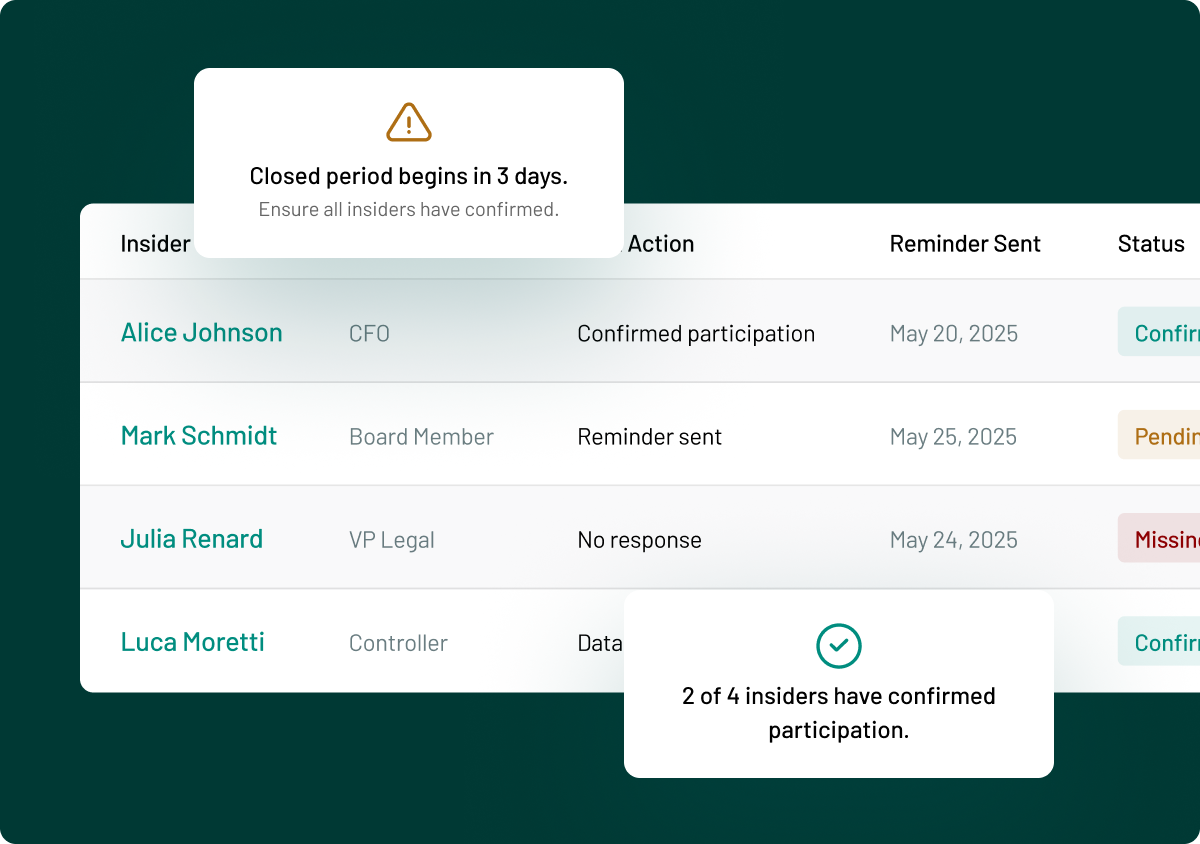
A holding period is the minimum amount of time an employee must hold onto company shares before selling them. The length of this period may vary from a few months to a year based on a company’s objectives and operations. .
Blackout periods
A blackout period is when employees cannot trade in company securities. As a standard practice, it is usually implemented for 30 calendar days before the announcement of quarterly or annual earnings reports.
PDMR and PCA responsibilities
Persons discharging managerial responsibilities (PDMRs) and those associated with them (PCAs) often possess inside information due to the PDMR’s role in the company. It is important to outline the specific duties of both to ensure transparency and fairness in trading activities. In addition to observing blackout periods, they must also notify the issuer and regulatory bodies if they plan to engage in personal trades above a certain threshold.
General conduct
General conduct guidelines specify the trading practices that employees should observe to ensure ethical behaviour, legal compliance and protection of market integrity.
Restricted trades
The compliance department may set specific parameters to dictate which trades are off-limits. They may prohibit employees from trading in certain securities, such as the company’s own or those of its subsidiaries or affiliates.
Post-trade reviews
Mention guidelines for monitoring employee personal trading activities with the Chief Compliance Officer. This practice is necessary to identify evidence of misuse of inside information or conflict of interest.
Potential sanctions
Potential sanctions to include are: A public warning A cease and desist order Returning profits gained or losses avoided Suspension or dismissal Fines
Relevant legislation
MAR
The Market Abuse Regulation (MAR) provides a framework for maintaining market integrity and transparency in the EU. It sets out the obligations, prohibitions and penalties for all market participants regarding three types of market abuse — market manipulation, insider trading and unlawful disclosure of inside information. Companies must incorporate suitable internal policies to ensure MAR compliance.
MiFID II
The EU Markets in Financial Instruments Directive II (MiFID II) focuses on ensuring market transparency, investor protection and the prevention of conflicts of interest. It includes provisions that companies can use to develop and enforce their employee trade policies.
Reasons for a policy
-
Prevent insider dealing: Prevents employees from trading based on inside information, protecting market integrity.
-
Prevent conflicts of interest: Keeps personal trades from interfering with professional duties, maintaining objectivity.
-
Ensure fairness: Guarantees fair play in the market by preventing and penalising unethical trading practices.
-
Protect the organisation: Shields the company from reputational damage and legal and financial penalties associated with market abuse.
-
Protect the organisation’s clients: Ensures client interests are prioritised and protected from unfair trading practices.
-
Legal compliance: Aligns the company’s internal practices with applicable laws, avoiding fines and regulatory issues.
Last updated:
Related Terms
See all termsMarkets in Financial Instruments Directive II (MiFID II) Explained
MiFID II is a regulatory framework created to standardise financial markets and ...
Trading Restrictions for Employees
When employees of investment firms or listed companies in any industry trade ...
Definition of a Conflict of Interest
A conflict of interest is when a company individual’s personal interests take ...
Definition of Employee Trade Monitoring Software
Employee trade monitoring software refers to digital tools that allow ...