









.png)







.svg)
.svg)
.svg)









.png)
.png)







.jpg)

%20F%20(1).jpeg)







.webp)






 Login
Login
Corporate governance is undergoing a profound transformation. Once viewed as a rigid framework of compliance and risk mitigation, it has evolved into a dynamic driver of strategic advantage.
Shifting stakeholder expectations now encourage boards of directors to move beyond the checklist to actively shape the company's corporate destiny. With only 32% executives agreeing that their boards are equipped with the necessary skills and expertise, it is essential that you understand the trends and strategic shifts needed to develop your board of directors to meet the challenge of the coming years.
Heading into 2026, the most resilient and successful organisations will be those whose boards master the art of foresight, agility and proactive oversight. This article explores the top corporate governance factors and steps to take to build a future-proof boardroom.
- Corporate governance is shifting from box-ticking to a source of strategic advantage that shapes decisions and resilience.
- With only a minority of executives confident in their boards’ skills, directors must close capability gaps and practise foresight, heading into 2026.
- AI governance is helping improve boards' approach to risk and compliance while demanding ethical oversight, bias checks and clear accountability for data use.
- Cybersecurity is now a board-level enterprise risk, requiring regular simulations and stronger resilience plans.
- The “G” in ESG and rising activism put remuneration, independence and transparent investor engagement under sharper scrutiny.
- Future-ready boards refresh composition for skills in technology, cyber, AI and other increasingly important areas, carrying out annual evaluations and succession planning to navigate the corporate environment.
The corporate governance factors shaping board strategy
Navigating the future requires a clear roadmap. For boards, this means understanding and integrating a set of critical factors that are reshaping the fundamentals of corporate oversight.
Mastering these areas will be the hallmark of effective leadership in 2026 and beyond.
| Major corporate governance factors | Explanation |
|---|---|
| AI-powered governance | Forward-thinking boards are using AI to enhance risk management, carry out real-time compliance monitoring and fuel strategic decision-making. |
| Elevated cybersecurity governance | The escalating threat landscape, including sophisticated state-sponsored attacks and widespread ransomware, demands a new level of board engagement. |
| The "G" in ESG takes centre stage with enhanced scrutiny | Stakeholders, from institutional investors to employees, are demanding greater transparency, accountability and ethical leadership from company leaders. |
| Evolving shareholder activism | Activist campaigns are growing in number and sophistication, requiring continuous improvement from boards |
| Board composition and refreshment for future relevance | Future-relevant boards require a diverse mosaic of skills, experiences and perspectives. There is a growing demand for directors with deep expertise in a range of topics |
| Attracting the next generation | The board of directors owns the process of attracting, developing and retaining the next generation of leaders and innovators. |
| Measuring and monitoring board effectiveness | Leading boards are combining traditional self-assessments with more rigorous methodologies, including peer reviews and externally facilitated evaluations. |
| Mastering geopolitical volatility and global regulatory complexity | Issues such as trade conflicts, sanctions, political instability, tariffs and divergent regulatory regimes across the globe have direct and immediate impacts on supply chains and strategic planning. |
AI-powered governance
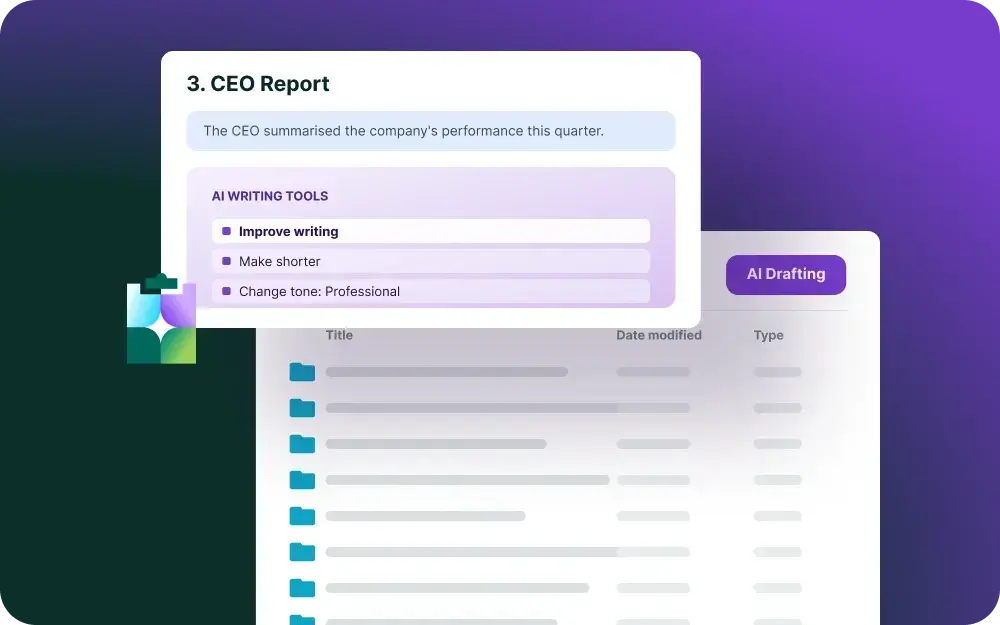
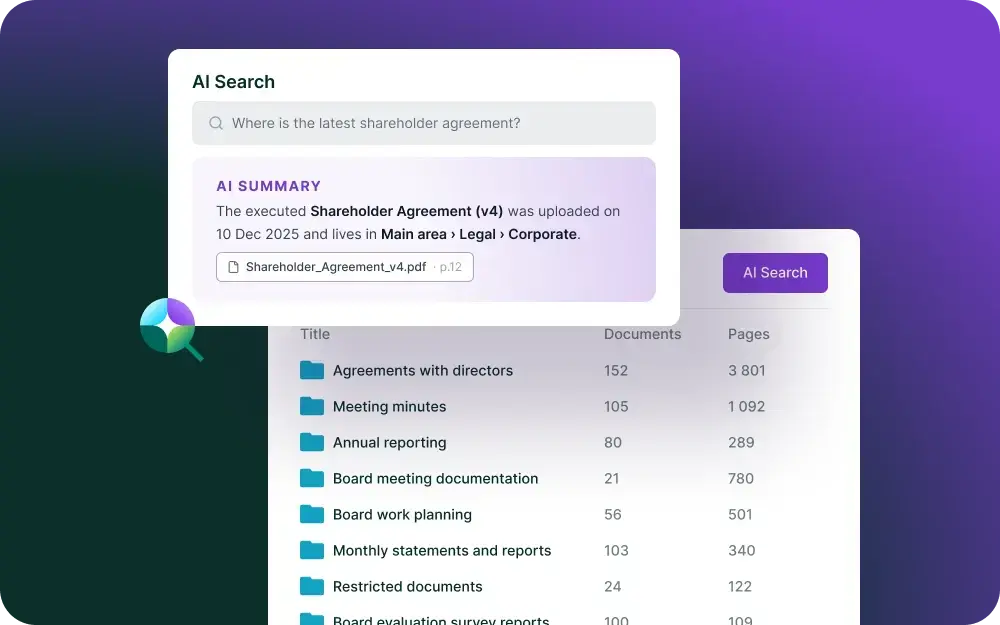
Artificial intelligence is no longer confined to operations; it is rapidly entering the boardroom. Forward-thinking boards are using AI to enhance risk management, carry out real-time compliance monitoring and fuel strategic decision-making.
AI tools can analyse vast datasets to identify emerging threats and uncover insights that would be impossible for humans to discern alone. However, this integration comes with its own corporate governance challenges. Your board must also oversee the ethical implementation of AI, addressing potential biases in algorithms, and ensure the privacy of both internal and third-party data that it processes. There is also the requirement to maintain transparency over decision-making, even when those decisions are automated.
The phasing of the EU AI Act covers AI use in products, operations and oversight and requires in-scope companies to take on new requirements relating to risk, corporate governance and documentation. Map your AI use cases ahead of entering the scope, classify your systems and set an AI risk committee and budget for conformity work ahead of implementation.
Action point
Establish a dedicated board-level committee or assign a director with the necessary competencies to oversee AI strategy and ethical corporate governance.
Elevated cybersecurity governance
Cybersecurity has shifted definitively from an IT issue to a core enterprise-wide strategic risk. The escalating threat landscape, including sophisticated state-sponsored attacks and widespread ransomware, demands a new level of board engagement.
The financial and reputational stakes are significant. The global cost of network breaches is projected to surge from $9.2 trillion (€7.8 trillion) in 2024 to $13.8 trillion (€11.8 trillion) by 2028.
Boards are already acknowledging this heightened responsibility. This is reflected in budget allocations, with a PwC report showing that 77% of organisations plan to increase their cyber budgets.
Effective oversight now means understanding the organisation’s cyber posture, challenging assumptions and ensuring that resilience is built into the business strategy.
Consider your data protection processes, considering the patchwork of laws across the world. Approve a single data-governance framework with local add-ons and appoint a board data owner to oversee your efforts.
Two key pieces of legislation may affect your company in 2026:
- NIS2 lifts cybersecurity obligations across sectors, with national laws now in force and more entities coming into scope. As a result, you may need to carry out crisis tabletop exercises to assess how prepared your board is for the change.
- EU Cyber Resilience Act brings additional incident and reporting duties from 11 September 2026. In anticipation, ask management for a CRA gap-assessment, product inventory and compliance plan, including vulnerability reporting.
Action point
Mandate and participate in regular, sophisticated cyber attack simulations and breach response drills to test the organisation's resilience and the board's own crisis management capabilities.
The "G" in ESG takes centre stage with enhanced scrutiny
While the broader environmental, social, and governance (ESG) narrative continues to evolve, 2026 will see an intensified focus on the "G": governance.
Stakeholders, from institutional investors to employees, are demanding greater transparency, accountability and ethical leadership from company leaders. This means additional scrutiny applied to executive compensation, board independence, shareholder rights and corporate culture.
While research from the Thomson Reuters Institute indicates that 82% of leaders believe ESG's importance will continue to grow, the focus is sharpening on how well a company is managed. Shareholder advisory firm SquareWellPartners found that 82% of institutional investors said that poor governance was the main reason for rising activism.
Strong corporate governance is now correctly seen as the foundation upon which credible environmental and social performance is built.
Action point
Proactively review and reform executive compensation plans to ensure a clear and defensible link between pay and long-term performance, in line with your strategic, ESG-related goals.
Evolving shareholder activism
Diving further into the realm of shareholder activism, campaigns are growing in number and sophistication.
Barclays found that Q3 2025 bucked the trend for a slow summer, with 61 activist campaigns launched against issuers. The US and APAC countries contributed most to this and a wider trend across the first three quarters of 2025, with 191 campaigns overall representing a 19% upturn on the long-term average. Although European Union activism is more subdued so far, boards across the continent should learn the lessons from their peers elsewhere, should the tide turn during 2026.
Activist investors are expanding their focus beyond financial returns to include operational inefficiencies, capital allocation and corporate governance structures. This can be seen as a reaction to the turbulent environment caused by geopolitical matters, climate change and other external pressures that require expert stewardship from boards. It calls for a proactive approach to mitigating potential campaigns and showing leadership involvement to reduce the need for institutional investors to take such action.
In a recent Admincontrol webinar, Caroline Ruellan,President of Sonj Conseil, discussed how the pressure on boards to be transparent and accountable has never been greater, leading to an increased risk of activism from both shareholders and stakeholders. She urged boards to take evaluations seriously in order to identify vulnerabilities before activists do and drive continuous improvement. Watch the full video of The Decisive Board: Evaluation Practices That Enhance Strategic Decision-Making for more insights.
Greater scrutiny is being placed on stakeholder capitalism, with an increasing expectation for boards to show how their decisions consider employees, customers and communities, not just shareholders.
A compelling corporate strategy, robust governance and a continuous, transparent dialogue with investors are all factors that will help dissuade activist investors. Make sure you tie your board KPIs to stakeholder outcomes and publish clear decision rationales relating to their impact.
Action point
Implement a year-round shareholder engagement programme, including shareholder meetings, to build relationships and communicate the board's strategic vision before an activist campaign materialises.
Board composition and refreshment for future relevance
Whereas the traditional board composition relied heavily on financial and legal expertise, this approach is no longer sufficient to navigate modern complexities.
Future-relevant boards require a diverse mosaic of skills, experiences and perspectives. There is a growing demand for directors with deep expertise in topics such as:
- Technology
- Cybersecurity
- Sustainability
- Artificial intelligence
- Human capital management
- International markets and more.
Board refreshment is essential to maintaining momentum towards your strategic goals, ensuring your training and upskilling efforts continue to benefit and futureproof your leadership team.
Progressive boards use skills matrices to identify gaps and implement formal policies, including term or age limits, to ensure a continuous injection of fresh perspectives. This proactive approach to composition is crucial for avoiding groupthink and equipping the board with the foresight needed to guide the company through future disruptions.
Action point
Develop and regularly update a board skills matrix to identify competencies that will be important in the short, medium and long term in your sector, informing your board refreshment process.
Attracting the next generation
The board needs to evolve to adapt to fresh challenges and this means ensuring continuity through a targeted board succession programme. This means the board of directors owns the process of attracting, developing and retaining the next generation of leaders and innovators.
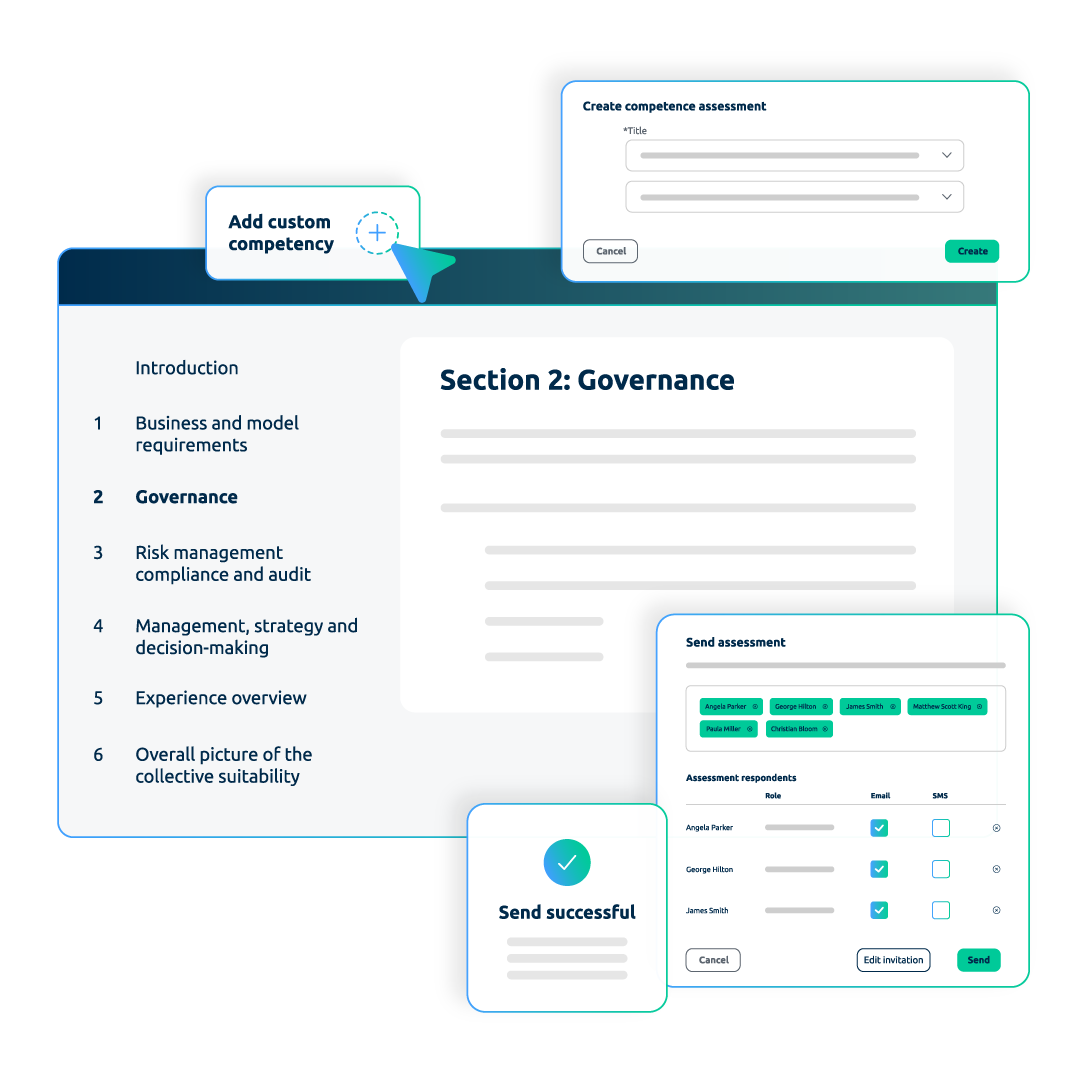
You must be sure that when a director steps down, whether that is planned or not, you have a pool of talent ready to step up. This means identifying which hard and soft skills the board will need and finding the candidates who will bring those competencies. The next step is to coach them so that they understand their other duties as a director and have insight into the decision-making process.
Action point
Search for candidates who are ready to jump in right away and act as temporary, de facto corporate directors in the event of the sudden exit of a board member. In addition, look for candidates with potential and nurture them over the long term, working towards target dates, such as the end of current directors' tenures.
Measuring and monitoring board effectiveness
The process of evaluating board performance is a powerful tool for driving competitive advantage. Leading boards are combining traditional self-assessments with more rigorous methodologies, including peer reviews and externally facilitated evaluations.
The goal is to honestly assess not just the board's structure and processes, but its culture, dynamics and the quality of its discussion and decision-making processes. A board that is committed to continuous improvement is better equipped to manage challenges and guide the company.
Action point
Conduct a board review every year, with a comprehensive, third-party-facilitated board evaluation every two to three years, to gain objective insights into performance, dynamics and areas for improvement.

Mastering geopolitical volatility and global regulatory complexity
Boards can no longer view geopolitical events as distant background noise. Issues such as trade conflicts, sanctions, political instability, tariffs and divergent regulatory regimes across the globe have direct and immediate impacts on supply chains and strategic planning.
Corporate directors must develop a sophisticated understanding of this landscape, embedding geopolitical risk analysis into the heart of their strategic oversight function. This requires scenario planning, building resilient supply chains and ensuring the company can navigate a fragmenting global order.
Action point
Integrate a formal geopolitical risk assessment into the annual strategic review process, utilising external expertise to map potential threats and opportunities.
External market, regulatory and political factors shaping governance now
The current corporate governance environment is being heavily influenced by external pressures:
- Economic uncertainty, including inflation and interest rate volatility, is forcing boards to sharpen their focus on financial oversight and capital allocation.
- Regulators globally are increasing their expectations for board accountability, particularly in areas like climate-related financial disclosures and cybersecurity incident reporting.
- Politically, shifting sentiments are challenging global business models, a concern reflected by executives who worry that future trade and tax policies could undermine competitiveness.
The era of passive, compliance-focused governance is over. The factors shaping the corporate world demand a new breed of board: one that is strategic, proactive and forward-looking. Mastering AI-powered governance, embedding cybersecurity as a strategic imperative, sharpening the focus on the "G" in ESG and proactively engaging with investors to avert shareholder activism are the cornerstones of modern, effective oversight. Futureproof boards are defined by their dynamic composition, their rigorous approach to self-improvement and their deep engagement with geopolitical risk. They understand that robust succession planning and a clear-eyed view of external pressures are essential for resilience.
Request a demo