









.png)




.svg)
.svg)
.svg)







.png)
.png)






.jpg)

%20F%20(1).jpeg)







.webp)






 Login
Login
Going public is a significant decision that companies of all sizes face at some point in their lifecycle. Although many European businesses have tended to spend longer in the private markets in recent years, there is now an upward trend in initial public offerings (IPO) across the continent.
By going public, organisations can more easily raise capital, spread awareness of their business and provide founders and venture capitalists with an exit strategy. But an IPO is not the only option available to organisations. Some opt for a direct listing (or direct offering) instead.
This article explores when to choose an IPO vs direct listing. It looks at the benefits and challenges of both options and how the processes differ, helping you select the right approach for your business.
Key takeaways
- European IPO activity picked up recently, but choosing between an IPO and a direct listing remains a strategic call rather than a one-size-fits-all decision.
- IPOs raise new capital and benefit from underwriter marketing, bookbuilding and allocations.
- Direct listings cut underwriting costs and provide immediate liquidity for existing holders with transparent, market-driven pricing, but raise no new funds and can result in higher debut volatility.
- The right route depends on capital needs, brand strength and visibility, desired control over the shareholder base, cost tolerance and prevailing market conditions.
IPO vs direct listing at a glance
Approach | Advantages | Disadvantages |
IPO |
|
|
Direct listing |
|
|
The IPO process
1. Select underwriters
Choose an investment bank (or a small syndicate of banks) that suits your sector and prospective investor base. This intermediary will help shape your equity story, recommend how to structure your offer and map the timetable for you. The underwriter is also key to helping you meet your regulatory requirements, buying shares and distributing them to investors.
At this point, you should also appoint other members to your advisor team, including a legal counsel and auditors.
2. Prepare the prospectus and financial statements
The EU Prospectus Regulation, set to be updated through the Listing Act in 2026, sets out the standard format and length of prospectuses. Make sure you have your financials audited in accordance with International Financial Reporting Standards (IFRS) and that they are robust and consistent.
Highlight KPIs and create a narrative around the numbers that tells prospective investors what they need to know about your offering. Include details of strategy, market conditions, risks, capital allocation and your approach to dividends, as well as non-financial performance.
File the prospectus with your national competent authority (NCA) and national stock exchange for review. Once approved, you can publish it to the investment community.
3. Roadshows and investor presentations
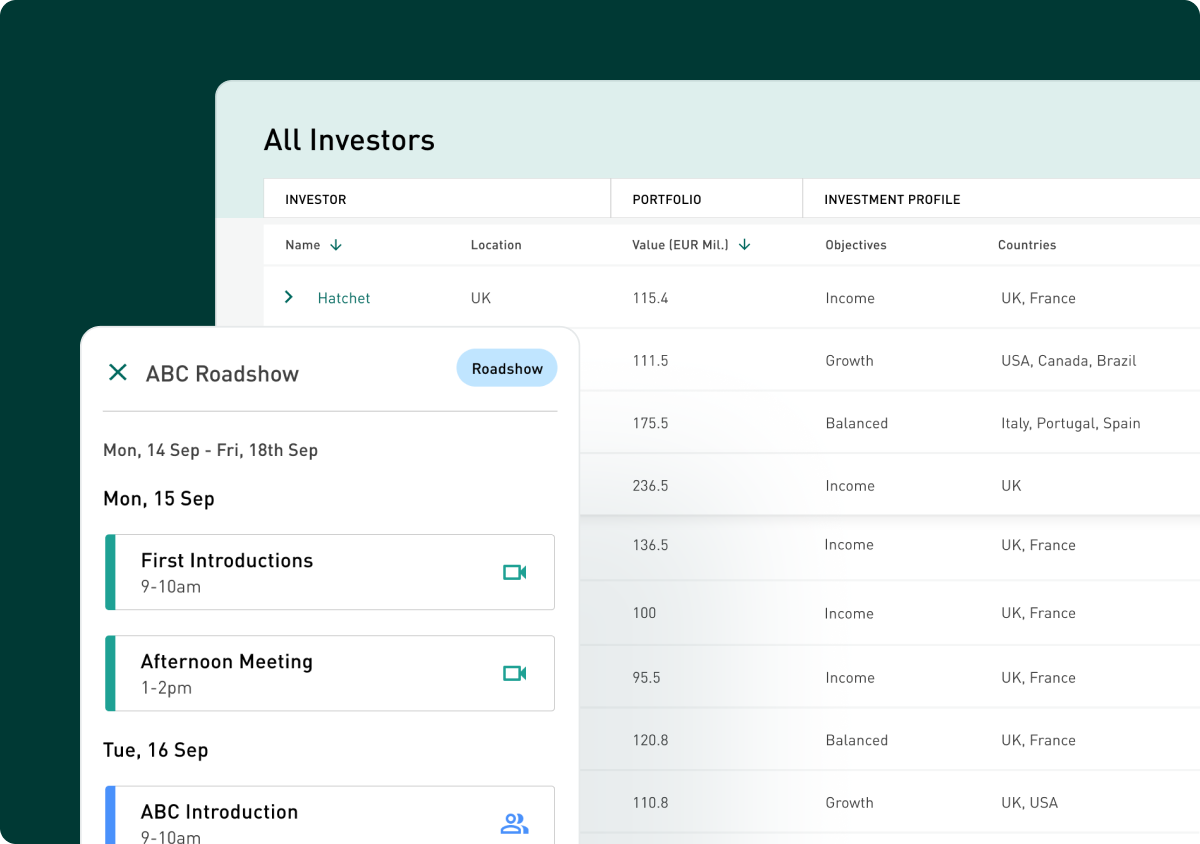
At this stage, you can engage analysts and investors more closely. Many companies send executives on the road to meet shareholders, but you can also hold hybrid and fully virtual roadshows to ensure you reach as many stakeholders as possible and spread the word about your IPO.
Tailor the meetings by the style of investor you want to attend. For example, hold different roadshows for growth investors, value investors, sustainable investors and so on, considering how best to present your narrative to meet their varying interests.
4. Price and share allocation
Your underwriter will support you with bookbuilding, gauging the demand in the market for your securities. This may include requesting indicative bids from different institutional shareholders to understand the optimal stock price and size of the issue.
Investment banks acting as underwriters aggregate the value of the bids submitted at this stage, assessing a cutoff price, which will be the value on the day that your IPO goes live.
Work with your underwriter to understand how big your initial and secondary offerings should be and to find a diverse range of shareholders, by region, investment style, drivers and size. The underwriter will then allocate the shares accordingly.
5. Listing and trading day
Any unallocated shares go live on the capital markets and you become a listed company. The listing ceremony happens and you will likely receive media coverage on your early trading performance.
Prepare with confidence for your IPONavigate every stage of your IPO journey with Euronext’s expert guidance, digital tools and market insights ready to set you up for success. |
The direct listing process
1. Prepare financial disclosures
Similar to the IPO process, you will need to have your financial statements audited to the required standards. Include risk factors and KPIs to support your admission for trading and present your risk management strategy.
You must put together your own equity story to explain your capital allocation and make it as easy as possible for prospective investors to understand exactly what you are offering. Present a coherent strategy for the business and show your clear governance structure to provide confidence in your securities.
2. Put together a team and engage advisors without underwriters
Direct listings are less costly than IPOs and one of the key reasons is that you do not use underwriters. However, this does mean that you are responsible for pulling together a strong team to support you through the process.
Engage a listing sponsor, legal counsel, auditors, a registrar or transfer agent, IR specialists and a communications team. Together, you can carry out due diligence, draft your listing timetable, put together the documentation you need, design an investor outreach strategy and actively engage advisors directly to sell the virtues of your listing.
3. Regulatory filings and listing application
Understand the requirements on you before you can achieve your listing. For admission on a regulated market, you may need to create a prospectus. For MTFs and growth markets, you may just require an admission document. You may also need to make other regulatory disclosures at this stage, depending on your jurisdiction.
4. Understand likely supply and demand
In an IPO, the underwriter helps you establish how many shares will be available and at what price. In a direct listing, you do not have this luxury and, indeed, to have any tradeability on day one, you must find willing sellers, as there are no new shares created.
Identify where your supply of shares is going to come from. This could be employees, early investors or maybe company founders who are using the direct listing as a way of exiting the organisation. Set simple rules for selling, including the windows in which they can offer their shares.
You need to have a share registrar in place, an agreement with the central securities depository and enough shares to interest investors without flooding the market. Engage institutional and retail investors with meetings and webcasts to interest them in your listing.
5. Reference price setting
There is no official offer price with a direct listing. Instead, you need to work together with the stock exchange to devise inputs and methodology that lead to a fair price to use as a reference point for matching supply and demand.
Too low and your original shareholders lose value on their investments. Too high and you could limit demand from the investment community.
Use recent private trades, third-party valuation ranges, indications from a market maker and the levels of supply that you identified earlier to agree on the reference price that strikes a good balance between benefiting old and new investors.
6. Opening day trading
On listing day, the market sets the first price by matching the buy and sell orders in the opening auction. The price can move quickly as potential investors decide what they are willing to pay and current shareholders declare what they will accept.
This share price volatility is usual in direct public offerings, as the market shifts in real time in response to share sale performance. For example, early demand can breed additional demand, which spikes the price upwards. If it slows, though, the market might become nervous and the price might drop. This is one of the accepted consequences of taking the less labour-intensive and expensive public offering route.
IPO vs direct listing: Which is right for your company?
To decide which method of becoming a public company is the right one for your organisation, here are some considerations you should make:
- Determine your capital needs. If you are looking for a large injection of cash into the business to fund growth, for example, an IPO is the best option. A direct offering is better for providing liquidity to current shareholders.
- Assess brand strength and visibility. A direct listing is usually more suited to a high-profile company that can generate demand without the need for established investment banks to spread the word across their network. If you enjoy good brand recognition, a direct offering might be for you. For more complex stories, or lesser-known brands, the IPO process helps to educate the investment community about your company as you build interest.
- Define your investor base strategy. If you want control over the allocations of securities that you offer, then an IPO allows you to shape the register accordingly. This provides a level of stability because you can plan more effectively for it. There is less control with a direct listing because anyone could buy or sell on day one, creating volatility and determining the quality of your ownership without your input.
- Weigh the cost considerations. IPOs can be expensive when you add up underwriting, marketing and listing costs. But, for those costs, you receive invaluable benefits, such as price discovery and greater stabilisation. Direct listings cost less, but require more work internally, with riskier outcomes.
- Evaluate market conditions. Bookbuilding can help reduce the risk of mispricing in a volatile market. However, when the public markets are buoyant, a direct listing might benefit from representing actual demand at the time of listing.
When weighing up IPO vs direct listing, it is a question of what you want to achieve from the process, what you can afford to do and which pitfalls you want to avoid. For cash-rich, well-known businesses that want to help their early shareholders exit and do not want to dilute their shares, a direct listing could be beneficial. For more low-profile organisations looking to fund expansion and to be able to shape their shareholding, an IPO might be the better option.
However you embark on your journey on the public markets, Post-Listing Advisory from Euronext Corporate Solutions is here to assist you with gaining the trust of the investment community. Through it, you gain access to Euronext’s market intelligence to inform engaging investor roadshows and AGMs, as well as developing a high-impact investor relations strategy for the future. Request a demo of Post-Listing Advisory today.
FAQ
Traditionally, direct listings do not raise new capital. They admit existing shares and provide liquidity without issuing new equity; however, some markets, including some US public markets, now allow companies to sell new shares at listing, whereas most European direct listings do not.
There are a number of different types of company that would be suited to choosing an IPO. They include:
- Growth-stage companies needing capital
- Firms with limited liquidity for early investors
- Businesses seeking strong institutional relationships.
These businesses could find a direct listing to be advantageous:
- Cash-rich companies
- Established brands with strong name recognition
- Businesses prioritising cost efficiency.
The route that works best depends on the business in question. Long-term returns are driven by fundamentals, execution quality, governance and the resulting shareholder base. IPOs offer bookbuilding and potential stabilisation, while direct listings avoid dilution and fees but can see more volatility early on.
References and further reading
Related Articles
See all postsGEO for Investor Relations: what AI tells investors about your company
06-08-26
10 Ways AI Is Transforming Investor Relations
11-06-26
Organising IR Events that Drive Engagement
09-06-26
Investor Relations Portal & Software: What Listed Companies Need in 2026
09-06-26
IR Communication Best Practices for Listed Companies
09-06-26