









.png)






.svg)
.svg)
.svg)







.png)
.png)






.jpg)

%20F%20(1).jpeg)







.webp)






 Login
Login
Compliance and Regulation
What is Personal Account Dealing?
Personal Account Dealing is an area of market activity that can cause regulatory issues for businesses. This article tells you the PAD FCA definition and how to manage it effectively.
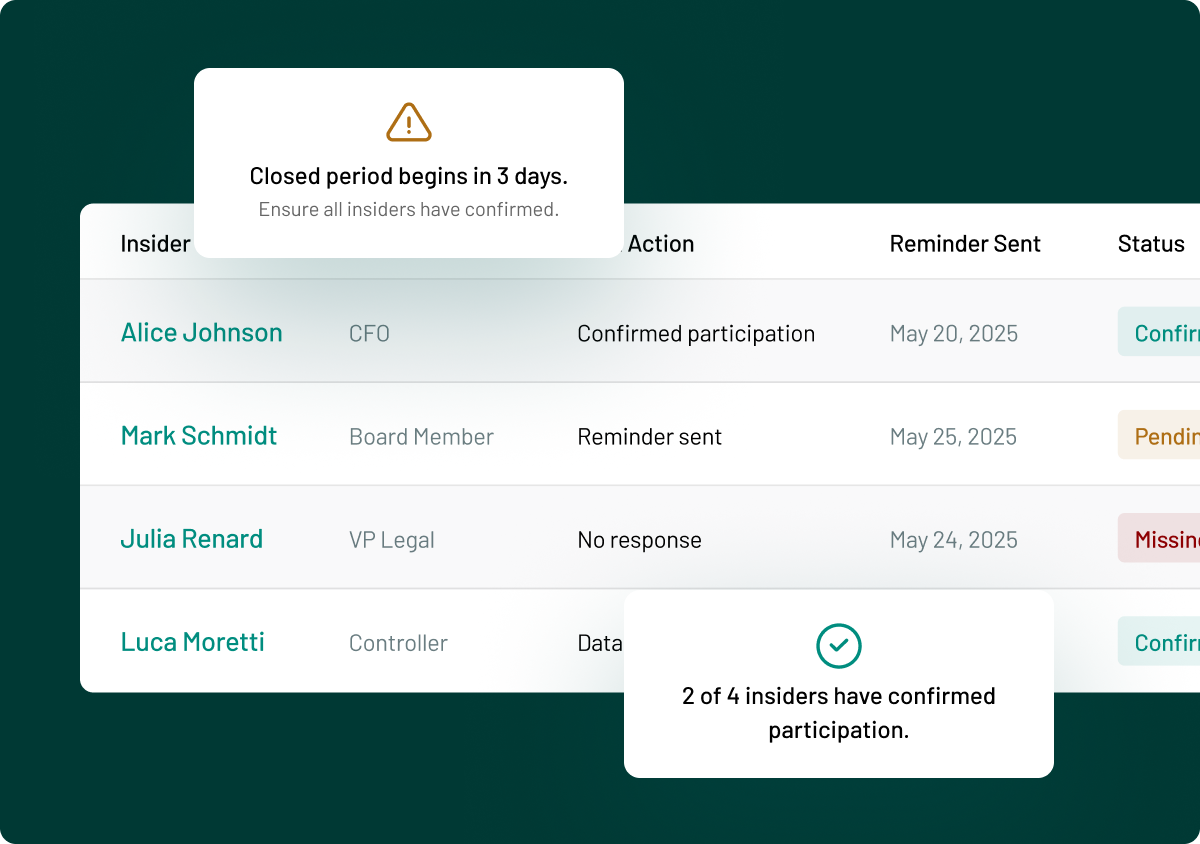
Personal Account Dealing (PAD) is when employees of an organisation engage in specific investment transactions such as buying or selling shares for their own benefit. These transactions are out of the scope of their routine work, but must be supervised by their companies to mitigate risks of conflict of interest or unlawful trading.
PAD and the FCA
The Financial Conduct Authority (FCA) is a financial governing body in the UK that works independently of the government. The organisation requires all firms that carry out designated investment business, to establish a code of conduct for PAD to prevent employees from engaging in trading in a noncompliant manner. Companies should develop clear policies and business models to manage personal dealing and mitigate the risks of market abuse.
Legislation relating to PAD
The FCA’s Conduct of Business Sourcebook regulates all business transactions of authorised UK firms. The COBS 11.7 rule requires all firms to establish and maintain sufficient rules to prevent employees from acquiring unlawful gains from personal dealings.
In addition, the Market Abuse Regulation (MAR) forbids activity that damages the integrity of the financial markets.
Possible pitfalls of personal account dealing
Here are the possible pitfalls of PAD when strict measures are not established:
Conflicts of interest with the company
An employee must not engage in any personal dealing that pits their interests against those of their employer. For example, betting against the company’s success.
Conflicts of interest with a client
The interests of the clients should always be prioritised. Otherwise, employees could advise clients to make investments that go against their interests in order to benefit the employee. For example, they might recommend the client make a significant purchase of stock in a company in which they are also invested because it may boost the share price, even if the client would have been better advised to invest elsewhere.
Insider trading
Insider trading involves the use of confidential, material information to make personal transactions or to encourage close contacts to do so. This can lead to front-running, where an employee knows a client will buy stock in a firm and they make a personal transaction first in order to benefit from the effect of the client’s purchase on the share price.
Monitoring and enforcement
All firms should have strict measures in place to monitor all personal trading activities of their employees and deal with any issues that arise. They must have real-time reports that the firm can take action on, and if necessary, report to the FCA.
Last updated:
Related Terms
See all termsDefinition of Insider Trading
Insider trading is when a person in possession of confidential information uses ...
Market Abuse Regulation (MAR) Outlined
The Market Abuse Regulation (MAR) came into effect in 2016 to ensure a uniform ...
Definition of Market Manipulation
Market manipulation, a form of market abuse, is the illegal act of artificially ...
Market Abuse Defined
Market abuse is any unlawful behaviour that is intended to disadvantage other ...