






.png)




.svg)
.svg)
.svg)







.png)
.png)






.jpg)

%20F%20(1).jpeg)







.webp)






 Login
Login
A B2B webinar strategy is a deliberate, repeatable approach to using live and on-demand video events to reach stakeholders, build authority and generate qualified leads. It treats each webinar not as a one-off broadcast but as an asset within a wider system, from the first registration email to the final piece of repurposed content. Executed well, this approach has become one of the most dependable channels available to corporate communicators and marketers, because it combines the reach of digital with the trust that normally requires a room full of people.
The case for that approach is now difficult to dispute. Marketers consistently rank webinars among the most effective formats in the content mix, placing them second only to in-person events, and a clear majority regard them as a primary lead-generation tool. A webinar combines images, sound and genuine interaction in a format that holds professional attention for a length few other channels routinely achieve, with average live viewing times approaching an hour.
1. Why webinars outperform other formats
Video has become the default medium for professional audiences. Research from Wyzowl has found that 91 per cent of businesses now use video as a marketing tool, and 93 per cent report a strong return on their investment. Webinars convert that general appetite into a structured, measurable event.
Three advantages stand out. The first is reach. A webinar removes the constraints of geography, travel time and venue capacity, opening an event to anyone with an internet connection, including stakeholders in different countries and time zones. The second is engagement. An interactive event actively involves the audience through polls, questions and live chat, rather than leaving them to drift away as a passive broadcast so often allows. The third is conversion: Zippia research has found that 83 per cent of US marketers regard webinars as effective, and a webinar generates contact data more reliably than almost any other content format.
There is a commercial subtlety here that disciplined teams understand well. Most prospective buyers conduct their research independently and do not engage a vendor until they are well advanced in their decision. The organisations that win are those that have already established authority on the relevant subject, long before the buyer makes contact. A webinar is one of the most efficient ways to build that authority at scale.
2. Where webinars fit across the corporate calendar
The format is no longer confined to marketing. It now supports events across the entire corporate year, including investor days and capital markets days, annual general meetings, earnings calls, company town halls, press conferences and training programmes. For listed companies in particular, the investor calendar is where a professional webcasting capability earns its keep, because each of these events carries reputational and regulatory weight that a consumer-grade meeting tool was never designed to bear.
A further consideration has emerged alongside the regulatory one. As more European companies fall within the scope of the Corporate Sustainability Reporting Directive, reducing a reliance on wholly in-person events provides tangible evidence of a lower-carbon approach, which investors increasingly factor into their assessment of an issuer. The shift towards virtual and hybrid events is therefore both an engagement decision and a sustainability one.
3. The value-first principle that underpins it all
The single most important strategic choice is to lead with value rather than with a pitch. Audiences are time-poor and sceptical of overt selling, so a webinar that promises insight and then delivers a sales presentation destroys trust rather than building it. A value-first webinar solves a genuine problem for its audience, positions the host as a credible authority, and allows the commercial relationship to follow naturally. This principle runs through every stage of an effective strategy, and it is the difference between an event your audience tolerates and one they actively seek out.
4. The webinar lifecycle: a connected system
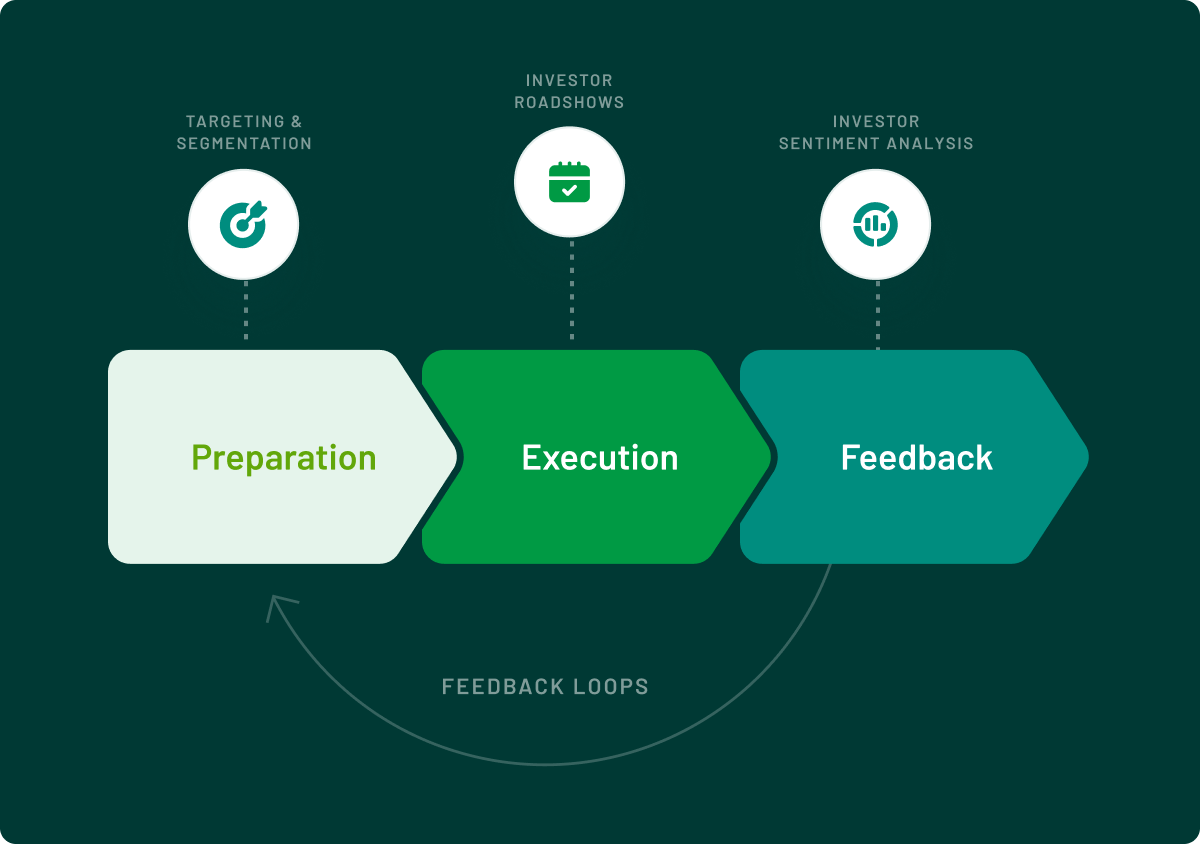
A strong webinar strategy breaks into four connected disciplines, each of which rewards close attention. Planning and structure determine whether the right audience attends the right content. Promotion and registration determine how many of them actually arrive. Engagement and delivery determine whether they stay, absorb the message and act on it. Repurposing and measurement determine how much value a single event ultimately produces and how much sharper the next event becomes.
These disciplines compound. A well-planned session attracts a more relevant audience; relevant audiences engage more deeply; deeper engagement yields richer material to repurpose; and rigorous measurement feeds directly back into the planning of the next event. Treated as a system rather than a checklist, each webinar makes the following one more effective.
5. Choosing the right partner
For internal updates, almost any conferencing tool will serve. For the high-visibility events that carry an organisation’s reputation, the production standard and the underlying technology become material to the outcome. The criteria that matter extend well beyond video quality to broadcast-grade reliability at scale, a full suite of interactive features, enterprise security, detailed audience analytics, and the availability of a team that can manage the technical execution so the host can concentrate on the message.
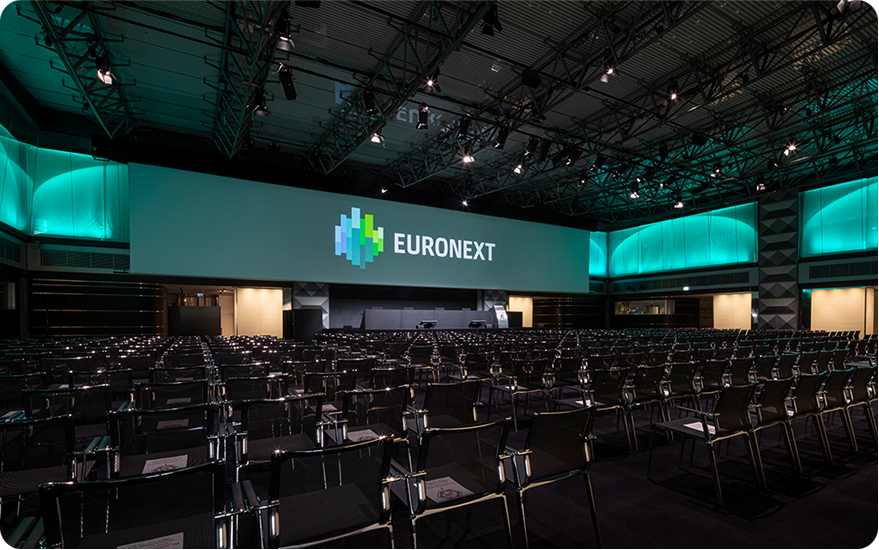
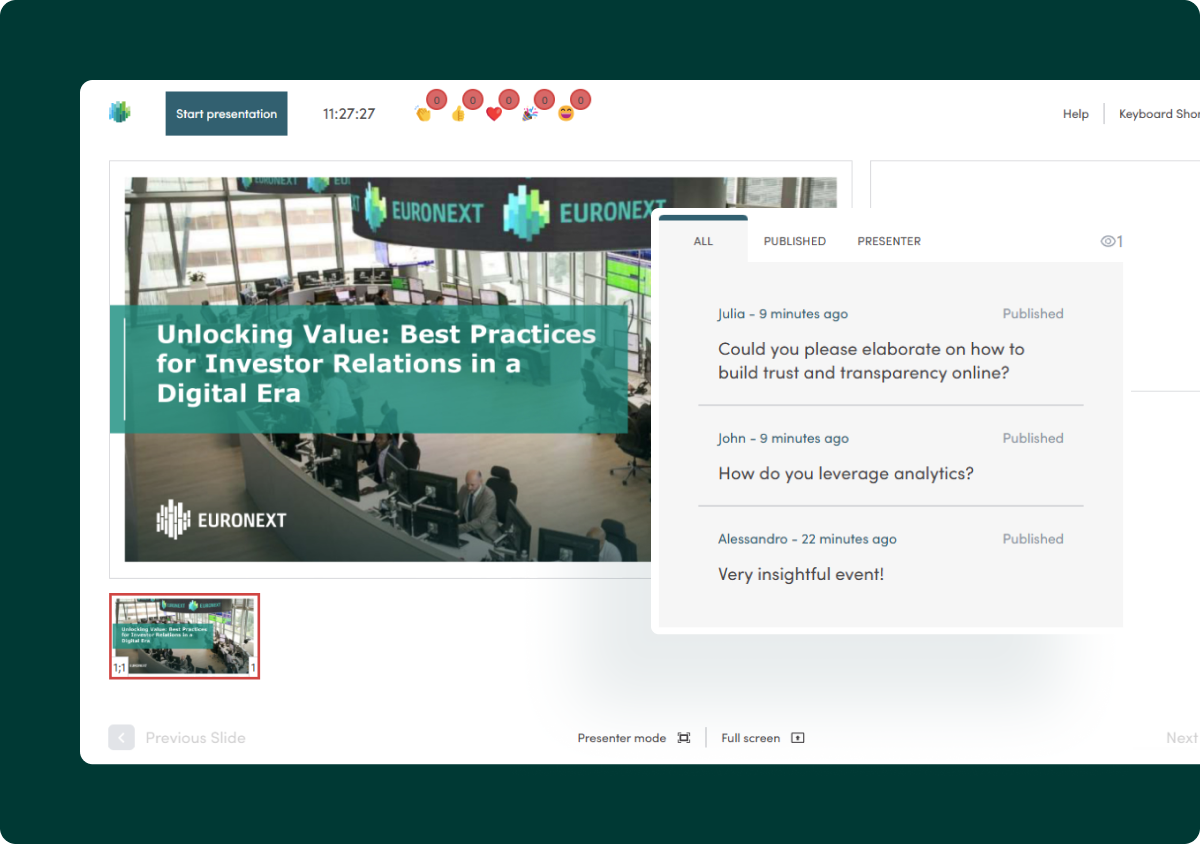
This is the territory in which EngageStream operates. As part of Euronext Corporate Solutions, it brings capital-markets-grade communication to corporate webinars and webcasts, supported by purpose-built broadcast studios across Europe, enterprise security certified to ISO 27001, peer-to-peer streaming technology that reduces bandwidth requirements substantially, and a white-glove service spanning consultation, coordination, production and end-to-end management. The experience runs deep: more than fifteen thousand events are delivered each year, for organisations ranging from KLM and Heineken to listed issuers such as Cofinimmo, which uses the platform to reach shareholders worldwide with interactive financial-results webinars. The interactive toolkit and real-time audience profiling are designed precisely for the two-way dialogue that distinguishes a genuine engagement strategy from a simple broadcast.
Key takeaways
-
Treat each webinar as a reusable asset within a system, not a one-off broadcast.
-
Webinars rank second only to in-person events for effectiveness, holding professional attention through interaction far longer than passive content
-
Lead with value, not a pitch: authority built before the buyer makes contact is what wins.
-
The lifecycle has four connected stages — plan, promote, engage, and repurpose-and-measure.
-
For high-stakes events such as AGMs, earnings calls and investor days, the production standard and platform are material to the outcome.
6. FAQs
What is a B2B webinar strategy?
A deliberate, repeatable approach to using live and on-demand video events to reach stakeholders, build authority and generate qualified leads — treating each event as a reusable asset rather than a one-off broadcast.
Are webinars effective for B2B lead generation?
Yes. Marketers rank webinars second only to in-person events for effectiveness, around three-quarters consider them a successful lead-generation tool, and a high share of B2B participants convert into qualified leads.
Which corporate events suit a webinar format?
Investor days and capital markets days, AGMs, earnings calls, town halls, press conferences and training programmes all translate well to virtual or hybrid webinars.
How do I choose a webinar platform?
Look beyond video quality to broadcast-grade reliability at scale, interactive features, enterprise security, audience analytics and the option of a full-service production team.
7. Conclusion
We hope these tips on how to write a company code of conduct will help you create a document that guides your employees to maintain compliance as you strive toward your goals.
When you write your code, you realise exactly how many policies and procedures there are in this ever-growing legislative environment. It can be overwhelming for both compliance professionals and employees.
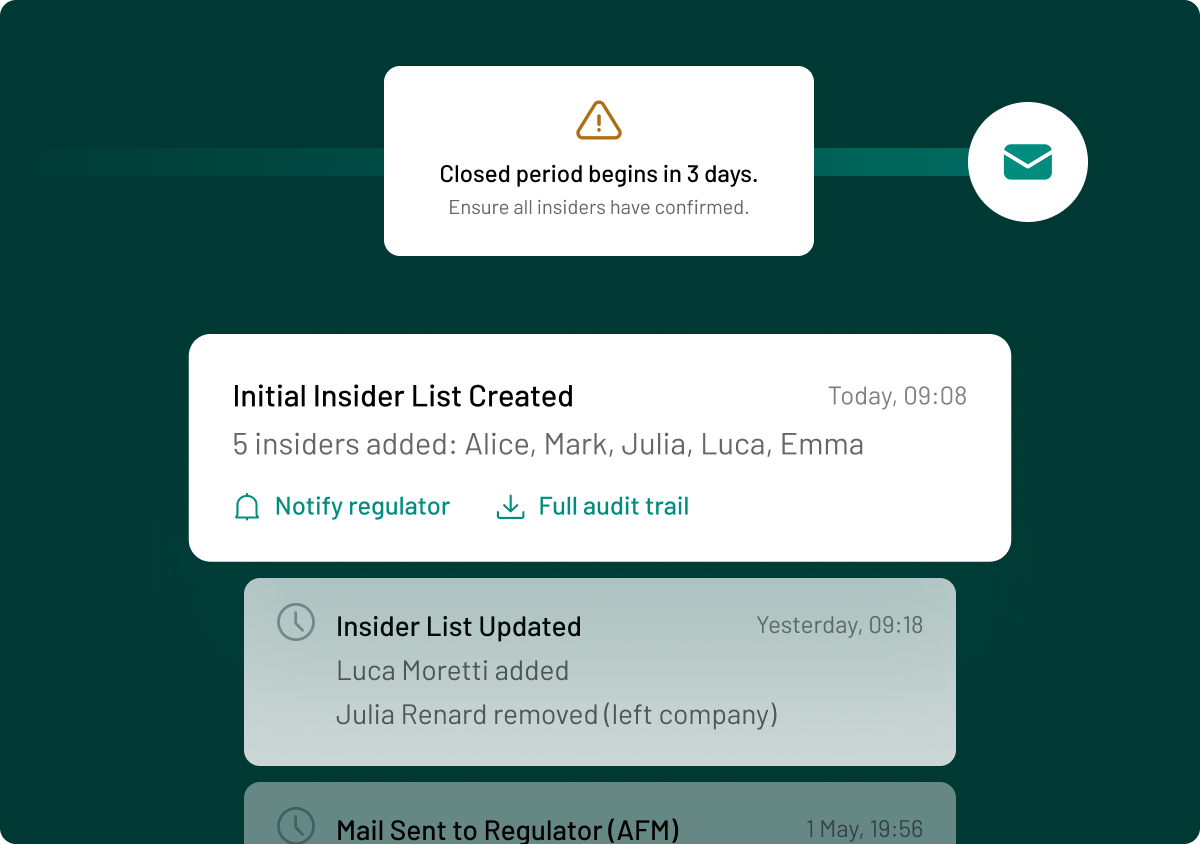
This is where compliance tools can help. InsiderLoghelps you understand when your persons discharging managerial responsibilities (PDMRs) must report their transactions in your financial instruments, alerts them to closed periods in which they may not trade and allows you to create a pre-clearance workflow for personal trading that makes it easier to prevent any transactions that may cause a conduct risk. Book a consultation to find out more.
8. References and further reading
- Value-first webinars
- Types of webinars and costs
- How to plan and structure a webinar
- How to promote a webinar
- Interactive webinars
- How to repurpose webinar content
- Webinar statistics 2026
- EngageStream webinar platform
- Engaging webinars & webcasts
- Corporate events: definition & types
- IR webcasting best practices
- The benefits of webcasting your AGM