









.png)




.svg)
.svg)
.svg)







.png)
.png)





.jpg)

%20F%20(1).jpeg)







.webp)






 Login
Login
An investor day, frequently presented as a capital markets day, is an extended event in which a listed company convenes its institutional shareholders, prospective investors and the sell-side analyst community for a structured examination of strategy, performance and outlook. It is the most concentrated opportunity in the IR calendar to influence perception of the long-term equity story, and shareholders attend with a deliberate set of expectations. Understanding those expectations precisely is the difference between an investor day that materially advances the case for owning the stock and one that merely fulfils a calendar obligation.
PwC research has been consistent on this point: most market participants depend on clear, targeted information to evaluate the companies they follow, and the substantive moments at which strategy can be examined and challenged are scarce. An investor day is precisely such a moment. The functions that prepare for it on the basis of what shareholders actually want from the event, rather than what the issuer would prefer to communicate, secure measurably better outcomes.
What shareholders are looking for
Shareholders attend an investor day with a recognisable set of objectives. They want to understand the company’s strategic direction and its medium-term financial trajectory in sufficient detail to test their existing position or justify increasing it. They want evidence of how the management team responds to market events and external pressures, because the credibility of the strategy is inseparable from the credibility of those executing it. They want the opportunity to discuss the challenges and concerns that have surfaced in their own analysis, and to hear how leadership intends to address them. They expect a two-way conversation rather than a sequence of presentations, and they value the opportunity to deliver feedback that the company is seen to absorb. They also expect a clear demonstration of the company’s preparedness for the regulatory and reporting standards now shaping institutional allocation decisions. This includes the sustainability disclosure regime governing European issuers under the Corporate Sustainability Reporting Directive.
The implication for the IR function is unambiguous. Content selection cannot be driven by the topics the issuer finds most comfortable to present; it must be informed by what shareholders are already considering and would address regardless. The most reliable way to confirm those priorities is to ask, and to plan the event accordingly.
Timing the event
Timing materially affects both attendance and the relevance of the material. Euronext Corporate Solutions research has identified a clear seasonality in the European market. June was a popular choice for issuers, aligning with first-quarter results. But the final quarter of the year was the most common, coinciding with third-quarter publication. That window provides an early indication of full-year performance and accommodates the availability of stakeholders. Alignment with results timing has a substantive purpose: it allows the strategic narrative to be reinforced with current performance data, rather than rehearsed against figures that are months out of date.
Sourcing topics from the attendees
Pre-meeting surveys distributed to confirmed and prospective attendees serve two purposes. The first is editorial: they surface the specific subjects on which shareholders most want information, ensuring the agenda addresses them rather than skirting them. The second is reputational: investors who observe their input shaping the programme interpret the gesture as evidence that the company is willing to engage substantively rather than defensively. The survey output should be treated as material in the planning sense; the topics that recur most frequently become the deep dives, and any subject the issuer would prefer to omit should be addressed proactively if it features in the responses. Specialist support is available through ECS Shareholder Analysis for issuers seeking to organise the survey effectively and target the right investor segments.
Aligning the equity story
An investor day reveals the consistency, or otherwise, of the equity story across the executive team. Transparency and trust depend on the company speaking with one coherent voice on strategy, performance, capital allocation and outlook; representatives offering subtly different versions of the same narrative damage credibility far more than a single suboptimal answer ever could. The IR function carries the responsibility of building that coherent equity story and confirming, before the event, that the chief executive, chief financial officer and operating leaders deliver it with consistency in language, emphasis and tone. ECS Post-Listing Advisory supports issuers specifically in constructing and stress-testing the equity story for events of this importance.
Presentation delivery follows the same principle. Investor days routinely involve four to six executive speakers, each requiring not only the right material but the right preparation in how to deliver it. Media coaching and structured rehearsal are particularly valuable for executives less accustomed to public delivery, because clarity and composure under questioning are themselves taken by the audience as evidence of operational discipline. Last-minute improvisation introduces precisely the inconsistency the preparation is designed to prevent.
Making the event accessible to international investors
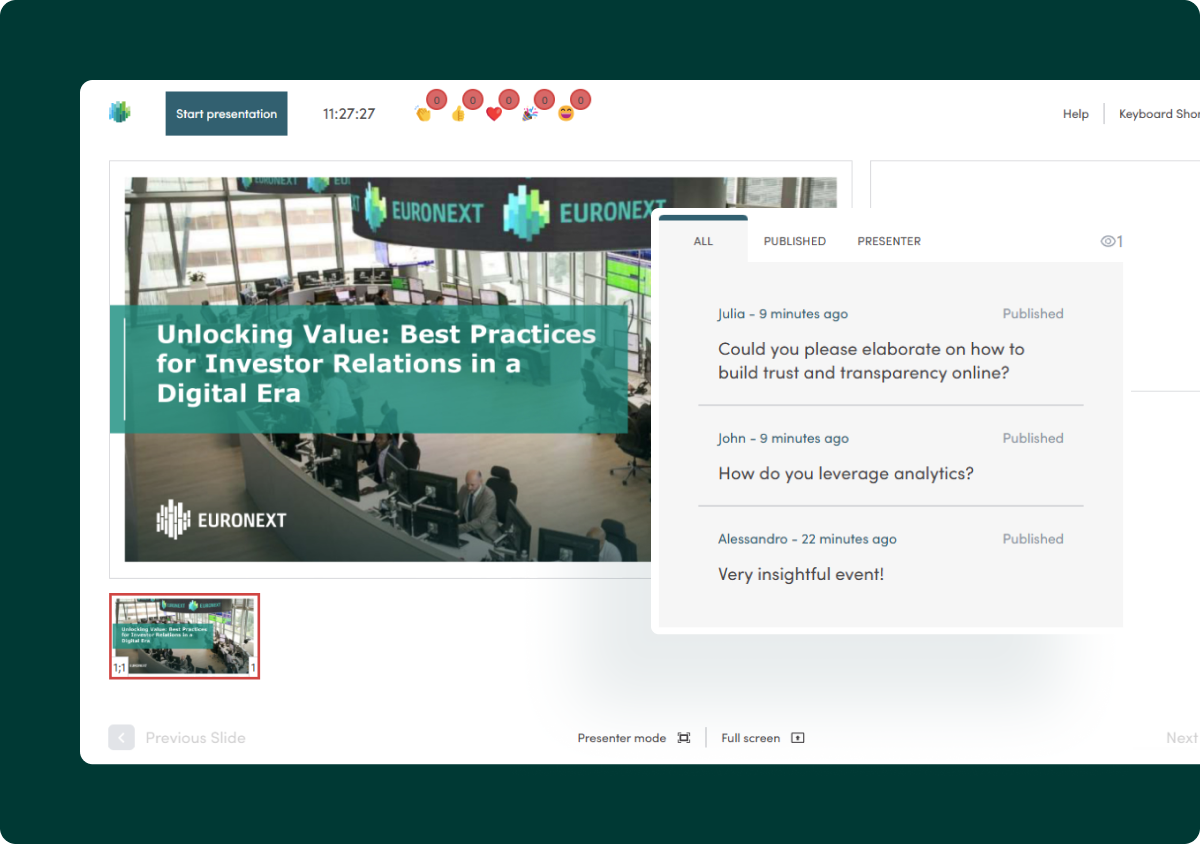
Hosting the investor day in a virtual or hybrid webinar format materially broadens the accessible audience. A shareholder or analyst who can join from their desk is significantly more likely to attend than one who must clear a full day for travel, and the practical economics of accessing investors in different jurisdictions improve substantially. ECS research recorded that 85 per cent of companies made recordings of their investor days available online, with 100 per cent of issuers in Italy and the Netherlands doing so, which reflects the established view that on-demand availability is now expected rather than exceptional. The on-demand recording continues to work as an asset long after the live event, supporting subsequent investor outreach and broker review.
Engagement during the event matters because shareholders attend a large number of issuer events each year and the recall of any individual session is correspondingly thin. Interactive features — live polls calibrated to each major section, moderated question-and-answer, chat-based feedback — make attendees active rather than passive participants, which materially improves recall of both the company and its messaging.
A worked example
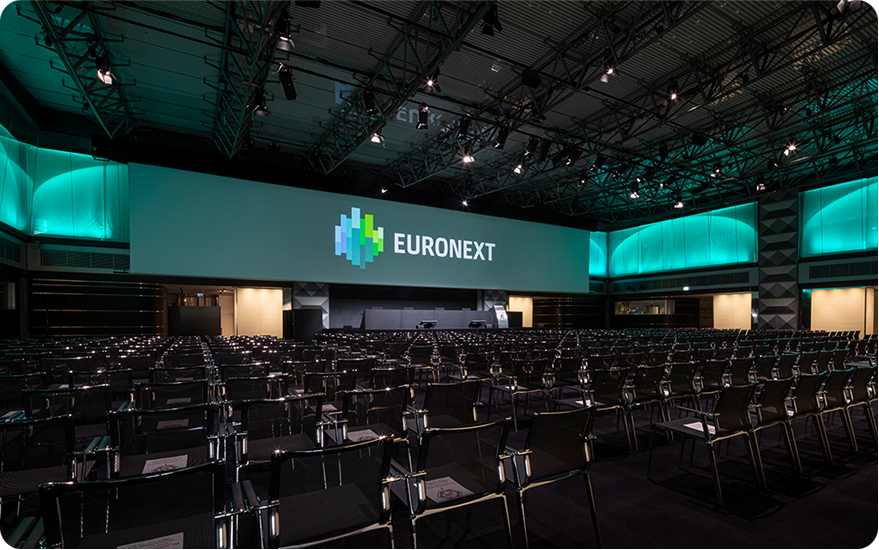
The standard is illustrated in the BESI case study. The IR team sought a capital markets day partner capable of delivering a complete end-to-end event-management service. The brief covered location scouting, professional cameras, microphones and lighting, and coordinated event delivery on the day. As the company’s IR coordinator subsequently observed: "The team delivered a one-stop-shop experience, and the positive and enthusiastic response we received confirmed the success of the event." The structural lesson is straightforward. The production standard, the platform reliability and the level of expert event management are themselves part of how shareholders judge the seriousness of the company hosting them. These are the characteristics ECS has built EngageStream specifically to provide.
What to include in the presentation
A coherent investor day presentation typically covers several core sections. The market opportunity reviews industry trends, market size and competitive positioning. The business model articulates how the company makes money and which revenue drivers support scalable profitability. Financial performance and outlook contextualise the results against the market backdrop. The innovation roadmap covers upcoming product launches and technology advances. Customer success and case studies illustrate the strategy in practice. The growth strategy outlines organic expansion and any inorganic activity. A structured question-and-answer session closes the event and allows the open, frank discussion shareholders attend the event to participate in. Each of these sections discharges a specific element of the expectations described above. An investor day that addresses all of them in sequence is materially more likely to meet the audience on the terms they brought to it.
Key takeaways
-
Shareholders attend with a recognisable set of expectations: clear strategy, evidence of management response under pressure, two-way dialogue and regulatory preparedness (including CSRD).
-
Timing matters: Euronext research shows June (Q1 results) is popular and Q4 (Q3 results) is the most common slot.
-
Pre-meeting surveys both improve the agenda and signal that the company engages substantively rather than defensively.
-
A coherent equity story, consistent across speakers, is the single biggest determinant of credibility on the day.
- Make the event accessible to international investors: 85% of companies recorded their investor days online (100% in IT and NL).
FAQs
What do shareholders want from an investor day?
Clear strategy and medium-term financial trajectory, evidence of how management responds to external pressure, substantive discussion of challenges, two-way dialogue with leadership, and a clear demonstration of regulatory preparedness (including CSRD).
What is the best time to hold an investor day?
Euronext Corporate Solutions research found June was popular (alignment with Q1 results) and the final quarter was the most common, coinciding with Q3 publication and offering an early indication of full-year performance.
What should an investor day presentation include?
Market opportunity, business model and revenue drivers, financial performance and outlook, innovation roadmap, customer success and case studies, growth strategy (organic and inorganic), and a structured Q&A.
Should we make our investor day available on demand?
Yes. ECS research found 85% of companies do so, with 100% in Italy and the Netherlands. On-demand availability is now expected by international shareholders and supports follow-up outreach.
References and further reading
- IR Events
- Investor Relations
How IR webcasting drives market performance- How to use data to engage investors in earnings calls
- Engaging international investors with virtual and hybrid IR events
Webcasting your capital markets day- The ultimate guide to hybrid event planning
- EngageStream webcasting platform
- Post-Listing Advisory
- Shareholder Analysis
.jpg)