









.png)




.svg)
.svg)
.svg)






.png)
.png)





.jpg)

%20F%20(1).jpeg)







.webp)






 Login
Login
The timing of your initial public offering (IPO) is key. You must be in the right position to move and the market conditions should be right to maximise the value of the offering. That is demonstrated in the fact that IPO numbers had dropped in recent months before surging more than 150% year-on-year during Q3 2025.
However important it is to move quickly when the time is right, you cannot sacrifice compliance. You still need to allow for rigorous investor due diligence and undergo disclosure checks before you go public and this process needs to happen with the strictest security and confidentiality.
This is why a virtual data room (VDR) plays an important role in the IPO due diligence process. From drafting the prospectus to managing regulatory scrutiny and investor due diligence, every document matters. Your VDR helps you maintain control and transparency, whilst allowing for secure collaboration in the run-up to listing day.
Key takeaways
- A VDR centralises all IPO documentation in one secure environment so that it is easy to find the documents each user needs to complete their duties.
- It streamlines collaboration between internal and external parties, allowing you to answer questions and log regular issues that you can address proactively.
- Version control reduces costly errors in the prospectus phase by ensuring everyone works on the same iteration of every document.
- Granular permissions protect your sensitive pre-IPO information, helping ensure people only see what they need.
- Audit trails help you maintain regulatory compliance and are essential for good governance of your IPO.
Why document control is critical in an IPO
There are a wide range of documents that form part of the IPO due diligence process. They include:
IPO document | Explanation |
Draft and final prospectus | The draft prospectus outlines the company’s business, financial position, risks and offering details for regulatory review. The final prospectus is the approved version published to investors before the shares begin trading. |
Financial statements and audit reports | These documents present the company’s historical financial performance and position, verified by an independent auditor. Investors and regulators use them to assess the company’s financial health. |
Corporate governance documents | These records explain how the company is managed and overseen, including board structures, committees and internal policies. They demonstrate that the company meets governance expectations for listed companies. |
Material contracts | These agreements cover key business relationships, such as major customers, suppliers, financing arrangements or partnerships. They help investors understand the company’s obligations and revenue drivers. |
Regulatory filings | These are submissions to regulators and exchanges required during the IPO process. They confirm that the company meets legal, disclosure and listing requirements before admission to trading. |
It is important to secure these documents and keep them in a centralised workspace on which all parties, including your internal teams, investors and regulators, can collaborate without risking leaks or unauthorised access.
Where you hold information in fragmented spaces, you risk:
- A lack of version control, meaning different stakeholders work from different iterations of the document. This can cause an issue with the obligation to provide equal access to information for all prospective shareholders.
- Delays in due diligence can occur if stakeholders, such as underwriters, regulators and advisors, cannot access all of the necessary documentation to fulfil their duties.
- Compliance gaps, such as not being sure who does or does not have access to inside information and, therefore, whether they should appear on the process’s insider list.
- Data security exposure as you are keeping different documents in different locations, sometimes with security vulnerabilities, and sharing multiple access credentials, which makes it difficult to control who sees what and when.
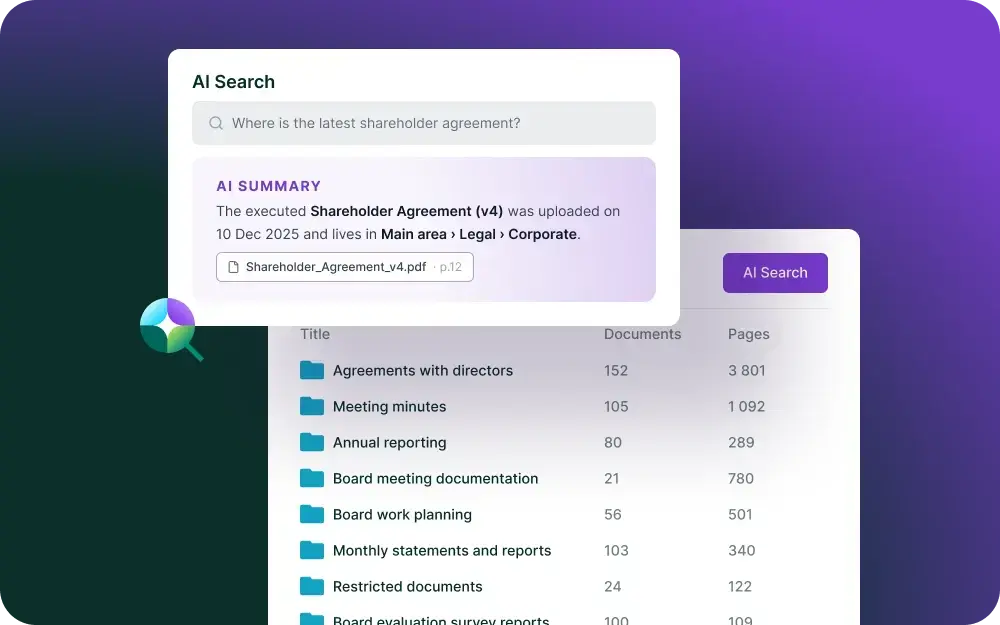
A VDR keeps information in a secure central location, with robust access controls and encryption to prevent data loss.
The role of a VDR in the pre-IPO phase
You can use a VDR from the very early stages of your IPO journey, ensuring you begin as you mean to go on. During this period, you are starting to put together the building blocks for the main campaign, when investors will start to scrutinise your offering.
Make sure you keep this early work confidential and organised so you can go to the markets confident you have a powerful story to tell.
Structuring the draft prospectus process
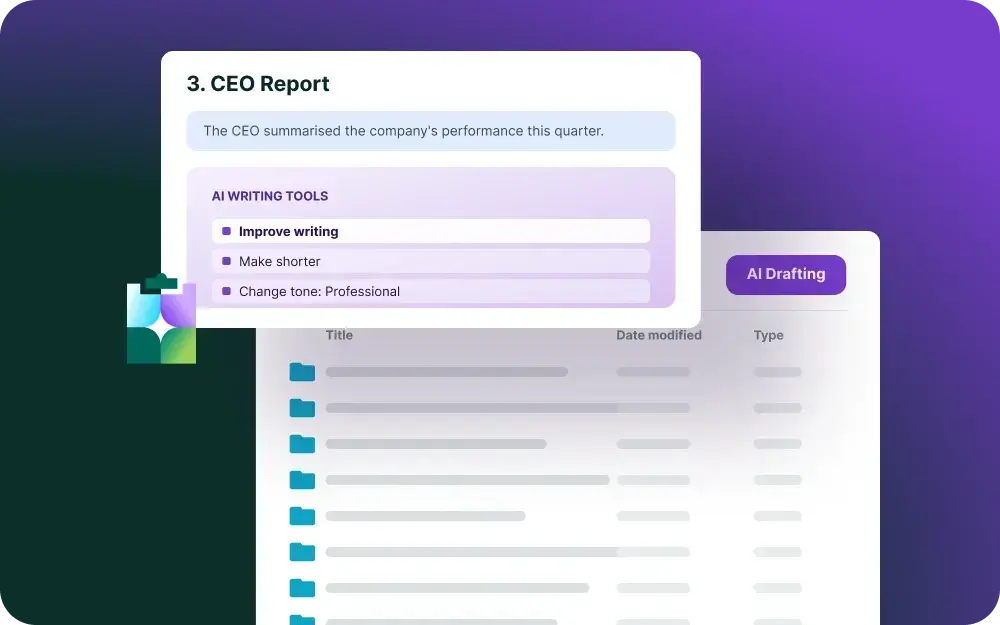
Using a VDR for the early iterations of your prospectus keeps it secure and prevents the investment community seeing early ideation before you have finessed and streamlined it. By controlling access for only approved internal and external stakeholders, the draft of your prospectus remains a working and developing document, guided by the input of only trusted parties.
You can share draft versions for legal review and sense checking in a secure manner, within the VDR, revising as many times as you like before the market sees it. The VDR also provides a clear version history and change tracking so you understand what changed between iterations, allowing you to revisit previous versions if needed.
Preparing for regulatory review
You want to make the regulator’s job as easy as possible. Without regulatory approval, you cannot move forwards with your IPO. By centralising all the supporting documentation you have to prove the legal viability of your offering, you help streamline regulatory due diligence and keep up the momentum of the process.
Regulators and advisors can log into the VDR thanks to permission-based access that allows them to see exactly what they need and nothing that does not concern them at this stage. Create a space for all your regulatory materials and take advantage of exportable audit logs to prove that you have carried out each step of your regulatory duties.
How a VDR supports IPO due diligence
When the time comes to invite the investment community to delve into your IPO and conduct their due diligence, your VDR becomes a platform for the essential interactions that must take place so that investors feel comfortable backing your bid to go public.
Secure investor access
A VDR helps you manage access to stakeholders so that you can control who sees what. For example, an institutional investor would require access to financial statements, forecasts, prospectus drafts and your key commercial contracts to help assess whether your valuation is suitable to help them achieve a return in the future.
You can implement an access system that requires all investors to sign a non-disclosure agreement (NDA), adding extra security to the process. Dynamic watermarking is another means to add visible information, such as the viewer’s name, email address, IP address or access time to documents viewed. These precautions discourage unauthorised sharing and help trace the source of any leaks involving sensitive pre-IPO information. They also help you know who has accessed any inside information during the process.
Real-time Q&A management
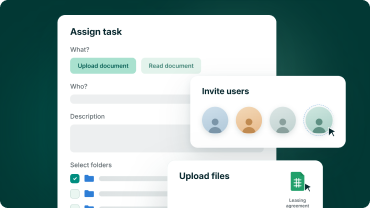
Your VDR will ideally provide a structured Q&A workflow that allows investors, advisors, auditors, listing authorities and all other stakeholders to ask any questions they might have, without risking information leakage by using insecure, third-party messaging platforms.
Keeping the Q&A within the secure data room also centralises all conversations, so you don’t miss anything if an internal stakeholder forgets to report an interaction they had on email, for example. You can spot common themes and regular concerns, assigning responsibility to team members to track these issues and resolve them.
Activity tracking and analytics
Document engagement monitoring is helpful to understand which documents are opened most often and which sections attract the most attention. This allows you to prioritise your resources to address concerns in a proactive manner and to uncover which aspects of your offering are most attractive to potential investors. This can help guide your IPO marketing push.
Tailor your communications with potential investors based on your engagement insights. Once you understand their interests and pain points, you can target them more effectively and stand a better chance of closing the deal.
Governance, compliance and risk mitigation
Maintaining good governance across the IPO due diligence journey is essential, and this means ensuring you do all you can to meet compliance requirements and mitigate any risks that occur. A VDR helps you achieve this in the following ways:
Transparency
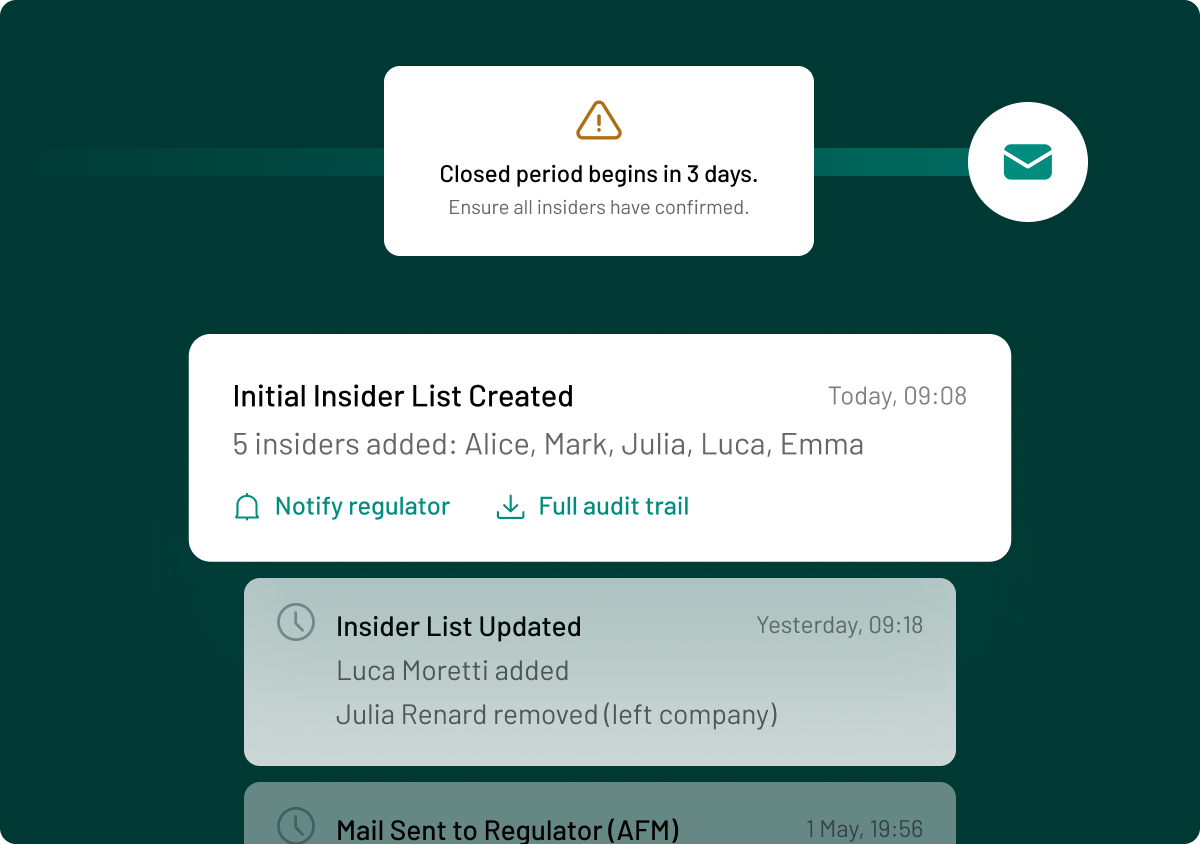
- Time-stamped document access provides a transparent audit trail over who has looked at which documents. There is no doubt over whether the legal counsel has assessed some information, for example. If they haven’t, do not move forward until they have.
- Full visibility over downloads helps narrow down the source in the event of a leak. Being able to identify potential candidates, you show a commitment to compliance. It also acts as a deterrent to those who might have considered sharing your information in an unauthorised manner.
Data security
- Your data is encrypted at rest and in transit, making it secure and reducing the chances of bad actors accessing it.
- Multi-factor authentication prevents access by parties who have stolen log-in credentials from genuine users.
- Role-based permissions mean that users can only access what they need to be able to complete their duties and no more. Very few users will be able to access all areas of the VDR.
Regulatory compliance
- You are ready for Market Abuse Regulation (MAR) requirements by being able to protect access to inside information, document decisions and controls and create a clear disclosure strategy in accordance with your obligations.
- Align with the EU Transparency Directive by organising regulated disclosures, controlling document access and maintaining audit trails that demonstrate timely and consistent information sharing with the market.
Using the VDR in the final IPO stages
A virtual data room helps manage last-minute document updates by maintaining strict version control and coordinating the controlled publication of the final prospectus so all stakeholders work from the approved version. It also enables secure board approvals by providing a controlled environment for directors to review and authorise final documents before disclosure.
As you move into post-IPO life, the VDR transitions from being an IPO room to acting as an ongoing governance repository for confidential business information. You can maintain all sensitive conversations and document sharing in the VDR, enjoying the benefits of a secure, centralised information hub.
An IPO is fundamentally a document-driven process under intense scrutiny. A well-structured VDR reduces risk, improves coordination and ensures that every stakeholder works from a single, secure source of truth. From the first draft prospectus to listing day, the right data room supports efficiency, compliance and investor confidence.
FAQ
Ideally, you should set up your VDR at the very start of the IPO preparation phase, during prospectus drafting. This helps you avoid having to restructure documents and folders later. It also benchmarks the security and access standards you expect in the process from the very beginning.
The VDR centralises documentation, controls access, enables structured Q&A and provides full transparency through tracking and audit logs. It helps external parties find everything they need in one place, speeding up the process for all parties.
A VDR is not legally mandatory for an IPO, but you do have a duty to run a secure and efficient due diligence process and the VDR facilitates this.