









.png)







.svg)
.svg)
.svg)







.png)
.png)







.jpg)

%20F%20(1).jpeg)







.webp)






 Login
Login
There are many processes during which you are bound by legal obligations to manage sensitive documentation in a manner that maintains the integrity of its contents and avoids leaks that could compromise it. For example, high-stakes transactions, regulatory reviews and litigation scenarios require a robust process to ensure only those who need access to certain information can find it.
In January 2026, it was reported that a UK law firm had meant to supply a litigant-in-person with personal data it held on him. However, it accidentally gave him access to 95% of all the contents of the opposing party’s file and unrelated data pertaining to people with the same surname as him. This could constitute a major data breach under GDPR, as well as compromising the law firm’s client’s case.
It is no longer enough to simply tell regulators and authorities that you have measures in place to protect your documents; you must be able to demonstrate who accessed what, when and under what authority.
Thankfully, by using a virtual data room (VDR) for such activities, you gain access to structured, time-stamped visibility that strengthens your internal controls and supports regulatory compliance by providing legal defensibility. This article explores what virtual data rooms are, why they are important and how they support compliance during certain processes.
Key takeaways
- Audit trails in a VDR provide time-stamped, tamper-proof records of document activity, allowing organisations to prove how sensitive information was handled.
- Unlike standard file sharing, VDR audit trails offer granular, document-level tracking and centralised reporting designed for high-stakes legal and regulatory use.
- Courts and regulators increasingly expect firms to demonstrate, not just claim, that they controlled access to confidential information.
- Audit trails strengthen defensibility in M&A and IPOs by evidencing controlled information sharing and consistent due diligence processes.
- In investigations and regulatory reviews, audit logs help identify access patterns, trace potential leaks and reconstruct decision-making timelines.
Features such as immutable logs, role-based permissions and exportable reports work together to support compliance, reduce risk and provide credible evidence under scrutiny.
What is an audit trail in a VDR?
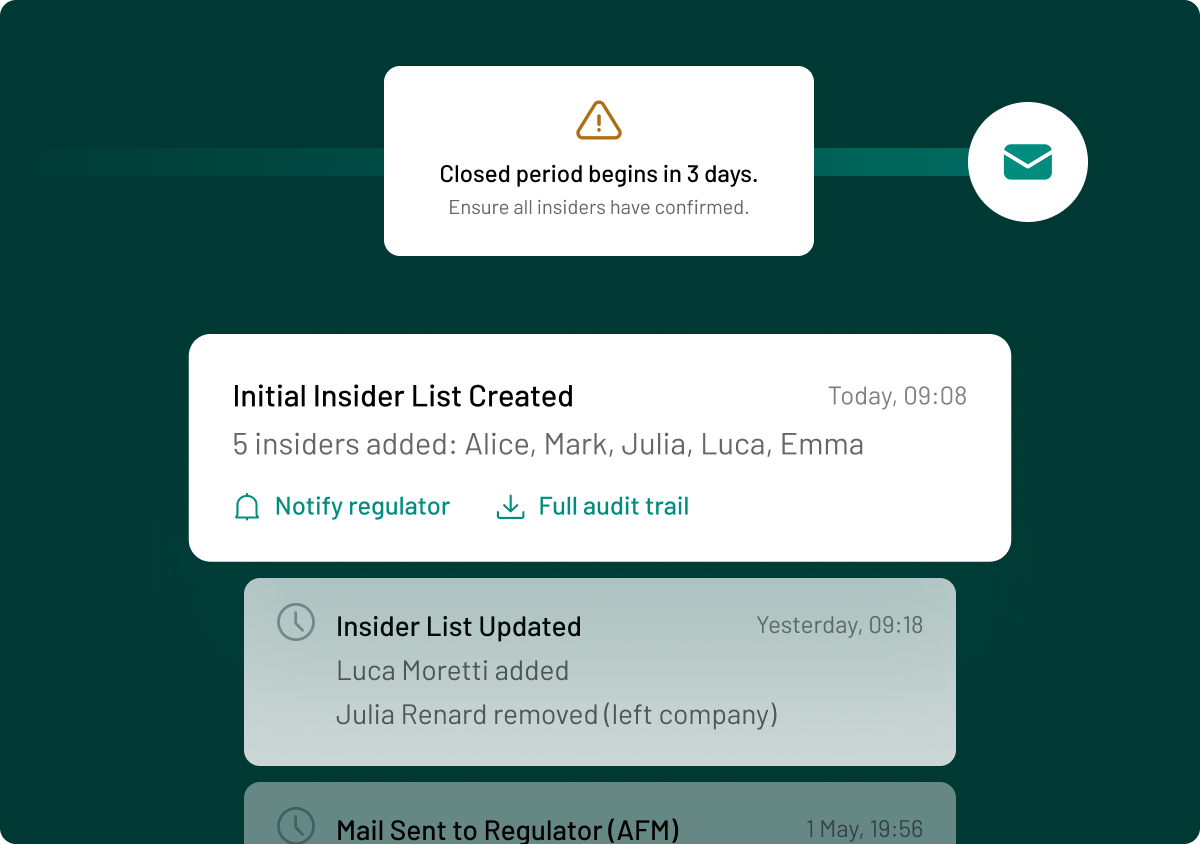
An audit trail in a VDR is a detailed, time-stamped record of every action that takes place within the platform, showing how documents are accessed, shared and managed throughout a process. It allows you to track user behaviour and demonstrate that you handled sensitive information in a controlled and compliant manner.
Unlike standard file-sharing tools, audit trails in VDR are designed to apply to high-stakes environments, such as due diligence, mergers, legal matters and other such activities. VDR audit trails provide:
- Immutable activity logs, meaning you can’t alter or delete records. This ensures the integrity of the evidence if you need to review it in a dispute or regulatory investigation.
- Granular tracking at document level, allowing you to see exactly who viewed, downloaded or printed a specific file and when.
- Centralised reporting functionality for administrators, so they can generate structured reports that summarise user activity across the entire project, making it easier to respond to audits or internal reviews.
- Controlled administrative oversight, allowing you to manage permissions, access logs and reporting in a secure framework. You can be transparent and consistent with your monitoring to ensure it aligns with your legal and regulatory obligations.
Why audit trails matter in legal and regulatory contexts
Context | Why audit trails matter |
Evidentiary support in litigation | Audit trails help legal teams show who accessed, viewed, downloaded or changed documents and when. This creates a clear record that you can use where there are disputes about disclosure, privilege and document handling. |
Regulatory scrutiny and compliance | Regulators often expect firms to demonstrate that they handled sensitive or inside information properly. Audit trails provide evidence of the access controls you have in place and the activity on each document. You can demonstrate your compliance with both internal and external requirements, as well as keeping records in the secure manner required under the law. |
Corporate governance and accountability | Audit trails create transparency around decision-making and document handling. This helps you show that you assigned responsibilities properly and that your approval workflows are robust. It also maintains oversight on the integrity of the sensitive information that your board needs to access. |
Use cases where audit trails in VDRs strengthen defensibility
M&A and IPO transactions
During long processes such as mergers and acquisitions (M&A) and initial public offerings (IPO), audit trails help you demonstrate the controlled and compliant way you handled the sensitive information generated. In both cases, you will have multiple stakeholders accessing documents at different stages and you will need to have clear evidence of how they interacted with the content to fulfil your confidentiality and Market Abuse Regulation (MAR) obligations.
Audit trails allow you to show:
- Who accessed key documents and at what stage of the transaction
- That access was limited to authorised participants
- That information sharing aligned with internal controls and regulatory expectations.
These audit trails also play a key role in documenting your Q&As with other parties and interactions regarding due diligence. During both of these processes, stakeholders will ask large volumes of questions and you will provide responses, as well as updating documents. A structured audit trail shows:
- All parties received consistent information
- No selective disclosure took place
- The process followed a clear and fair workflow.
If anyone raises issues later, you can rely on this record to demonstrate the integrity of the procedure.
Internal investigations
During an internal investigation, you need to gain insight on who accessed the information and how they used it across the organisation. If someone raises concerns about the process, the audit trail helps:
- Identify access patterns across users and documents
- Detect unusual activity outside normal roles or timeframes
- Confirm whether access was aligned with the permissions you set.
You can also rely on audit trails to trace potential data leaks. If it appears that confidential information has spread beyond the organisation, audit logs help you:
- Track document views, downloads and sharing activity
- Narrow down where and when the exposure occurred
- Assess whether the issue was accidental or deliberate.
Having this traceability available to you strengthens your investigation and supports your follow-up actions with clear, evidence-based findings.
Regulatory reviews and enforcement actions
During regulatory reviews, audit trails help you demonstrate that your organisation followed proper compliance procedures. Regulators expect clear evidence of how you handled and controlled information.
The audit trail allows you to:
- Produce documented evidence of access controls and document handling
- Show consistent application of internal policies
- Demonstrate that sensitive information was restricted appropriately.
If regulatory bodies request evidence of how you handled data during processes, the audit trail allows you to:
- Reconstruct timelines and decision-making processes
- Respond quickly and accurately to supervisory bodies’ requests
- Evidence your good faith efforts to maintain compliance.
This can provide mitigation in the event that there is a regulatory breach. You can show that you were proactive in managing risk and had controls in place to try and prevent such activity.
Other key VDR features that enhance legal defensibility
- Immutable logging mechanisms to ensure no one can alter or delete user activity records. This means you have a reliable history of document access and actions. Your evidence is more credible and can withstand scrutiny in the event of a dispute or investigation.
- Exportable audit reports allow legal teams to quickly produce structured records of activity, including access, downloads and document changes. This makes it easier to respond to regulators, courts or internal investigations with clear, organised evidence.
- Multi-factor authentication records show that users verified their identities before accessing sensitive documents. This ensures only authorised personnel can view such information and reduces the risk of the data getting into the hands of bad actors.
- Role-based access controls ensure that users only see information relevant to their role or matter and there is no unnecessary exposure of sensitive information to anyone who does not need to see it. You can prove that you controlled access and maintained confidentiality effectively.
- Watermarking tied to user identity embeds identifying details such as name or email onto documents viewed or downloaded. This discourages unauthorised sharing and allows you to trace the source of any leaks, reinforcing your control over confidential information.
- Retention and archival controls ensure documents and activity records are stored for the appropriate period and you can retrieve them when needed. This helps you meet legal and regulatory data handling requirements while maintaining access to evidence for future disputes or reviews.
Best practices for maximising audit trail value
- Establish clear access governance policies so that all parties understand what information they can and cannot read and download.
- Regularly review user permissions to ensure they are up to date and parties still need access to the documents they are able to see.
- Retain logs in accordance with legal retention rules so that you do not contravene laws such as GDPR.
- Assign responsibility for VDR oversight to a person or team so they can take the lead coordinating your permissions and evidence gathering.
- Test reporting functionality before high-risk transactions to make sure that you will be able to extract the accurate audit trail when needed.
In environments where transparency and accountability are critical, audit trails transform document management from passive storage into a defensible governance infrastructure. By capturing detailed, time-stamped activity records, VDRs provide the evidentiary backbone required to withstand regulatory review, litigation scrutiny and transaction-related disputes.
FAQ
While admissibility depends on jurisdiction, structured and well-maintained digital records are commonly relied upon in litigation and investigations.
Retention periods depend on the jurisdiction in which you are located, regulatory requirements and internal policies within your business.
No. They support and document compliance processes, but must be combined with strong governance controls to create a holistic approach to preventing unethical behaviour.