









.png)




.svg)
.svg)
.svg)







.png)
.png)






.jpg)

%20F%20(1).jpeg)







.webp)






 Login
Login
For M&A transactions and due diligence, a virtual data room must deliver far more than secure file storage. The features that determine whether a data room accelerates or obstructs a deal are: granular access control, a complete audit trail, dynamic watermarking, an integrated Q&A module, and robust security certifications including ISO 27001 and SOC 2. Admincontrol Data Room from Euronext Corporate Solutions is built specifically for this environment, combining bank-grade security with the workflow tools that corporate and M&A teams require to run efficient due diligence processes.
- Security architecture (AES-256 encryption, MFA, ISO 27001, SOC 2) is the non-negotiable baseline, not a differentiator.
- Document-level granular permissions are essential when multiple buyer teams access different document subsets simultaneously.
- The audit trail doubles as a buyer analytics tool: time spent on documents and Q&A patterns reveal which counterparties are most engaged.
- AI-assisted redaction and OCR full-text search are now standard expectations in enterprise-grade VDRs for 2025–2026 deals.
- EU data residency is a compliance requirement for regulated sellers, not a preference, under GDPR and DORA.
1. Security Foundation
Security is the product. Every other VDR feature is secondary to a robust security architecture. The non-negotiable requirements for any M&A or due diligence data room are:
| Feature | Required Standard |
|---|---|
| Encryption at rest | AES-256 minimum |
| Encryption in transit | TLS 1.2 or TLS 1.3 |
| Multi-factor authentication | Mandatory for all users, no exceptions |
| Security certifications | ISO 27001 and SOC 2 Type II (both required) |
| Dynamic watermarking | User identity + IP + timestamp on every viewed page |
| Screen capture prevention | Fence view / secure viewing mode |
2. Granular Access Control
M&A processes involve multiple parties reviewing the same document set with different authorisation levels. A corporate acquirer and their external legal advisors should not have identical access; a financial sponsor in a competitive auction process should not see documents prepared exclusively for a strategic buyer.
The access control architecture must support:
- Role-based groups: Assign users to predefined groups (Management, Buy-Side Financial, Buy-Side Legal, Sell-Side Advisors) with group-level default permissions.
- Document-level overrides: Grant or restrict access to individual files independently of their parent folder. A single sensitive employment contract may require narrower access than the broader HR folder.
- Independent print, download, and copy controls: Read-only access without download rights is standard for highly sensitive documents. Print restriction should be configurable separately from download restriction.
- Time-bounded access: Access that expires automatically on a defined date, or that can be revoked instantly (without alerting the user) is essential when participants exit the process.
- IP restrictions: Limiting access to known corporate IP ranges adds a layer of physical security for the most sensitive document categories.
3. Audit Trail and Activity Analytics
The audit trail in an M&A data room serves two distinct purposes: regulatory compliance and strategic intelligence.
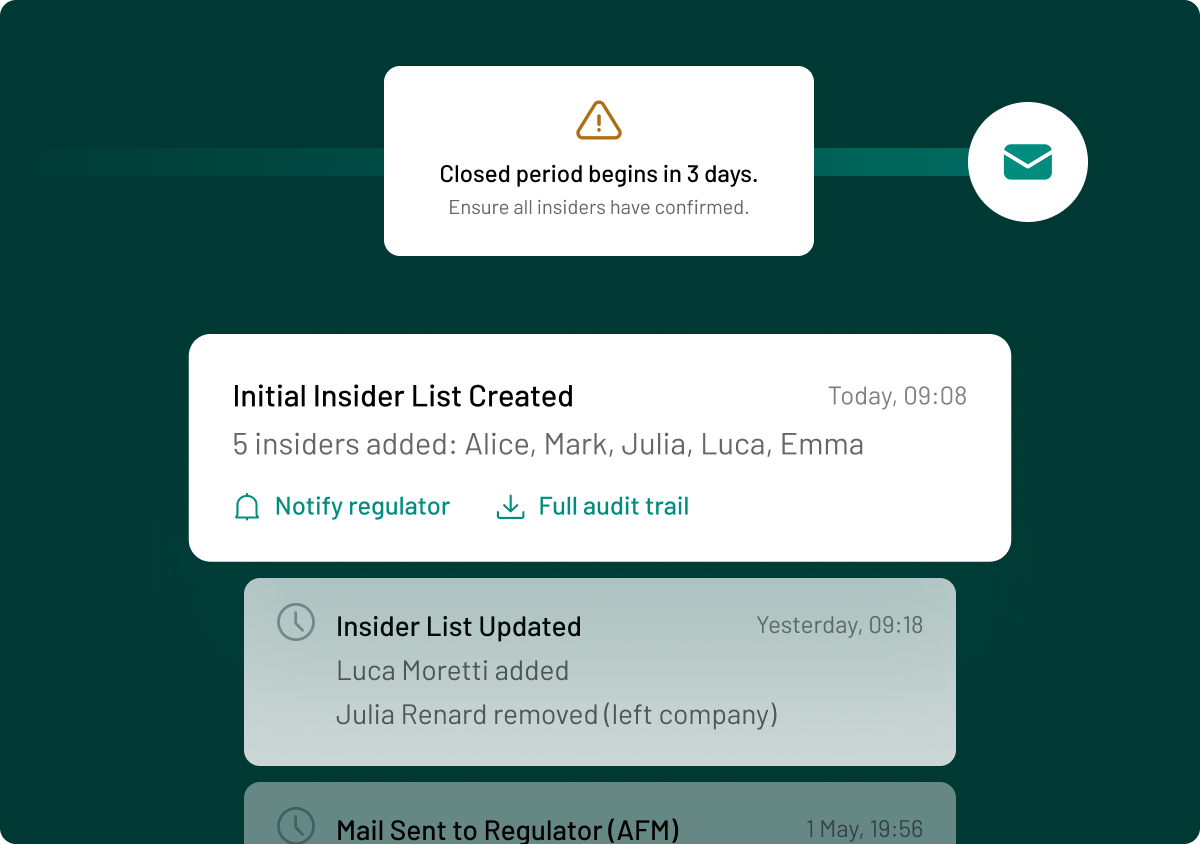
From a compliance perspective, a complete audit trail documents who accessed what, when, and for how long, providing the evidence chain required for legal due diligence sign-off and regulatory inspection under frameworks including GDPR and DORA.
From a strategic perspective, sell-side advisors use activity analytics to understand buyer engagement. Identifying which buyers have spent the most time on financial projections or IP schedules, and which have barely opened core documents, enables prioritisation of management time and sharper negotiation positioning. This intelligence is only available if the audit trail captures document-view events and download activity across different user groups.
Required audit trail capabilities:
- Timestamped log of every document view, download, and print event per user
- Page-level reading time for all document formats
- Q&A submission and response history
- Access attempt logs (including failed access attempts)
- Exportable in PDF and structured data formats for legal and compliance use
| Admincontrol Data Room delivers the audit trail, access control, and EU compliance your M&A transaction requires. Request a demo |
|---|
4. Document Management and Search
A large M&A data room may contain thousands of documents across dozens of categories. Document management capability directly affects how quickly counterparty advisors can locate what they need. Slow navigation creates friction that delays the deal.
Essential document management features:
- Bulk upload with drag-and-drop: The ability to upload entire folder structures in a single operation, preserving directory hierarchy, eliminates manual file-by-file administration.
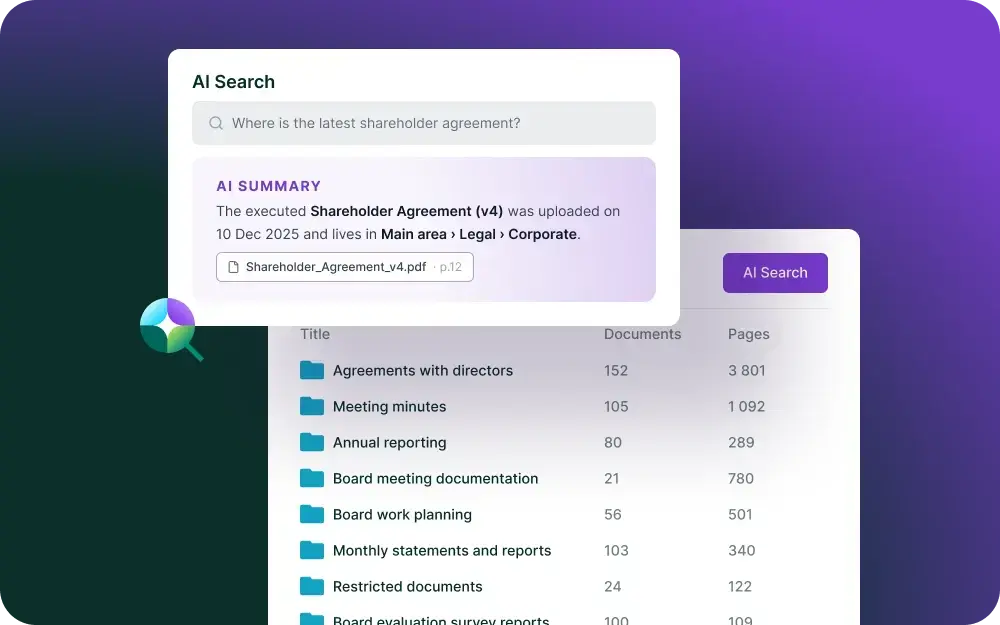
- OCR full-text search: Search must index the text content of uploaded documents, including scanned PDFs and image-based files, not just file names. This is critical for locating specific contract clauses or regulatory references within large document sets.
- Document versioning: Updated documents should be tracked as new versions, with prior versions accessible to administrators. Legal and financial advisors must always be viewing the current version, with version history preserved for audit purposes.
- Auto-indexing and naming: Intelligent folder numbering and document naming conventions that persist regardless of upload order reduce administrator effort and improve navigation for external users.
- Multiple format rendering: All common document formats (PDF, Word, Excel, PowerPoint, images) must render in-browser with full fidelity, without requiring client-side installation.
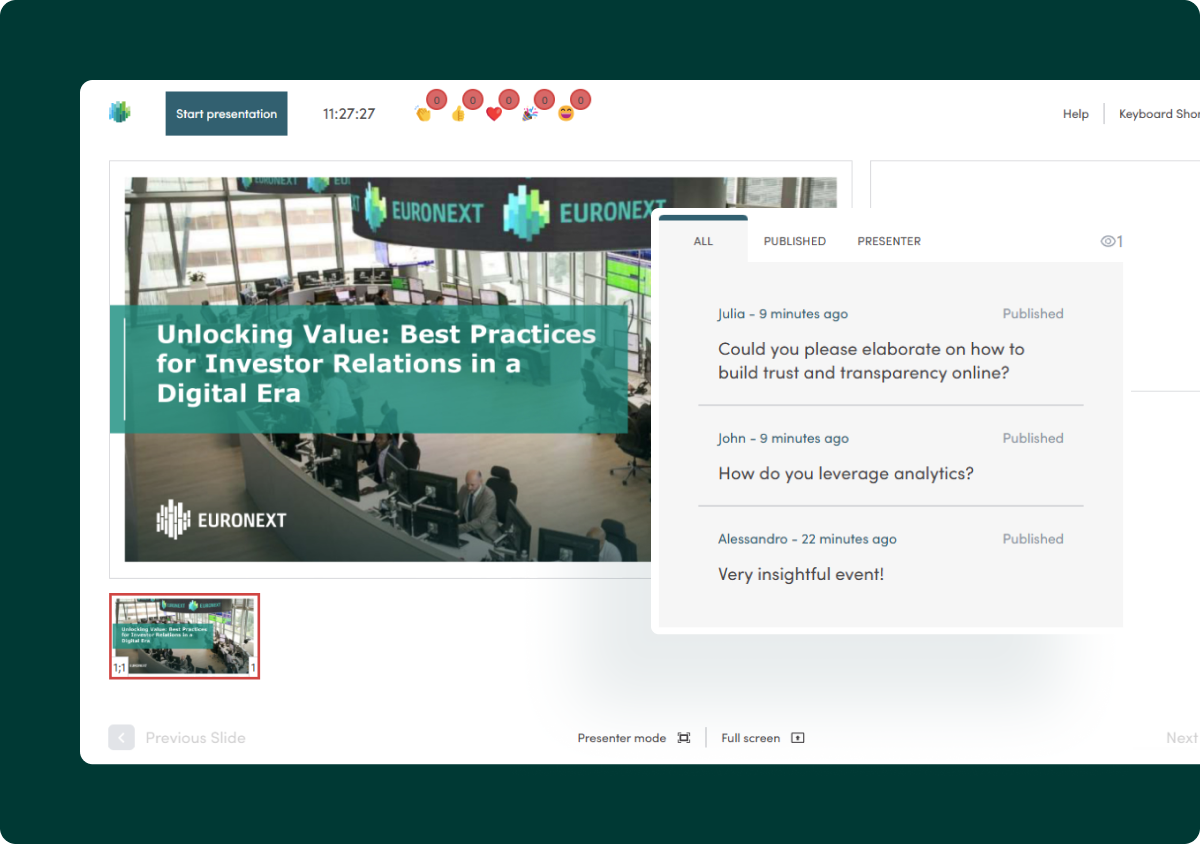
5. Q&A and Collaboration Tools
The Q&A module is frequently the most under-appreciated capability in a data room, and the one most likely to create compliance risk if absent. In a competitive M&A process with multiple buyer groups, hundreds of questions flow between counterparties over compressed timelines. Managing this through email creates version confusion, information asymmetry, and an incomplete compliance record.
A professional Q&A module provides:
- Structured question submission by external users, categorised by document or topic
- Assignment of questions to internal subject matter experts (legal, financial, HR)
- Response drafting workflow with internal review before external release
- Selective distribution: the option to answer the same question to all bidders, or to provide differentiated answers per group
- Full Q&A log as part of the audit trail, including response timestamps and assignee records
6. AI and Automation Features
AI-powered features have moved from premium to expected in enterprise VDRs. In 2025–2026, the capabilities with the most practical impact on M&A workflows are:
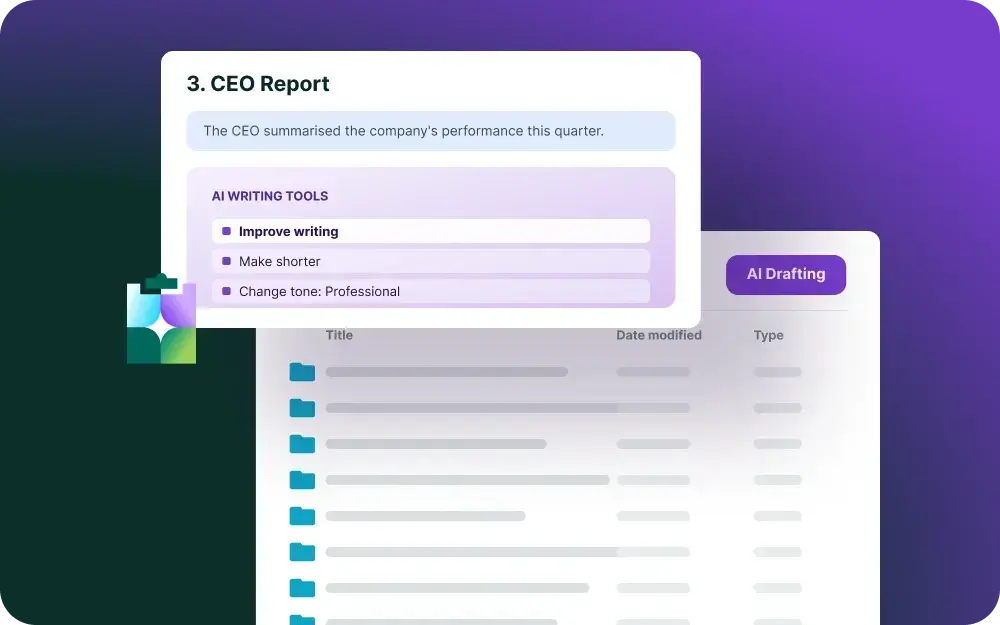
AI-assisted redaction (caviardage): Automatic identification and masking of personally identifiable information (PII), sensitive financial data, or legally privileged content before document release. Reduces the manual review burden on legal teams preparing documents for external disclosure, while reducing GDPR risk from inadvertent personal data exposure.
Intelligent OCR and search: Enhanced optical character recognition that extracts and indexes text from complex document layouts, handwritten annotations, and multi-language documents. Enables semantic search across the entire data room.
Engagement analytics: Machine-learning analysis of buyer behaviour patterns (which document categories generate the most Q&A activity, which buyer groups show declining engagement) provides sell-side advisors with deal-stage intelligence that was previously unavailable.
7. Regulatory Compliance and Data Residency
For European companies and regulated entities, the following compliance requirements apply directly to VDR selection:
GDPR data residency: Personal data relating to EU individuals (which will be present in any HR, customer, or management data folder) must be stored in compliance with GDPR. Providers with EU-only data centres eliminate the cross-border transfer risk associated with US-hosted platforms and their CLOUD Act exposure.
DORA third-party risk: Banks, insurers, and investment firms subject to the Digital Operational Resilience Act must contractually manage the resilience and security of ICT service providers, including VDR providers. Select providers that offer formal DORA-compliant service agreements and incident reporting obligations.
AMF and regulatory filings: Listed entities or entities preparing public transactions in France must ensure that document management processes meet AMF (Autorité des marchés financiers) documentation standards, including integrity and completeness requirements for the information memorandum process.
Frequently Asked Questions
Granular access control is the most operationally critical feature in an M&A data room. The ability to assign precisely defined permissions (by user, role, and folder) prevents information leakage between competing bidders and protects commercially sensitive data from inadvertent disclosure. Security certifications are equally important but are prerequisites rather than differentiators.
A complete audit trail is required by most regulated M&A frameworks and is expected by deal counsel as standard practice. For entities subject to DORA, NIS2, or financial regulator oversight, the audit trail forms part of the ICT risk management evidence base. Beyond regulatory obligation, a comprehensive audit log is essential for resolving post-closing disputes about document disclosure.
Redaction (caviardage) is the process of permanently masking specific text or information within a document before it is made available to external reviewers. In an M&A data room, redaction is used to remove personally identifiable information from HR documents (GDPR compliance), mask legally privileged content, and protect commercially sensitive terms that differ across bidder groups. AI-assisted redaction tools automate the identification of content to be masked, reducing the manual legal review burden.
A Q&A module provides a structured channel through which external reviewers submit questions linked to specific documents or categories. Questions are routed to designated internal experts for response, reviewed before release, and optionally distributed to all bidder groups simultaneously or selectively. The complete Q&A record forms part of the audit trail, creating a documented history of all information provided to counterparties. This is important for both regulatory compliance and post-closing warranty claims.
ISO 27001 and SOC 2 Type II are the minimum certifications for any enterprise VDR handling European transaction data. ISO 27001 validates the information security management framework; SOC 2 Type II confirms that security controls operate effectively over time. Providers serving regulated entities in France or other EU member states should additionally be able to demonstrate GDPR data processing agreement compliance and, for financial sector clients, evidence of DORA-aligned third-party risk management provisions.
The data room features that most directly affect deal outcomes are those that build counterparty confidence: a demonstrably secure environment, precisely controlled access, and a complete activity record. Admincontrol Data Room from Euronext Corporate Solutions delivers all of these with EU data residency and GDPR alignment, the foundation that European regulated M&A transactions require.
Request a demo