









.png)




.svg)
.svg)
.svg)







.png)
.png)






.jpg)

%20F%20(1).jpeg)







.webp)






 Login
Login
When it comes to your initial public offering (IPO), the due diligence process is essential for a range of stakeholders. Legal advisors, underwriters, auditors, investors and regulators must scrutinise vast amounts of confidential information under strict timelines. They all need the ability to share documents with authorised personnel and ask you questions in a secure environment so they are best placed to carry out their duties or make a well-informed move in relation to your IPO.
Between 2024 and 2025, proceeds from IPOs rose by 39% to US$171.8 billion (€149.2 billion) across the world. With this much capital flowing through the markets, the stakes are high when it comes to protecting business-sensitive data.
A virtual data room (VDR) enables you to share documents in a secure, structured and transparent manner that keeps the process moving smoothly and in line with your regulatory and legal obligations. This article helps you understand the IPO due diligence process, why a VDR is preferable to traditional document sharing and how it helps you go public with less friction.
Key takeaways
- IPO due diligence requires multiple stakeholders to review large volumes of sensitive information under tight timelines, making secure and structured document management essential.
- The risks of poor due diligence include data leaks, regulatory delays, litigation exposure and errors caused by complex coordination.
- Traditional tools like email and shared drives fail because they lack version control, access management and transparency over document activity.
- A VDR provides a secure, centralised platform with role-based permissions, encryption and watermarking to protect sensitive IPO information.
- Structured Q&A workflows and detailed activity tracking help ensure consistent information sharing and support compliance with regulatory requirements.
Understanding IPO due diligence
Here are some of the key elements that stakeholders scrutinise during the IPO due diligence workflow:
Element | Explanation |
Financial information | Stakeholders must review historical financial performance, cash flow and balance sheets to confirm their accuracy and consistency. Independent audit reports provide assurance that the figures meet the required standards, increasing investor confidence. |
Legal structure and material contracts | Other parties will want to examine your legal entity structure and key agreements with customers, suppliers and partners. This helps identify any obligations, risks and restrictions that could affect the IPO or your future operations. |
Corporate governance documentation | People will look at your board structure, committees and internal policies to ensure the company meets listing and governance requirements. Strong governance is essential for gaining investor trust and regulatory approval. |
Risk factors | This identifies and documents the key risks facing the business, ensuring you have disclosed them clearly in your prospectus. Accurate risk disclosure is critical to avoid misleading investors and potential liability. |
Intellectual property and employment agreements | Reviews ownership of IP assets and ensures employment contracts properly assign rights to the company. This helps confirm that key assets and talent are secure and transferable ahead of the listing. |
There are multiple potential issues that you could face if you do not have a secure framework and structured workflow in place to manage due diligence. They include:
- Exposing price-sensitive information that could influence investor decisions. Leaks or premature disclosure could constitute a market abuse risk and force you to make announcements about your direction of travel before you are ready to do so.
- Regulatory scrutiny if there are inconsistencies, omissions or incomplete documentation. This can lead to a delay in approval for your IPO or even a formal investigation.
- Potential litigation if your disclosures are incomplete, misleading or inconsistent with the underlying information. You could face claims from investors after the IPO, especially if your share price drops and shareholders face losses as a result of unclear information you presented.
- Errors caused by tight deadlines and complicated coordination. IPO timelines are often compressed, requiring close collaboration between legal teams, auditors, banks and management, which increases the risk of errors if you do not manage your processes and document control effectively.
Why traditional document sharing fails
Relying on email and shared drives during IPO due diligence creates unnecessary risk when you need security and clarity. Such tools were not designed for high-stakes, regulated processes and can lead to a host of issues. For example:
- Email quickly leads to version confusion, with multiple drafts circulating and no clear source of truth.
- Shared drives offer only basic permission settings, making it difficult to control who sees sensitive information. Security is also weaker than with a dedicated due diligence tool, increasing the risk of unauthorised access or accidental sharing.
These generic tools also lack transparency. You cannot easily track who accessed documents, what they viewed or when they downloaded files. There is no structured way to manage your Q&A, so key discussions become scattered across people’s inboxes and important messages can go missing.
Without clear records and controls, you cannot demonstrate that you handled confidential information properly, increasing the risk of regulatory scrutiny and legal challenges during and after the IPO.
How a VDR supports IPO due diligence
Secure document management
A virtual data room gives you one secure place to manage all IPO documents. Instead of juggling files across emails and folders, you keep everything in a centralised repository that all authorised parties can access. You control who sees what through role-based permissions, so sensitive information only reaches the right people.
Strong security measures protect your data at every stage. For example:
- Encryption keeps documents safe both in transit and at rest, reducing the risk of interception or unauthorised access.
- Dynamic watermarking adds another layer of protection by tagging documents with user details, which discourages users from sharing it with unauthorised parties and helps you trace any leaks.
Structured Q&A workflows
IPO due diligence involves fielding constant questions from advisors, underwriters and regulators. In your VDA, you can assign each question to a specific internal owner, ensuring you attach it to someone with the correct skillset so you can respond faster. The VDR brings structure to this process by organising their questions and your answers into clear categories, making them easier to manage and track.
This avoids scattered email threads and helps ensure that all parties receive the same information, reducing the risk of confusion or selective disclosure. Equal access to information is essential during the IPO process.
Advanced tracking and reporting
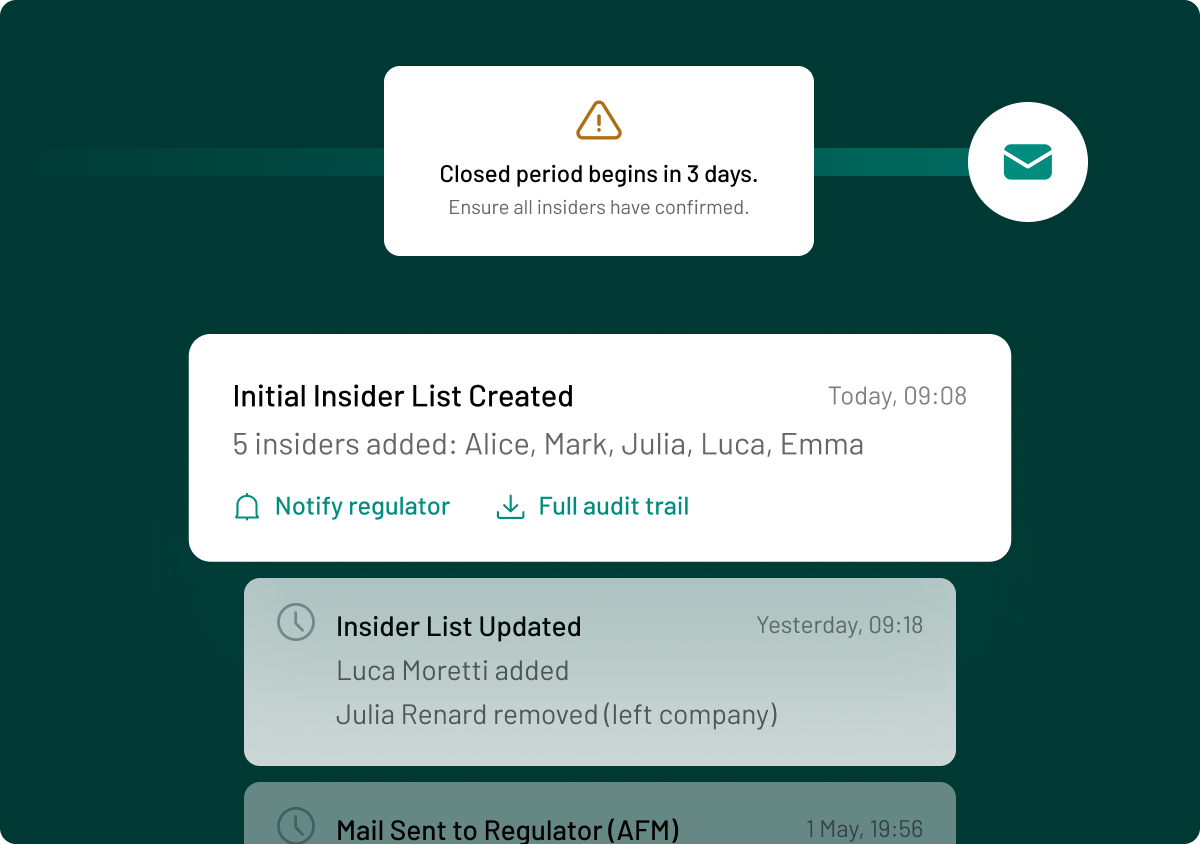
A VDR gives you full visibility over activity on your documents during the IPO due diligence process. User activity logs show who accessed each file, when they viewed it and what actions they took. This creates a clear record of how information was handled.
You can also use document engagement analytics to understand which materials attract the most attention from investors and advisors. This insight helps you focus your communication and address potential concerns early. When needed, you can export audit trails to demonstrate compliance and respond quickly to regulators or internal reviews.
Investor and underwriter access management
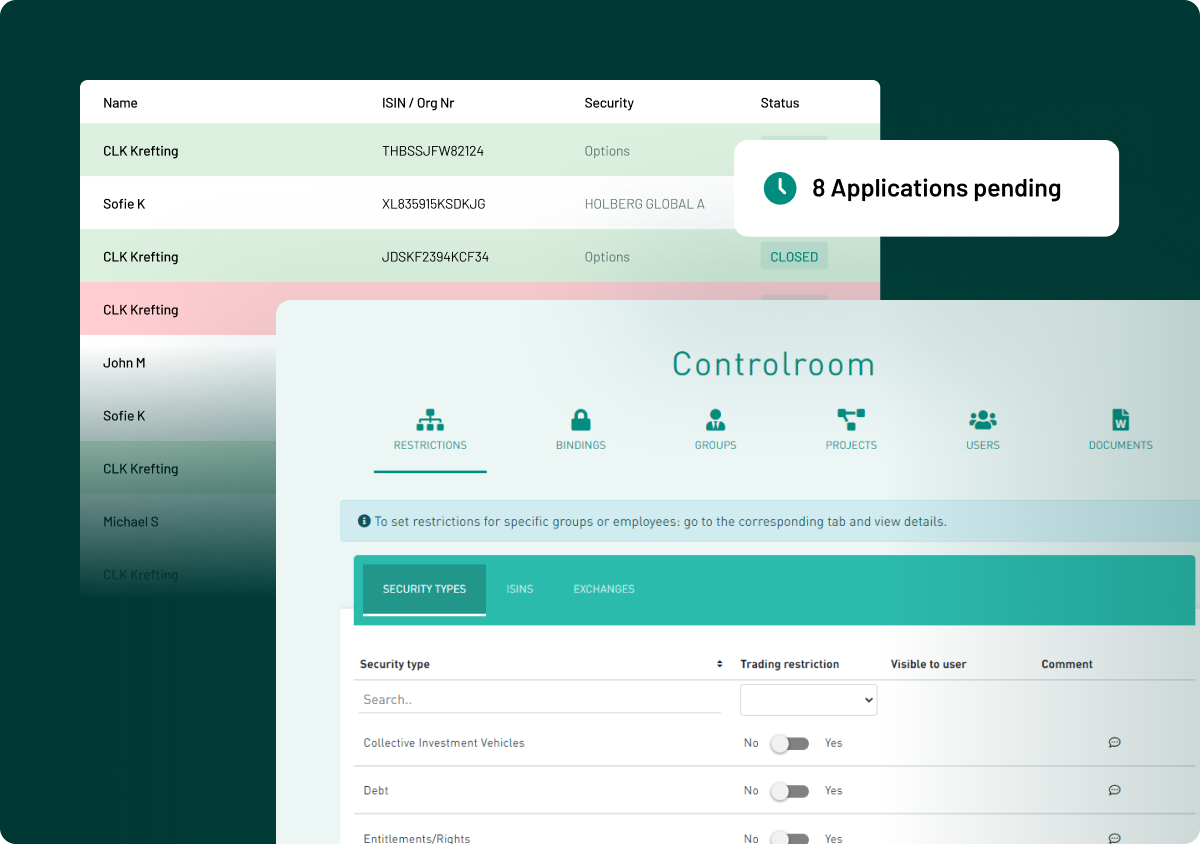
A VDR allows you to manage access for investors and underwriters in a controlled and flexible way. You can set tiered permission levels so different groups see only the information relevant to their role in the IPO process.
You can gate access through NDAs, ensuring that only authorised participants can enter the data room, as well as applying time-limited access. This automatically removes permissions when you no longer need them. The VDR helps maintain control over sensitive information and reduces the risk of ongoing exposure after you complete the key stages of the IPO.
Regulatory and compliance considerations
Area | Requirement | What it means in IPO due diligence |
Supporting documentation availability | Under the EU Prospectus Regulation, issuers must ensure that all statements in the prospectus are backed by verifiable documentation, which must be organised and accessible for review by advisors and regulators. | |
Transparency and disclosure standards | The prospectus must present complete, accurate and consistent information so investors can make informed decisions, meaning all due diligence materials must align with disclosed information. | |
Handling inside information securely | Information that could affect share price must be tightly controlled, with access restricted to authorised individuals to prevent leaks or misuse. | |
Controlled disclosure practices | Inside information must not be selectively disclosed, and any public disclosure must be made in a way that ensures equal access to all investors. | |
Record-keeping obligations | Document retention | Issuers must retain relevant documents and records to demonstrate how information was prepared, reviewed and disclosed during the IPO process. |
Auditability for regulators | Companies must be able to provide clear, time-stamped evidence of document access, decisions and disclosures if requested by regulators. |
Best practices for structuring an IPO VDR
- Create a logical folder hierarchy aligned with due diligence checklists. This makes sure that it is easy to find the right information when needed.
- Maintain strict version control for financial documents to prevent issues such as creating unequal access to information. Arm your stakeholders with the most up-to-date and relevant data possible.
- Limit access on a need-to-know basis to prevent leaking sensitive details to any unauthorised party.
- Assign internal VDR administrators to ensure that you are running each aspect of your IPO in accordance with the law.
- Conduct pre-launch testing before opening access so that you understand how the data room works and the measures you can put in place to create a straightforward and compliant workflow.
IPO due diligence demands precision, confidentiality and speed. A virtual data room provides the secure infrastructure needed to manage complex documentation, streamline stakeholder collaboration and maintain regulatory compliance. When properly structured, your VDR reduces risk and supports a smoother path to listing.
FAQ
A VDR is a secure digital platform used to store and share confidential IPO documents with authorised stakeholders during due diligence.
Ideally, implement a VDR before formal due diligence begins, during IPO preparation and prospectus drafting.
Underwriters, legal advisors, auditors, regulators and sometimes cornerstone investors should have access to the VDR during the IPO.
The VDR reduces risk through secure access controls, encryption, detailed audit trails and structured information management.
A VDR is not explicitly required by law for IPO due diligence, but widely considered market standard practice for secure and compliant execution.