









.png)




.svg)
.svg)
.svg)







.png)
.png)





.jpg)

%20F%20(1).jpeg)







.webp)






 Login
Login
The fundraising process is your chance as an organisation to give investors all the information they need to understand the value that you offer. Whether it is an initial public offering (IPO), debt fundraising, growth equity or any other form of approach to the investment community, it is essential to be open and comprehensive to avoid any issues or disputes later.
Even the suggestion that your company was not transparent during fundraising can result in damaging outcomes. Ammunition producer Czechoslovak Group (CSG) was accused of withholding information from investors during its IPO by activist short-seller Hunterbrook Group. Even though CSG denied the accusation and stood by its prospectus, shares fell by 50%.
This highlights the importance not only of full disclosure during fundraising, but also of creating robust audit trails within your virtual data room (VDR). If you can prove who knew what and when, it can reduce public controversy like the CSG affair.
This article helps you understand the mistakes that many issuers make during fundraising, as a result of less-than-effective data room management.
Key takeaways
- A fundraising data room is a critical due diligence tool that helps investors verify claims, assess risks and evaluate the quality of the opportunity.
- Common mistakes such as poor organisation, incomplete documentation, weak access controls and outdated files can undermine investor confidence and significantly delay your fundraising timeline.
- A well-prepared data room should be structured, searchable, secure and supported by robust audit trails, version control and role-based permissions.
- Effective use of Q&A workflows, activity monitoring and engagement analytics helps management address investor concerns quickly and focus efforts on the most promising opportunities.
- Companies that prepare their data rooms thoroughly, maintain accurate documentation and manage disclosures carefully create a smoother fundraising process and present a more professional and credible investment proposition.
What is a fundraising data room?
A fundraising data room is a secure online workspace where your company stores and shares important business information with prospective investors. It gives investors access to the documents they need to carry out due diligence and to assess the opportunity you are offering as part of the fundraising.
In this data room, you would usually upload items such as:
- Financial statements and forecasts
- Corporate documents
- Legal information
- Current shareholder details
- Customer and operational data
- Compliance and risk documentation
Once investors show a serious interest in your fundraising process, you would normally have them sign a non-disclosure agreement (NDA) and then allow them access to the data room.
Investment professionals, analysts, lawyers and accountants can then review your information so they can verify your claims and identify any risks within the offering that might affect their investment decision. Data rooms usually provide space for Q&As between the buy side and the sell side, allowing you to clarify anything that investors need to know.
Mistakes in fundraising data rooms
Mistake 1: Opening the data room too early or too late
Some companies open the data room before it is fully prepared because they want to demonstrate momentum and show investors they are moving quickly. Others take the opposite approach and only begin gathering documents once investors start asking for them.
Both scenarios can create problems:
- An incomplete data room means you have to deal with unnecessary and repeated questions about information that should be available. This places a burden on your internal stakeholders and can be frustrating for the investor’s team who want to carry out due diligence.
- Delaying preparation can mean that you have to rush to collect all the documentation that you need and this can lead to inconsistent information being available and avoidable delays at a critical stage of the fundraising process.
Build and review the data room before granting access to investors to make sure it is ready for its purpose. Use a standard due diligence checklist to ensure all key information is available and accurate.
A complete and organised data room allows investors to focus on evaluating the opportunity rather than chasing documents, helping the process move forward more efficiently.
Get ready for legal due diligence
Download our Legal Due Diligence checklist to find out what exactly you should present to the buying side.
|
Mistake 2: Treating the data room like a filing cabinet
Many companies simply upload documents into folders without considering how investors will navigate them. The result is a collection of files with little structure or context, meaning investors and their advisors have to spend valuable time searching for the information they need.
A poorly organised data room can also create the impression that the business lacks strong internal controls or governance, even if that is not the case.
Create a clear, numbered folder hierarchy covering areas such as Corporate, Financial, Legal, Commercial, HR and Compliance.
Use descriptive file names and maintain a consistent structure throughout. Investors should be able to find the information they want quickly and understand how each document supports your investment case. Choose a data room provider that offers intuitive folder structure templates that help you build a better workflow from the beginning.
Mistake 3: Weak access controls
In an effort to keep the process moving, some companies grant broad access to all investors and advisors. This can expose your commercially sensitive information, including customer data, pricing arrangements and strategic plans, to parties that do not need to see them.
The risk becomes even greater when multiple investors or competing organisations are reviewing the opportunity simultaneously.
If some of the information within the data room is classed as inside information, this can also provide a compliance risk for your organisation.
Apply role-based permissions and restrict access according to each user’s responsibilities. Consider releasing highly sensitive information in stages as discussions progress, rather than all at once, only revealing the most confidential detail to those who are committed.
A granular approach to access protects your information while still providing investors and their teams with everything they need to evaluate the opportunity within their sphere of expertise.
Strong access governance also demonstrates professionalism and good data management practices.
Mistake 4: Incomplete or inconsistent documentation
One of the quickest ways to lose investor confidence is to provide information that is incomplete, contradictory or unsupported by evidence. This could include:
- Missing contracts
- Unsigned agreements
- Outdated shareholder records
- Financial figures that do not match across different documents.
This immediately raises concerns with anyone looking to invest. Potential shareholders may begin to question the reliability of other information in the data room, leading to additional scrutiny and delays in your fundraising process.
Carry out an internal review before launching the fundraising process. Check that your financial statements, forecasts, corporate records and legal documents are complete and consistent. Have this confirmed by another internal party.
Ensure that every key claim you make in the investor presentation or information memorandum can be supported by documentation that is present in the data room. Addressing issues before investors find them helps maintain your credibility and avoids unnecessary challenges later in the process.
Mistake 5: Outdated documents and poor version control
It is common for companies to accumulate multiple versions of financial models, board papers and strategy documents, for example, during a fundraising process.
If both old and new versions remain available within the data room and there is no clear way to distinguish which is current, it can lead to misunderstandings by investors. You will face repeated questions to clarify the situation and it could raise concerns about the reliability of the company’s reporting processes.
Create a clear version control process and maintain a single source of truth for important documents.
Date your files consistently, removing superseded versions from the data room. You should also ensure any updates in one document are reflected across all related materials to maintain consistency. Investors should be confident that the information they are reviewing represents the latest position of the business.
Mistake 6: Poor Q&A management
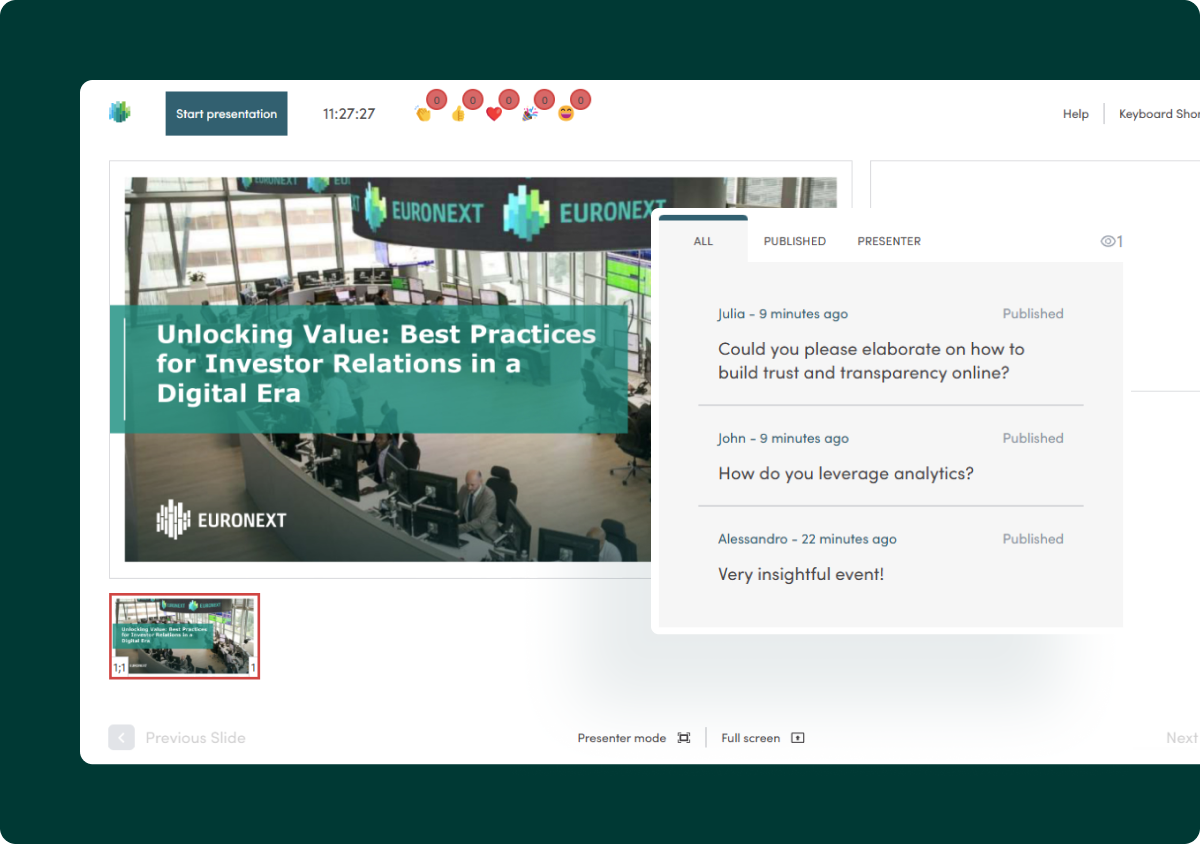
As interest grows, you might face questions from multiple stakeholders at the same time. Managing these conversations through individual email chains can quickly become difficult, with duplicate responses and the risk of losing important details along the way. This increases the risk of misunderstandings and slows the due diligence process.
Use the structured Q&A functionality within the data room to centralise your communication with investors. This creates a single record of questions and responses, making it easier to maintain consistency and transparency in your answers.
It also allows management teams and advisors to collaborate more effectively, ensuring investors receive timely and accurate answers throughout the fundraising process.
Mistake 7: Ignoring investor engagement signals
Many companies focus entirely on providing documents and overlook the valuable information generated by investor activity within the data room. As a result, they miss opportunities to understand investors’ priorities and identify their concerns. These are vital to assess the likelihood of an investment progressing.
Monitor engagement data and activity reports throughout the fundraising process. Pay attention to which documents receive the most views and which sections attract repeated visits.
These insights can reveal what matters most to prospective investors, allowing your management to tailor their follow-up discussions so they can address concerns proactively and you can focus your resources on the most promising opportunities.
What a good data room actually looks like
|
Feature |
What good looks like |
Why it matters |
|
Structure and organisation |
Clear folder hierarchy with logical sections, supported by indexing and consistent naming conventions. |
Investors and advisors can find information quickly, reducing delays and repetitive document requests. |
|
Security |
Strong encryption, multi-factor authentication and secure document storage. |
Protects sensitive business information and demonstrates that the company takes data security seriously. |
|
Access controls |
Role-based permissions that allow users to see only the documents relevant to their responsibilities. |
Reduces the risk of information leaks and helps maintain confidentiality throughout the fundraising process. |
|
Audit trail |
Detailed records showing who viewed, downloaded or interacted with documents and when. |
Creates accountability and provides evidence if questions or disputes arise later. |
|
Search functionality |
Advanced search tools that help users locate specific documents and information quickly. |
Saves time during due diligence and improves the investor experience. |
|
Q&A management |
A structured process for handling investor questions within the platform. |
Keeps communications organised, reduces duplication and creates a consistent record of responses. |
|
Document control |
Version control, clear dating of files and removal of outdated documents. |
Ensures all parties work from the latest information and avoids confusion. |
|
Activity monitoring |
Visibility into which documents are receiving the most attention and which investors are engaging most actively. |
Helps management understand investor priorities and prepare more effective follow-up discussions. |
|
Task management |
Ability to assign responsibilities, track progress and monitor completion of document requests. |
Keeps the fundraising process moving and reduces administrative burden. |
|
Export and reporting |
Secure export capabilities and comprehensive reporting on activity and documentation. |
Provides a complete record of the process and supports future audits and compliance reviews. |
Simply having a data room is not enough to ensure your fundraising runs smoothly. You must take advantage of the multiple features to create an intuitive and beneficial investor experience that prizes security, ease of finding the right documentation and structured collaboration. Take time to organise your data room, ensure the information is relevant and up to date, your access controls match each individual’s needs and that you analyse user data to understand where you need to focus your efforts.
FAQ
A well-organised data room allows investors and their advisors to find, review and verify information quickly, while missing or poorly structured documentation creates delays, additional questions and repeated due diligence requests.
Advisors should use role-based permissions, separate bidder groups and staged disclosure so each party can access only the information relevant to its stage in the process.
Common gaps include shareholder agreements, board approvals, IP ownership records, signed material contracts and up-to-date financial information, all of which investors typically expect to review before completing a transaction.