









.png)






.svg)
.svg)
.svg)







.png)
.png)






.jpg)

%20F%20(1).jpeg)







.webp)






 Login
Login
Information asymmetry on a board is the gap between what directors believe they know and what they actually know. It exists in every boardroom because management controls the flow of information that reaches directors, and directors rarely have time to verify it independently. Caroline Ruellan, President of SONJ Conseil and of Le Cercle des Administrateurs, identified this asymmetry as one of the core questions a board evaluation must investigate. The chair's most important job, in this context, is to make sure every director receives complete, unbiased information on time.
- Directors typically overestimate the completeness of the information they receive; the data they get is filtered, biased, and incomplete by default.
- The chair is the chief steward of information flow; making sure directors get the right information on time is one of their core responsibilities.
- Effective board evaluations probe information asymmetry directly: are directors getting the data they need, when they need it, in a form they can challenge?
- A modern board portal narrows the gap by giving directors structured access to source documents, audit trails, and analytics.
- Directors should base decisions on facts, not opinions; the discipline of fact-checking is harder than it looks because human bias defaults to opinion.
What information asymmetry means in a boardroom
Information asymmetry is a concept borrowed from economics. In a market, it describes a transaction where one party knows more than the other (the classic example: a used-car seller knows the car's history; the buyer does not). On a board, the same dynamic plays out between management and the directors who are meant to oversee them.
Management lives inside the operations every day. Directors visit those operations a few times a year. Management chooses which numbers to report, which risks to highlight, which projects to defend, and which problems to soften. Directors process what they receive, ask questions, and make decisions. The board pack is, by design, a curation, not a complete record.
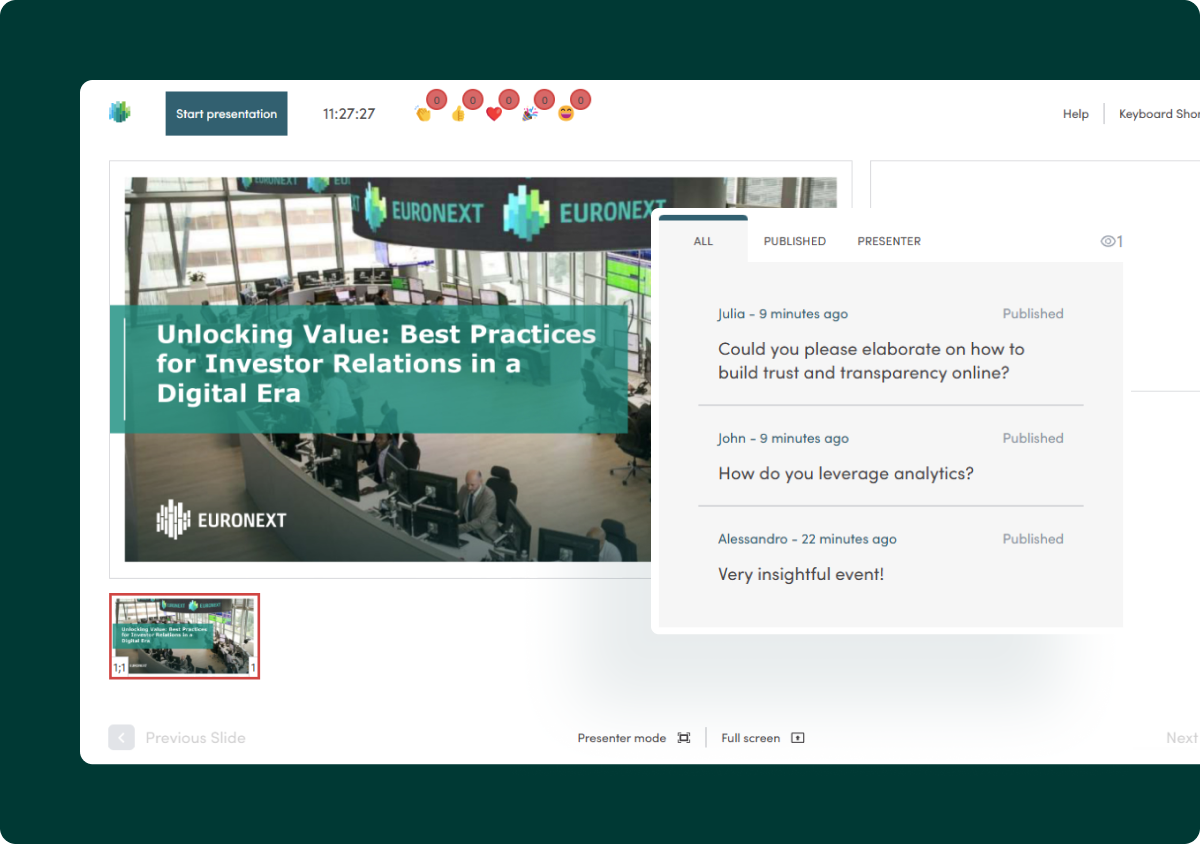
Caroline Ruellan made the point bluntly during the Decisive Board webinar hosted by Euronext Corporate Solutions: as a director, you tend to assume you have the full, unbiased, complete picture. You rarely do. Recognising that gap, and treating it as a structural feature of the role rather than an occasional accident, is the first step toward better board oversight.
"As a board member, you tend to consider that you have got the full information, non-biased and complete. The fact is that the information is biased and incomplete. This is what we technically call information asymmetry."
Why it persists, even on well-run boards
Three forces keep information asymmetry alive in boardrooms even when everyone is acting in good faith:
Volume. The agenda of a modern board is enormous. Strategy, risk, finance, regulation, ESG, cybersecurity, succession, talent, M&A: the surface area expands every year. Directors cannot independently fact-check every slide of every pack. They have to trust the curation, which means they have to trust whoever does the curating.
Distance. Most directors are non-executive. They do not interact with the operating layers of the business. Their picture of the company comes through the executive committee, which has every incentive to present an internally consistent narrative.
Politics. Information is power. In any organisation, including boards, those who control information control outcomes. A management team that wants a particular decision approved will, consciously or unconsciously, shape the information pack to make that decision easier to approve. This is not malice; it is gravity.
The combination means that even an attentive director, on a well-functioning board, with no malign actors anywhere, ends up working with a partial picture. The question is not whether information asymmetry exists; it is what the board does about it.
The chair's role in narrowing the gap
The chair carries primary responsibility for the integrity of the information flow. Caroline Ruellan described the chair as "the conductor of the orchestra": the one who sets the agenda, decides what gets discussed, and makes sure each director has the right information at the right time. A chair who does this job well neutralises a significant share of the asymmetry. A chair who does not do it well, perhaps because of skill, time, or conflict of interest, leaves the rest of the board flying blind.
"The chairman should be very active in making sure that all board members get the right information on time, in order to take the right decision in the best interest of the company."
This is also why the chair's own performance is one of the most sensitive items in any board evaluation. Directors are often reluctant to criticise the chair, especially when the chair proposed their own appointment. Evaluation processes that protect anonymity, and that include external facilitators when needed, are the only way to surface honest feedback on the chair's stewardship of information.
Beyond the chair, the corporate secretary plays a quietly central role. The secretary controls the practical mechanics of how information reaches directors: when packs go out, in what format, with what supporting documentation, and how questions are routed back to management. A capable secretary is one of the most underrated lines of defence against information asymmetry.
How to assess information asymmetry in an evaluation
A serious board evaluation probes information flow directly. Generic questions ("are board materials clear?") produce generic answers. Specific questions surface real issues. Examples:
- Do you receive the board pack early enough to read, question, and consult before the meeting?
- When you have asked for additional information in the past 12 months, did you receive it within a reasonable time?
- Are dissenting views from inside management visible to you, or only the consensus position?
- Do you feel you have enough access to operating-level data (not just summaries) when you need it?
- Have you ever made a decision and discovered later that material information was withheld? If so, how was it handled?
- Does the chair make space for directors to challenge management's framing, or are challenges discouraged in practice?
These questions only work under genuine confidentiality. Directors will not flag information problems honestly if they believe their answers will reach the chair or the CEO unfiltered. This is one of the structural reasons hybrid evaluations (internal process supported by an external facilitator) are increasingly favoured for sensitive topics.
How a board portal narrows the asymmetry
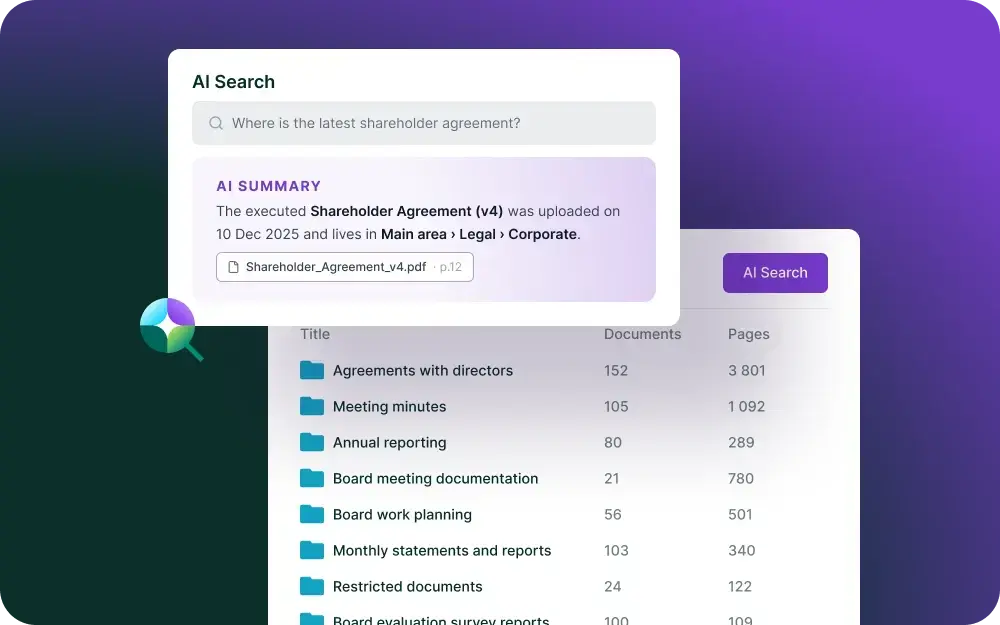
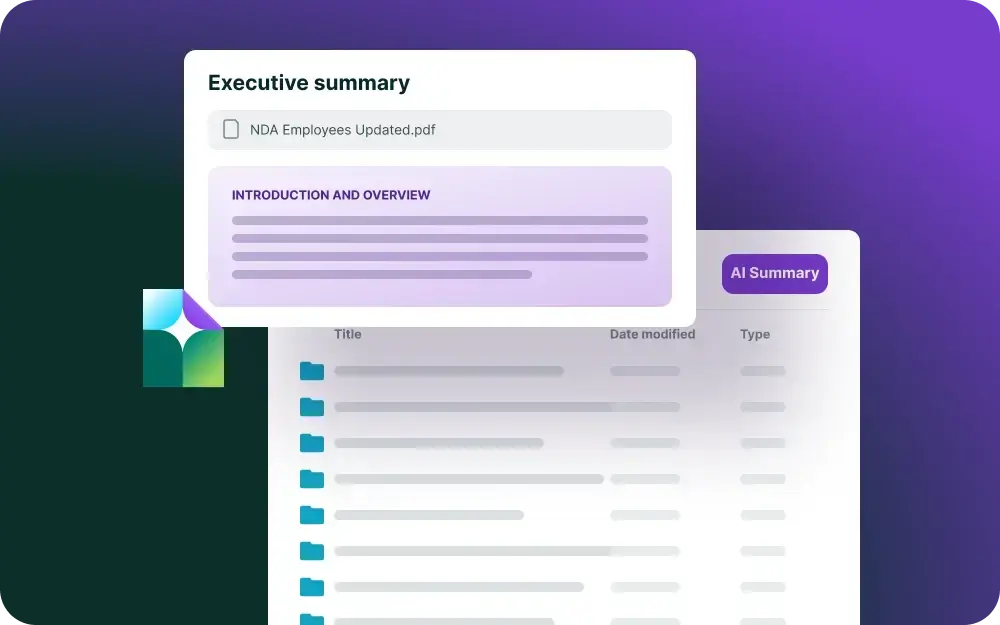
Technology cannot eliminate information asymmetry, but it can reduce it. Admincontrol Board Portal contributes in three concrete ways. First, it gives directors direct access to source documents, not just curated summaries; a director who wants the underlying data can find it. Second, it preserves an audit trail: who accessed what, when, and what changes were made to documents between versions. Third, it creates a structured channel for follow-up questions, so that requests for additional information are tracked and answered, not lost between meetings.
None of this replaces the chair's leadership or the corporate secretary's discipline. It does, however, give directors a tool to challenge information at the level of detail required by modern oversight, particularly on technical matters such as cyber risk, regulatory exposure, and ESG reporting where the gap between management and the board is widest.
Combined with structured annual evaluation, this infrastructure creates a feedback loop. The evaluation surfaces information gaps; the portal supplies the missing data; subsequent evaluations check whether the gaps closed.
Frequently Asked Questions
The underlying concept is the same: one party has more or better information than another. In financial markets, this can become market abuse and is heavily regulated. On a board, it is structural and largely lawful, but it has consequences for decision quality and director accountability.
The chair is the primary steward of information flow, supported by the corporate secretary. Each individual director is also responsible for asking the questions, requesting the data, and pushing back when something looks incomplete. A passive director makes information asymmetry worse.
Activists exploit information gaps. When the board is poorly informed, it is slow to spot problems and slow to react when an activist does. Closing the asymmetry is also one of the most effective defences: a board that genuinely understands its own company is harder to surprise.
No, and trying to do so would be counterproductive. The board's job is oversight, not management. Some asymmetry is inevitable and even appropriate. The goal is to reduce it to a level where directors can make informed decisions and challenge management's framing, not to eliminate it.
Yes. The chair's stewardship of information is a measurable dimension of leadership: timeliness of packs, openness to follow-up questions, willingness to commission additional data, and even-handedness in surfacing dissenting views from management. These are the elements a serious chair evaluation should probe.
The fastest way to narrow information asymmetry is to give directors structured, secure access to source documents and a clean audit trail. Admincontrol Board Portal supports both.
Explore Admincontrol Board Portal