









.png)




.svg)
.svg)
.svg)






.png)
.png)





.jpg)
%20F%20(1).jpeg)







.webp)






 Login
Login
Most town hall meetings follow the same script: a prepared presentation, a few slides, a short Q&A window where two people speak and the rest scroll their phones. Everyone logs off feeling informed, but not particularly engaged.
That gap between information and engagement is costing organisations more than they realise. When a town hall conference fails to connect, it misses its single most valuable function: building trust with the people who matter most to your business.
Here's how to run town hall meetings that go beyond broadcasting and become the kind of events your audience actively looks forward to.
What Is a Town Hall Meeting and Why It Matters
A town hall meeting is a structured communication event where company leadership addresses a broad audience that includes employees, investors, shareholders, or analysts to share updates, strategic direction, and key decisions. The term originates from civic tradition but has become a cornerstone of modern corporate life.
For listed companies especially, the stakes are high. A well-executed town hall conference builds credibility with investors and reinforces internal alignment at the same time. Done poorly, it creates confusion, erodes confidence, and generates the kind of post-event chatter you don't want on a message board or in a shareholder letter.
Town Hall Meeting vs. Town Hall Conference: Key Distinctions
These two formats share DNA but serve different audiences and objectives.
- Town hall meeting: Typically internal, focused on employee communication, leadership updates, strategic alignment, or culture. Often recurring (quarterly, annually)
- Town hall conference: Often broader in scope, involving external stakeholders: investors, analysts, media, or clients alongside or instead of employees. More formal in production and governance expectations
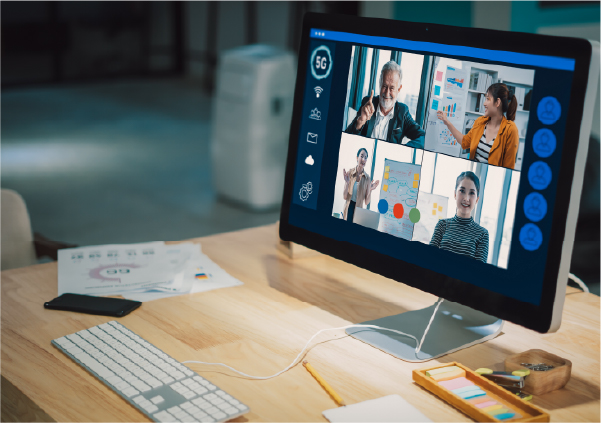
- Hybrid formats: Increasingly common, combining both audiences across in-person and virtual channels simultaneously
Understanding which format you're running shapes every decision that follows, from tone and agenda design to the technology platform you choose.
The 4 Key Elements of a Successful Town Hall Meeting
1. A Clear Agenda Built Around Your Audience's Questions
Leadership teams often design town halls around what they want to say. High-performing organisations design them around what their audience needs to hear. There's a difference.
Before finalising your agenda, ask: what are the three questions your audience is most likely walking in with? Address those directly and early, and you'll earn the attention required for everything else on the agenda.
2. Two-Way Interaction: Not Just a Q&A Window
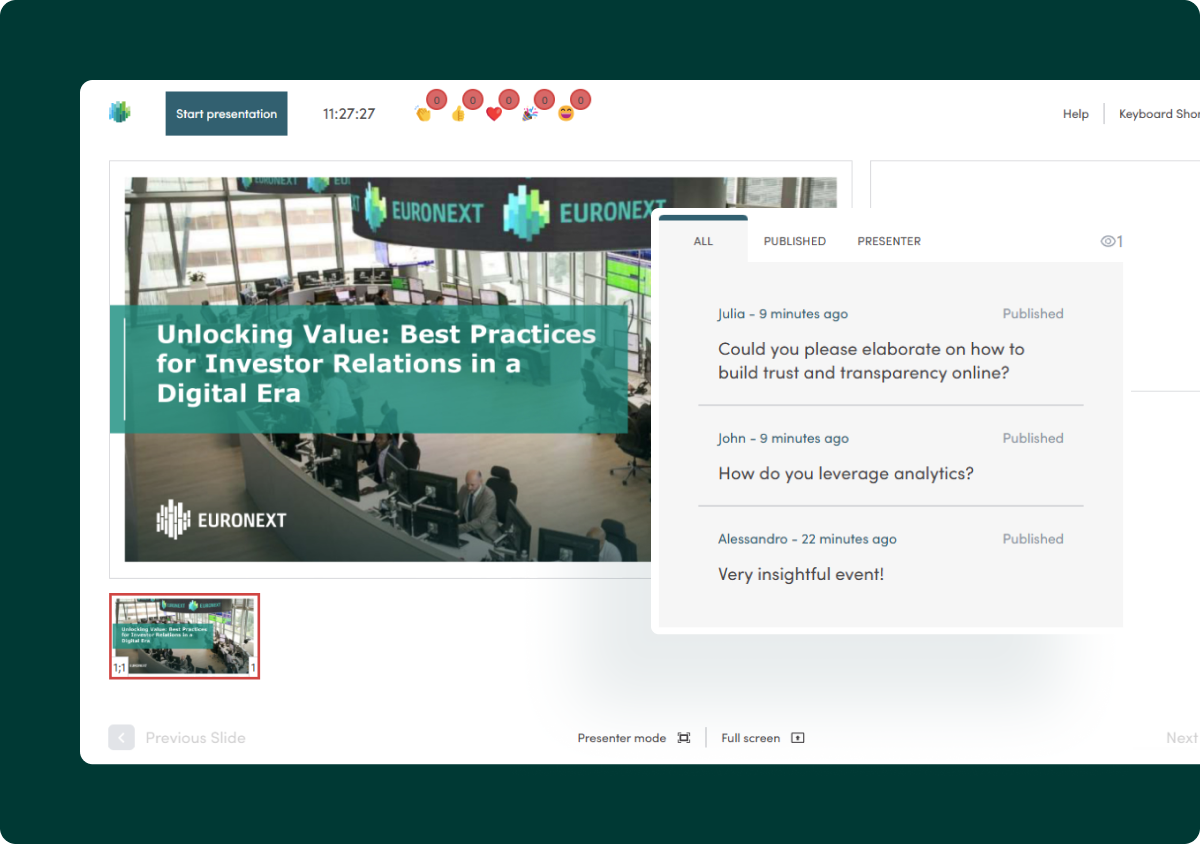
Live polling, real-time sentiment checks, moderated Q&A, and post-session surveys transform a broadcast into a conversation. Audiences who participate are more likely to remember key messages, act on them, and engage positively with your organisation.
This is especially important in investor-facing town hall conferences, where the quality of dialogue signals governance maturity and management transparency.
3. Production Quality That Matches Your Message
A pixelated stream, audio dropouts, or a presenter fumbling with slides undermines your credibility before a single word lands. For both internal and external audiences, production quality is a proxy for organisational professionalism.
This doesn't mean over-engineering every event. It means choosing the right infrastructure from the start.
4. Accessibility Across Geographies and Devices
Your audience is distributed. Whether you're running a town hall meeting for a global workforce or a shareholder webcast for international investors, your platform must handle time zones, languages, and device types without friction.
Common Pitfalls to Avoid
Even experienced teams make avoidable mistakes. Watch out for:
- Overloading the agenda: Too many speakers and topics dilute focus. Prioritise ruthlessly
- Underinvesting in moderation: A skilled moderator shapes the Q&A, manages timing, and protects speakers from off-topic tangents
- Neglecting the follow-up: The town hall doesn't end when the stream stops. Post-event content - recordings, summaries, action item trackers - extends impact significantly
- Treating virtual as a downgrade: A virtual town hall conference, when run correctly, can reach more people more effectively than an in-person event
How Technology Is Reshaping the Town Hall Conference
The shift to hybrid and virtual formats isn't a pandemic hangover. It's a structural change in how organisations communicate at scale. The town hall meeting software landscape has matured accordingly, offering capabilities that in-person logistics simply cannot match: real-time analytics, automated registration, multilingual streams, and deep integration with investor relations workflows.
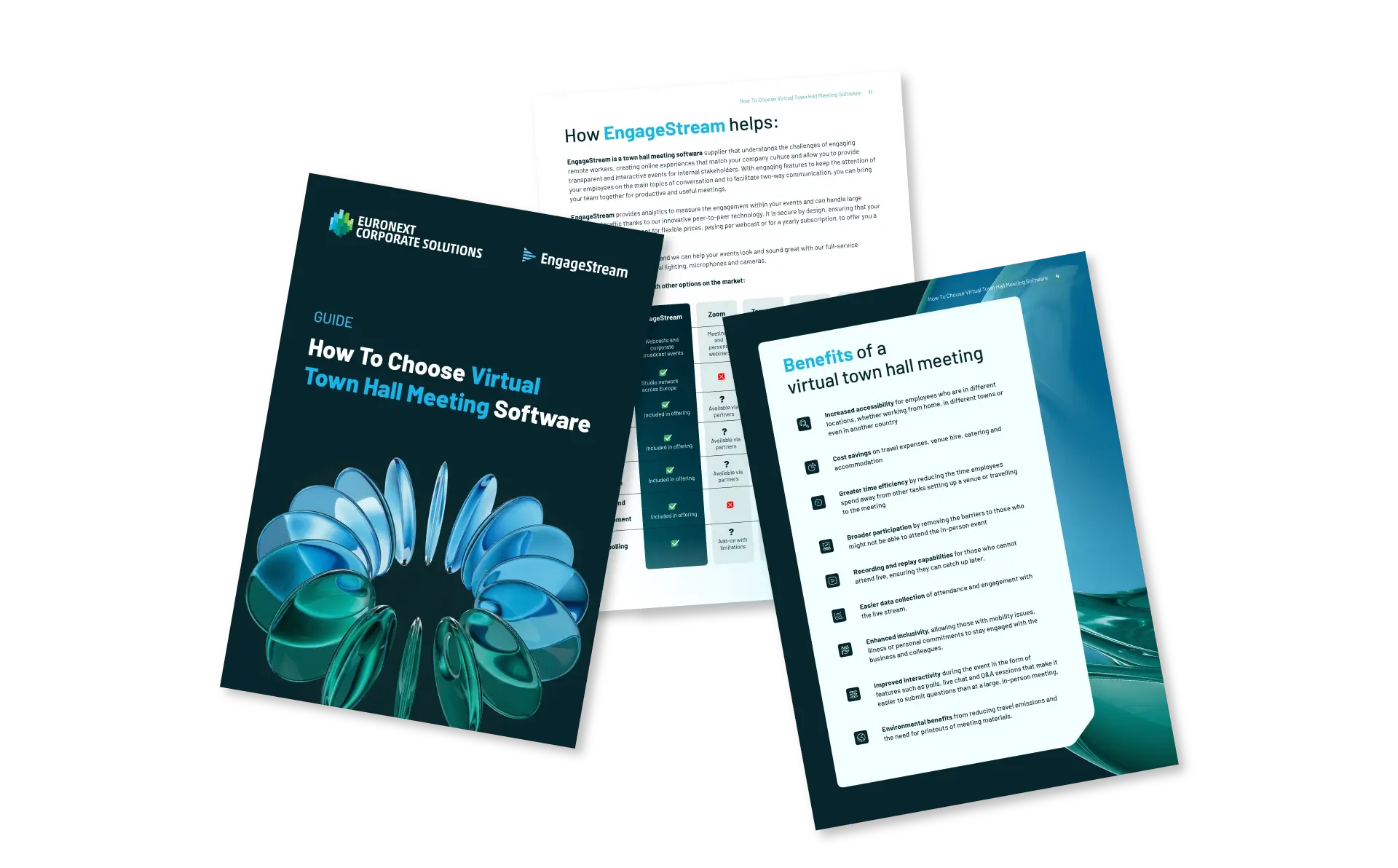
Choosing the right platform is one of the most consequential decisions you'll make in your event planning process. The wrong tool creates technical friction that no amount of great content can overcome.
Before Your Next Town Hall: A Practical Checklist
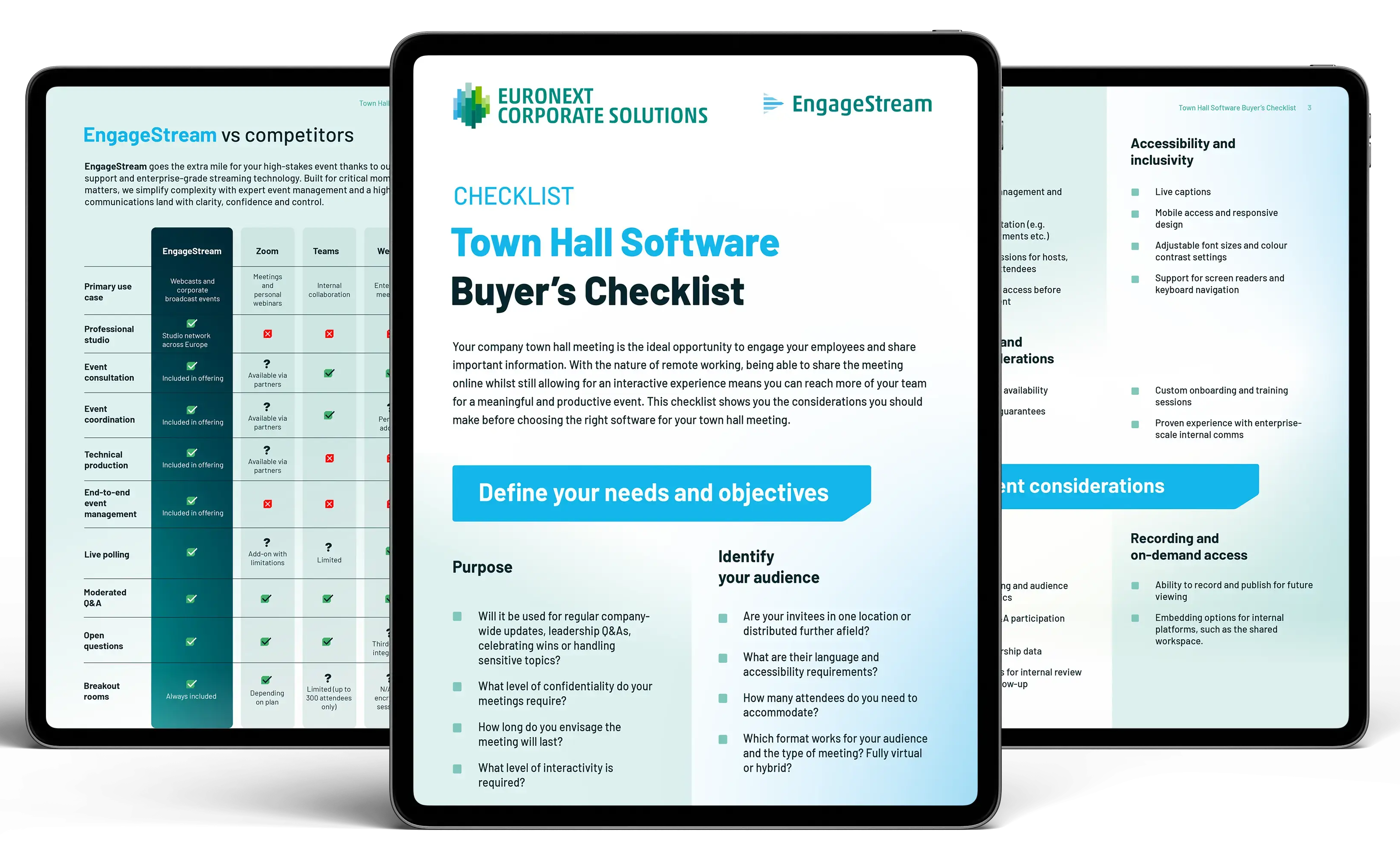
Whether you're planning a recurring internal town hall meeting or a high-stakes investor conference, a structured checklist ensures nothing falls through the gaps :from speaker briefings and tech rehearsals to audience registration flows and moderation protocols.
Elevating the Town Hall Experience: What "Good" Actually Looks Like
There's a measurable difference between a town hall that checks a communications box and one that genuinely moves an audience. The latter tends to share a few characteristics: leadership is visibly prepared and present, the format creates space for real dialogue, and the technology disappears into the background. It just works.
Organisations that consistently run high-impact town hall conferences treat them as strategic assets, not administrative tasks. They invest in the right infrastructure, brief speakers thoroughly, and analyse engagement data after every event to improve the next one.
The Platform Behind High-Performing Town Halls
Euronext Corporate Solutions works with listed companies and large organisations to deliver town hall meetings and conferences that perform. Our webinar and webcast solutions are built for the complexity of investor and employee communications, combining a white-glove service with broadcast-quality streaming, interactive engagement tools, compliance-grade security, and audience analytics that give your communications team real visibility.
EngageStream, our dedicated event platform, is designed specifically for organisations that can't afford to get this wrong. From registration to replay, it handles every touchpoint of the town hall lifecycle. So your team focuses on content, not logistics.
Run Town Halls That People Remember
A town hall meeting is only as valuable as the trust it builds. That trust is earned through relevance, transparency, and a format that respects your audience's time and intelligence.
The right strategy, the right content, and the right technology platform make that possible, consistently, at scale, and across every audience that matters to your organisation.
🔗 Explore our solutions: Webinars & Webcasts | EngageStream Platform