






.png)




.svg)
.svg)
.svg)







.png)
.png)






.jpg)

%20F%20(1).jpeg)







.webp)






 Login
Login
An effective earnings call is no longer a matter of reading the prepared remarks and managing the question queue. It is a disciplined, data-driven event in which the issuer marshals external metrics, internal analytics and competitor intelligence to shape a credible narrative, anticipate the questions that matter most to the shareholders attending, and demonstrate command of the issues that move the share price between disclosures. The investor relations functions that adopt this approach build stronger relationships with shareholders, sharpen their equity story and improve the quality of the dialogue with the sell side and the buy side.
The strategic rationale is straightforward. Shareholder engagement has moved decisively from optional to non-negotiable. A 2024 study published in The Review of Financial Studies recorded a sharp increase in formal engagement activity, with the proportion of companies offering structured shareholder engagement rising from 5.5 per cent in 2011 to 36.3 per cent in 2019 under pressure from investor groups, proxy advisors and regulators. PwC has captured the implication for boards directly: "Building strong investor relationships during stable times creates a foundation of trust, helping companies navigate challenges like activist interventions or market volatility." Disciplined data use is the mechanism by which that foundation is built and tested in every results cycle.
What data adds to a conference call
Data does three things that intuition and anecdotal feedback cannot. First, it establishes credibility, because verifiable figures support the narrative more persuasively than assertion. Second, it enables transparency, because shareholders presented with both the favourable and the unfavourable indicators are far less likely to suspect concealment. That in turn reduces speculation and strengthens the reputation for sound corporate governance. Third, it provides context, because a number presented in isolation seldom resonates. The same figure, reframed against historical trends, peer comparison or stated strategic objectives, takes on substantive meaning. A modest decline in revenue presented against a steeper industry decline becomes evidence of resilience rather than weakness.
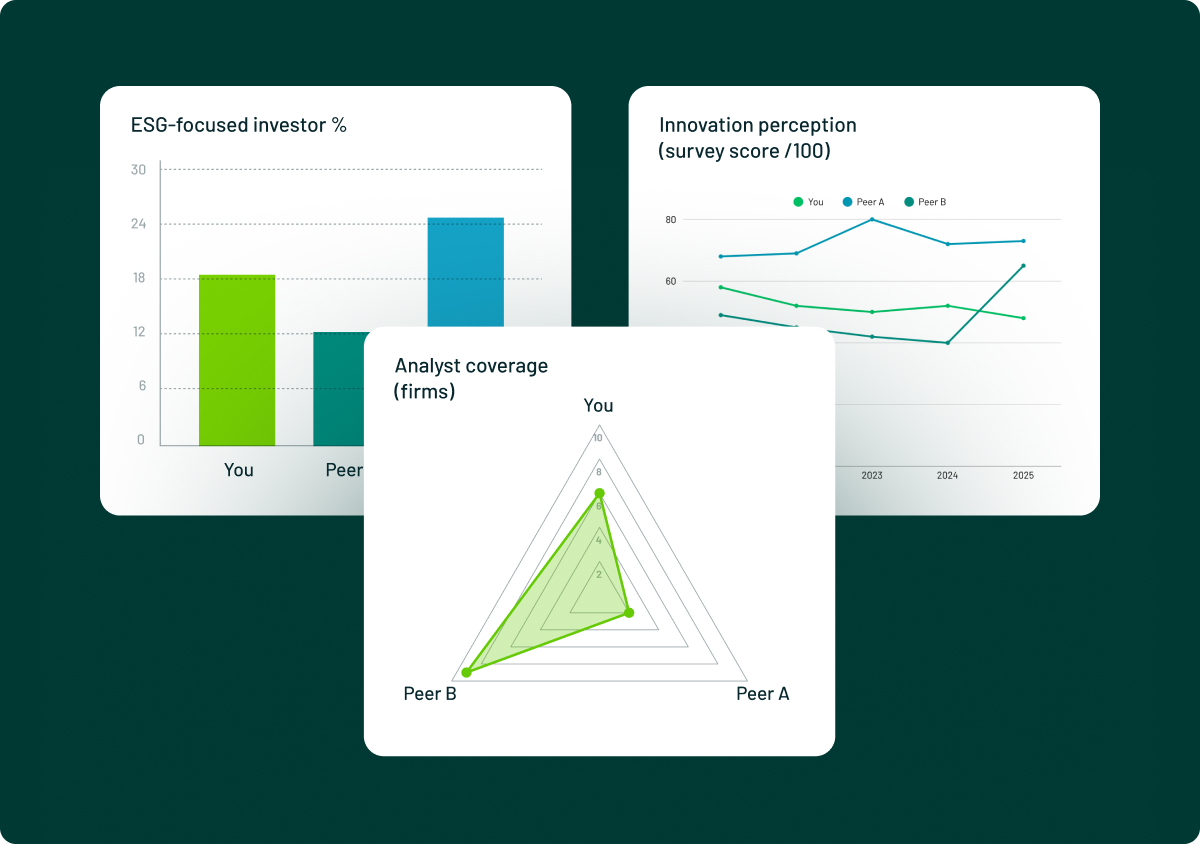
The benefits compound in the second-order indicators. Engagement analytics drawn from previous calls indicate which topics held the audience’s attention and which prompted disengagement, allowing the agenda for the next call to be calibrated accordingly. Shareholder identification data exposes the institutions that are underweight in your stock relative to peers, identifying targeted invitees and informing the messaging that will speak most directly to their stated investment criteria. Industry benchmarks position the company within a broader competitive context, giving investors the comparative reference points they need to make informed allocation decisions. The cumulative effect is a call that addresses the questions investors are already considering, rather than the ones the issuer would prefer to address.
External and internal data
A productive way to organise the data inputs is to separate what is communicated externally from what is analysed internally.
External data is the material presented to investors during the call. It comprises the headline financial metrics: revenue, earnings, profit and loss, earnings per share alongside operational data such as sales volumes and unit growth, and forward-looking guidance covering capital expenditure, operating expenditure and growth projections. The discipline lies in selecting the indicators that materially advance the equity story and contextualising each one against the trend, the peer set and the stated objective.
Internal data shapes the preparation that the audience never sees. It comprises investor perception studies, engagement analytics from previous IR events, and a record of historical call interactions. Perception studies document how the investment community currently views the business and its prospects. Engagement analytics from previous events reveal which topics and formats land most effectively. The historical record details the tone, the topics and the orientation of individual investors. This internal layer determines whether the call is meeting investors where they already are, or talking past them.
A workflow for the call cycle
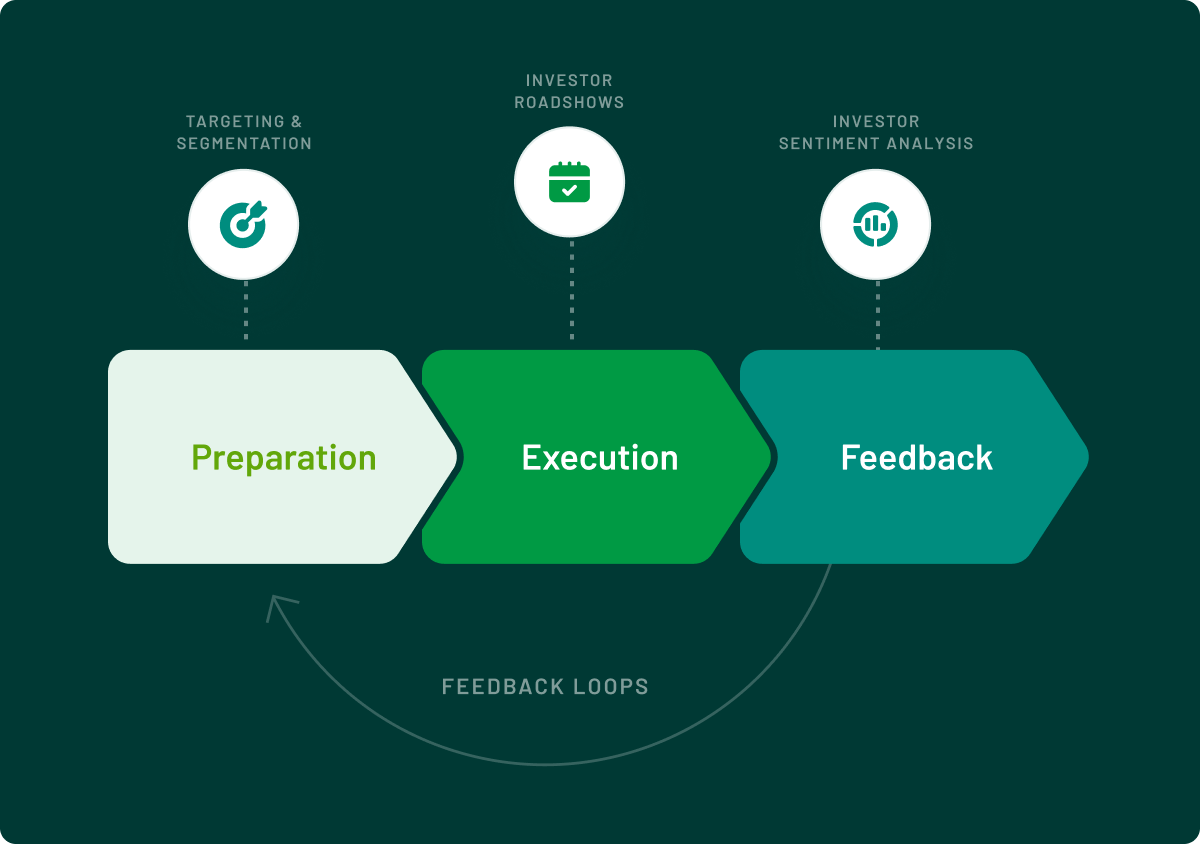
Disciplined preparation begins with structured data collection. Registration data identifies who will attend and whom they represent, allowing a sensible check against previous interactions and a realistic expectation of the questions to be raised. Competitor transcript analysis surfaces the questions investors are asking across the sector, and the framings other companies are using. This is precisely the value Euronext Corporate Solutions’ IR.Manager provides, with peer transcripts reviewed by Factset analysts to ensure accuracy and comparability. Investor sentiment analysis completes the picture. Drawing on perception studies, social media monitoring and direct feedback, it identifies what concerns investors most acutely going into the call.
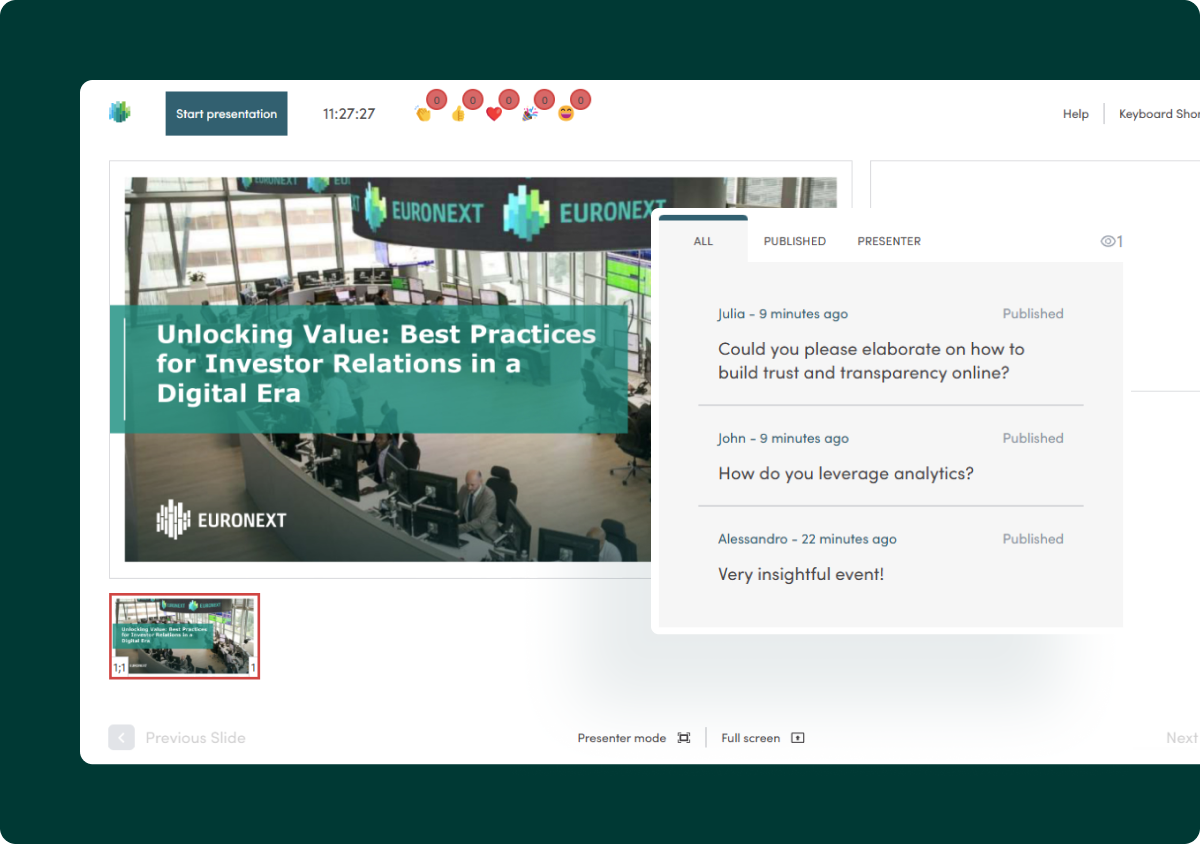
On the call itself, the data discipline shifts to live monitoring and interaction. An interactive webcasting platform such as EngageStream allows the IR team to gauge in real time whether shareholders are engaged or disengaging, which permits a timely change of subject when audience interest is waning. Visual presentation of data takes on a particular significance: when figures are reinforced on screen rather than recited audibly, they remain in view long enough to land substantively. Investor questions are answered with the supporting figures the team has prepared, and the executives know the numbers thoroughly enough to deploy them with confidence rather than ambiguity.
The call does not end at the close of the Q&A. Engagement analytics from the platform reveal who attended, the duration of their attention and the texture of their interaction; a short post-call survey supplements that quantitative picture with structured feedback on content, pacing and technical execution. Material non-public considerations permitting, follow-up outreach to clarify outstanding questions or to deepen specific topics is a high-value use of the IR team’s time, because it reinforces the candour the call has already demonstrated
A practical example
Greencore, the FTSE 250-listed UK convenience food manufacturer, illustrates the standard in practice. As a listed issuer with significant retail and foodservice exposure, the company treats results announcements as high-stakes events in which there are no second chances. Using EngageStream, Greencore now runs consistently smooth and professional financial webcasts that strengthen market confidence and reinforce its reputation as a reliable communicator. The combination of broadcast-grade streaming, end-to-end event management and engagement analytics is exactly the infrastructure the data-driven approach above requires; the operational scale and the exchange-operator pedigree are what distinguish ECS in delivering it.
Key takeaways
-
Structured shareholder engagement rose from 5.5% (2011) to 36.3% (2019) under pressure from investor groups, proxy advisors and regulators, it is now non-negotiable.
-
Data does three things intuition cannot: it establishes credibility, enables transparency and provides comparative context.
-
External data (revenue, EPS, guidance) and internal data (perception studies, engagement analytics, historical interactions) play different roles in the call cycle.
-
Pre-call: registration data, peer transcripts (IR.Manager), sentiment analysis. On the call: interactive monitoring with EngageStream. Post-call: analytics + survey + targeted follow-up.
FAQs
What is a data-driven earnings call?
A conference call planned and run on the basis of structured data: external metrics, internal analytics, peer transcripts and investor sentiment, rather than intuition and anecdotal feedback.
What types of data should IR teams use?
External data presented to investors (revenue, profit and loss, EPS, operational data, forward guidance) and internal data for preparation (perception studies, engagement analytics from prior events, historical interaction records by investor).
How do I prepare for an earnings call using data?
Identify attendees from registration data, analyse peer transcripts to anticipate questions, run sentiment analysis to surface concerns, structure the agenda around the topics investors care about most, and rehearse tough-question responses with the executive team.
How do I measure earnings call success?
Use engagement analytics from the platform (attendance, watch duration, poll and chat activity), supplement with a post-call survey on content and pacing, and track follow-up engagement and share-price reaction over the days after.
References and further reading
- IR Events
- Investor Relations
How IR webcasting drives market performance- What shareholders want from an investor day
- Engaging international investors with virtual and hybrid IR events
- Earnings call
- Company earnings conference call
- Leveraging AI for Investor Relations
- IR webcasting best practices
- EngageStream webcasting platform