









.png)




.svg)
.svg)
.svg)







.png)
.png)






.jpg)

%20F%20(1).jpeg)







.webp)






 Login
Login
What an Investor Relations portal does
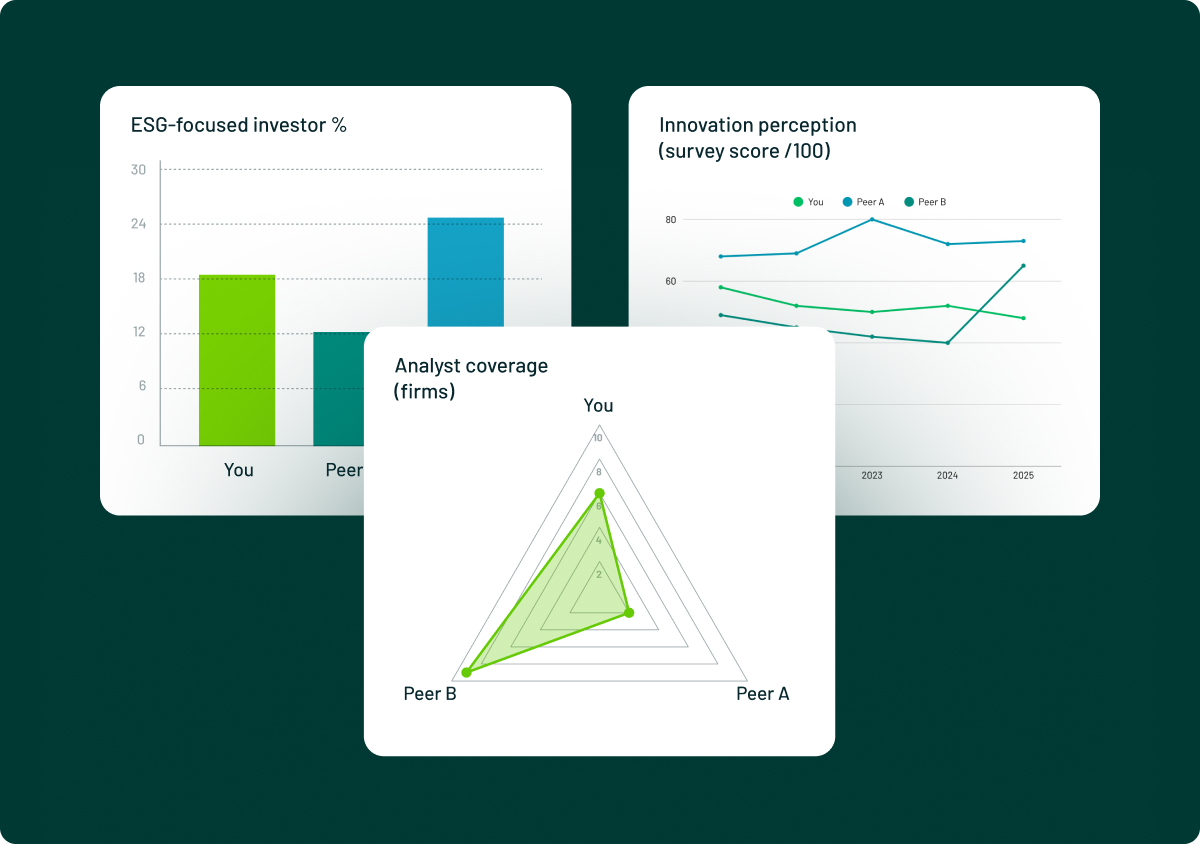
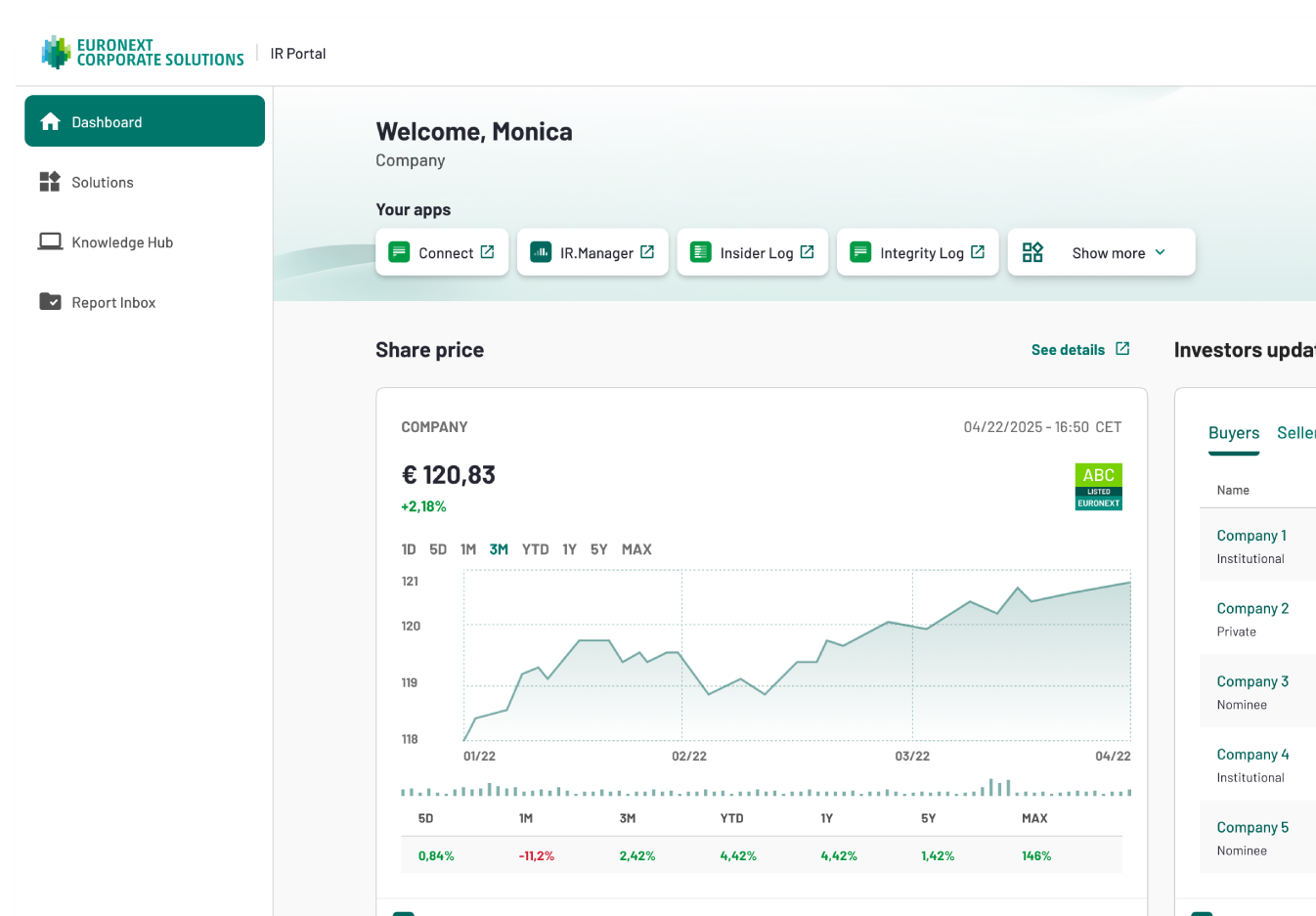
An IR portal is an integrated software environment that supports the day-to-day operation of an investor relations function. Designed for IR professionals, such portals represent a single-entry point consolidating the tools an IRO needs into one, secure workspace: an investor relations CRM holding the contact base and meeting history, shareholder analysis showing current and prospective ownership, real-time share-price widgets feeding the IR website and internal dashboards, knowledge hub for Investor Relations and reporting workflows for advisory deliverables.
The category exists because the alternative of running IR through spreadsheets, generic email, separate vendor logins and manually refreshed contact lists is fragile and creates regulatory exposure. When ownership changes accelerate around earnings or activist campaigns, a fragmented stack stops being a productivity problem and becomes a disclosure risk.
The shift toward integrated portals has been driven by three forces. The Shareholder Rights Directive II (SRD II) made shareholder identification a structured, EU-wide right rather than an opportunistic data-purchase exercise. Investor expectations have moved toward digital-first engagement, which puts more demand on the IR website and event infrastructure. And the IR function itself has broadened in scope, adding retail outreach and structured perception studies, often without a proportional increase in headcount.
What to look for in an IR portal
Selecting an IR portal is a strategic procurement, not a tools decision. Six dimensions matter.
1. Shareholder intelligence under SRD II
The portal should make shareholder identification a routine workflow rather than a quarterly project. That means structured ingestion of SRD II data, automated detection of ownership changes, monitoring of position movements at the fund level, and the ability to produce a defensible holdings picture at any point in the calendar. For issuers with significant retail investor bases, the platform should also surface retail ownership distinct from institutional flows.
2. A purpose-built IR CRM
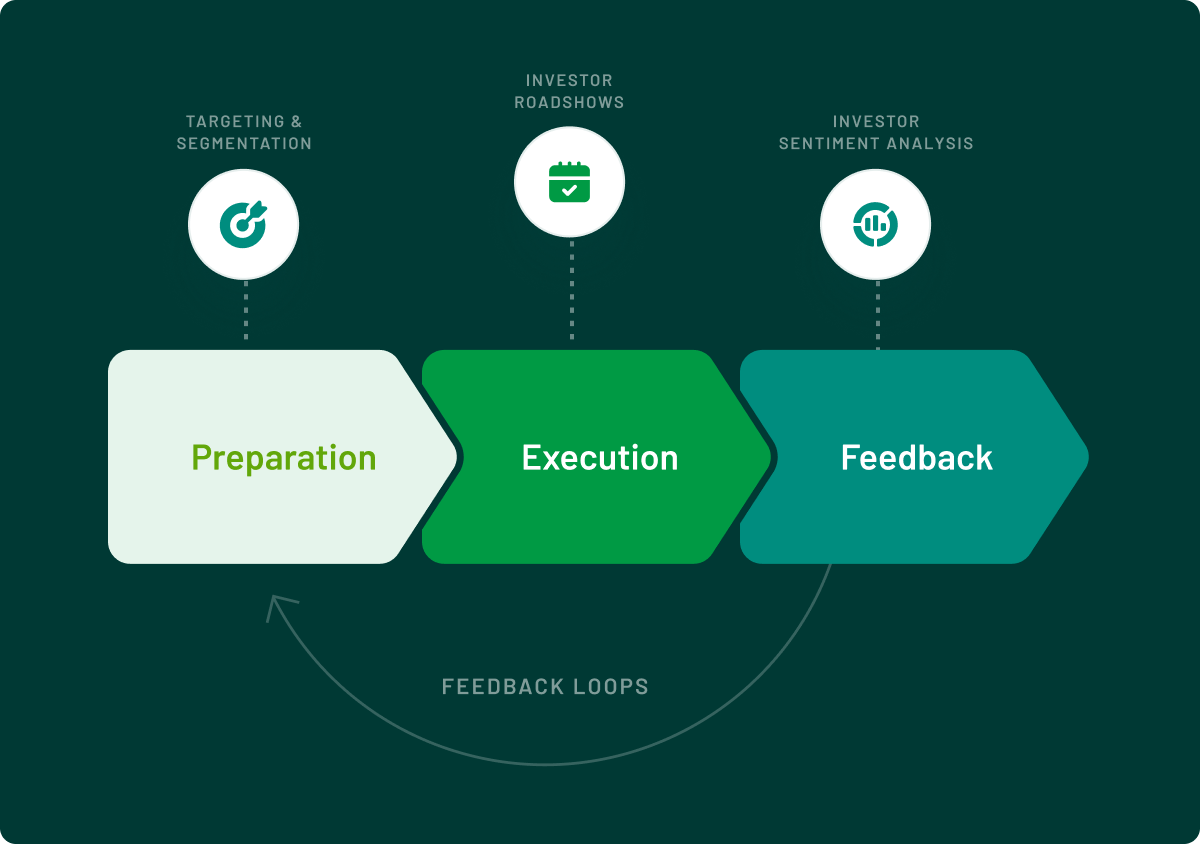
A general-purpose CRM does not work for investor relations. The IR CRM needs to hold the investment-world contact database composed of funds, analysts, mandates, ESG screening criteria, and to integrate meeting history with holdings data so that targeting decisions can be made on evidence rather than intuition. The CRM should support roadshow planning, post-meeting capture, and reporting back to the executive team without requiring the IRO to rekey notes into a separate system.
3. Real-time market data on the IR website
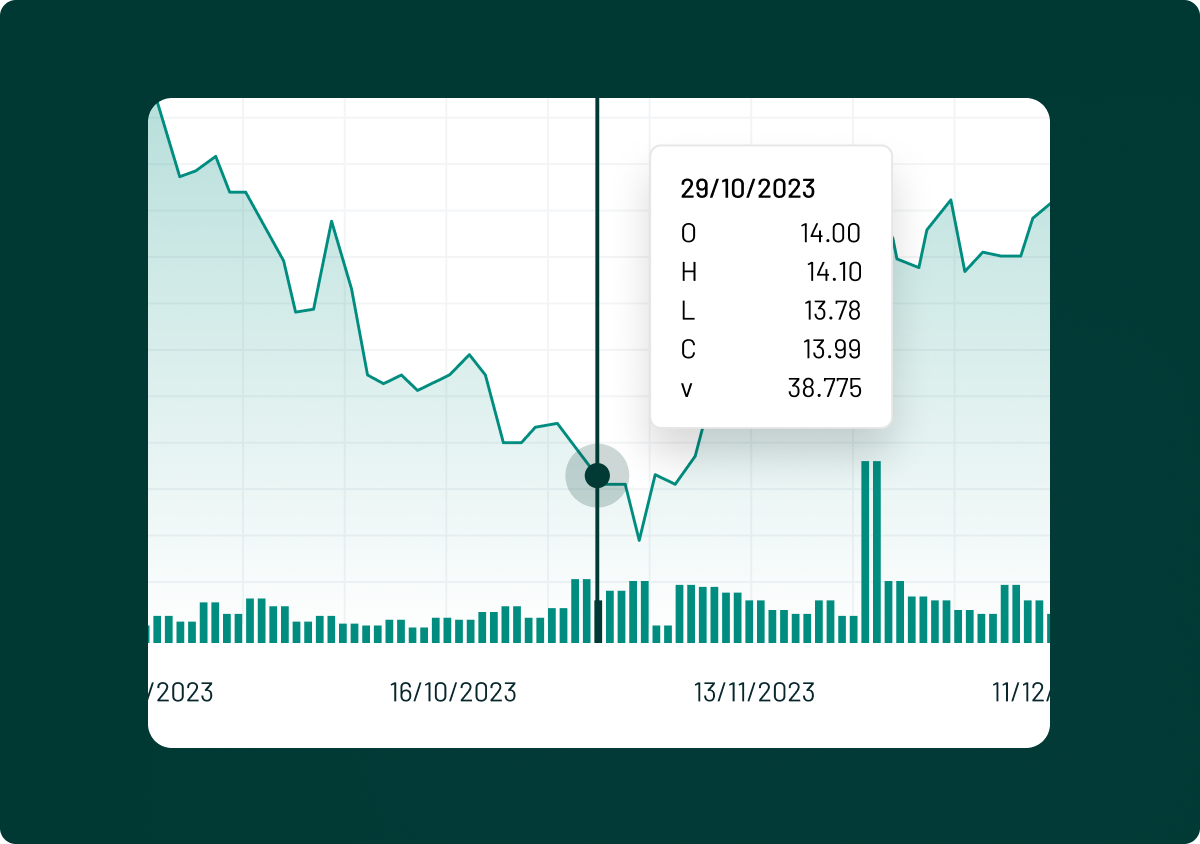
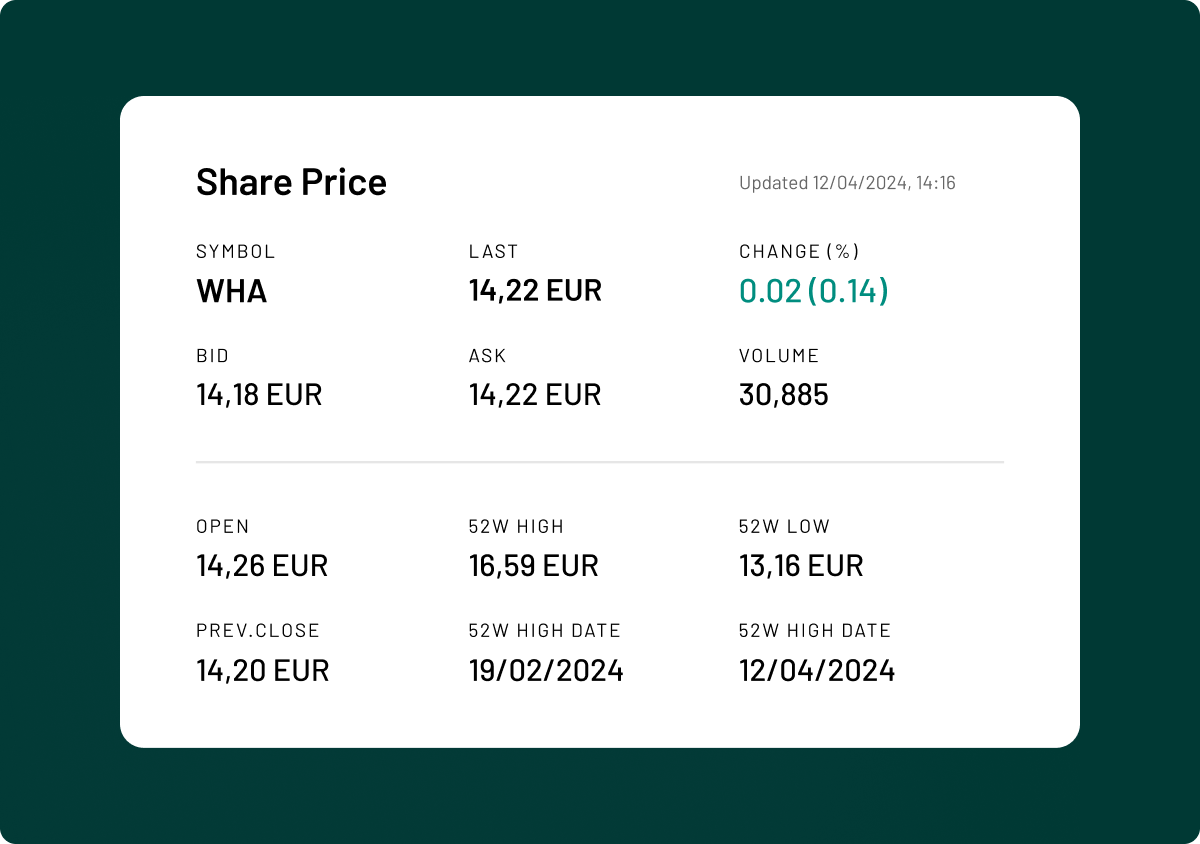
The IR website is now a primary investor touchpoint. Live share-price feeds, peer comparisons and trading indicators displayed directly on the IR site reduce the friction for prospective investors doing first-pass research, and signal that the issuer treats investor information as a core function rather than a compliance afterthought.
4. Integrated event delivery
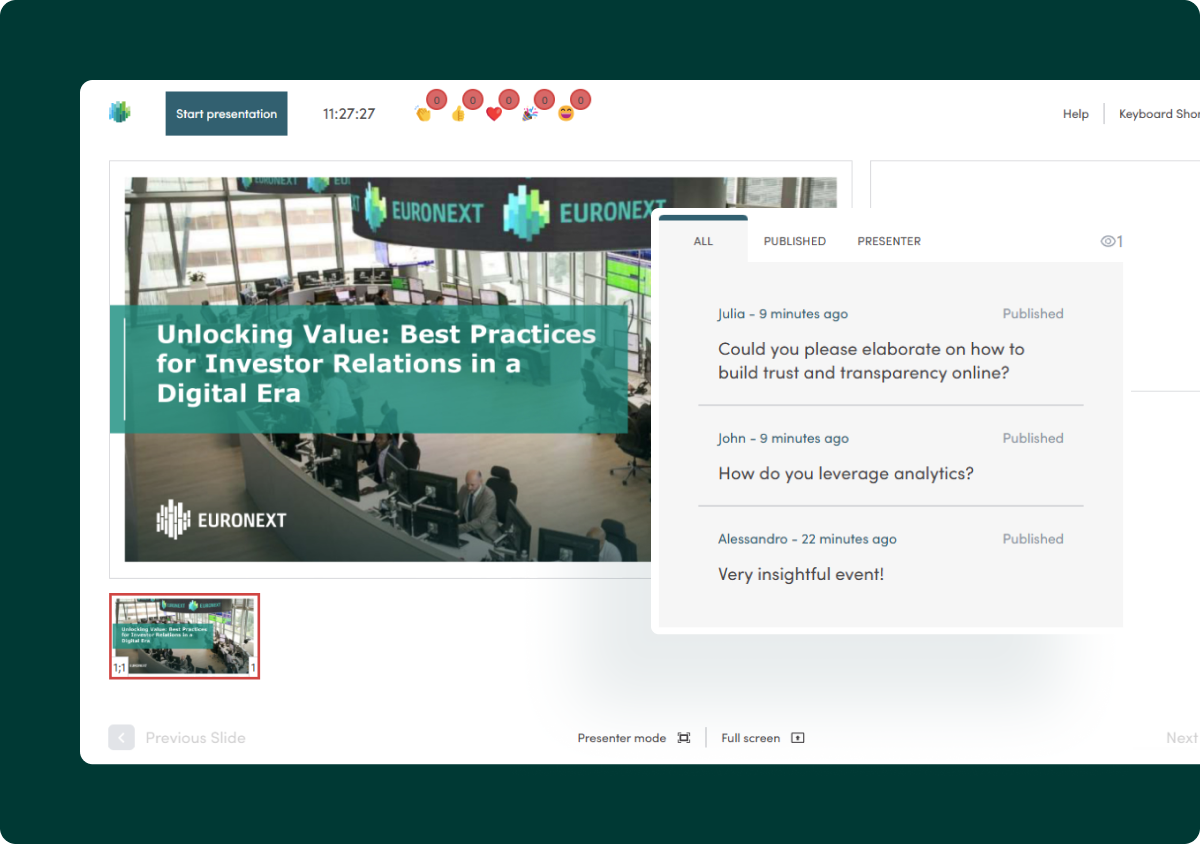
Capital markets days, results presentations and AGMs increasingly run as hybrid or virtual formats. The portal should integrate with the webcasting and event platform used to deliver them, capturing attendance, engagement and Q&A patterns as structured data that feeds back into the CRM and the targeting workflow.
5. Advisory deliverables in one place
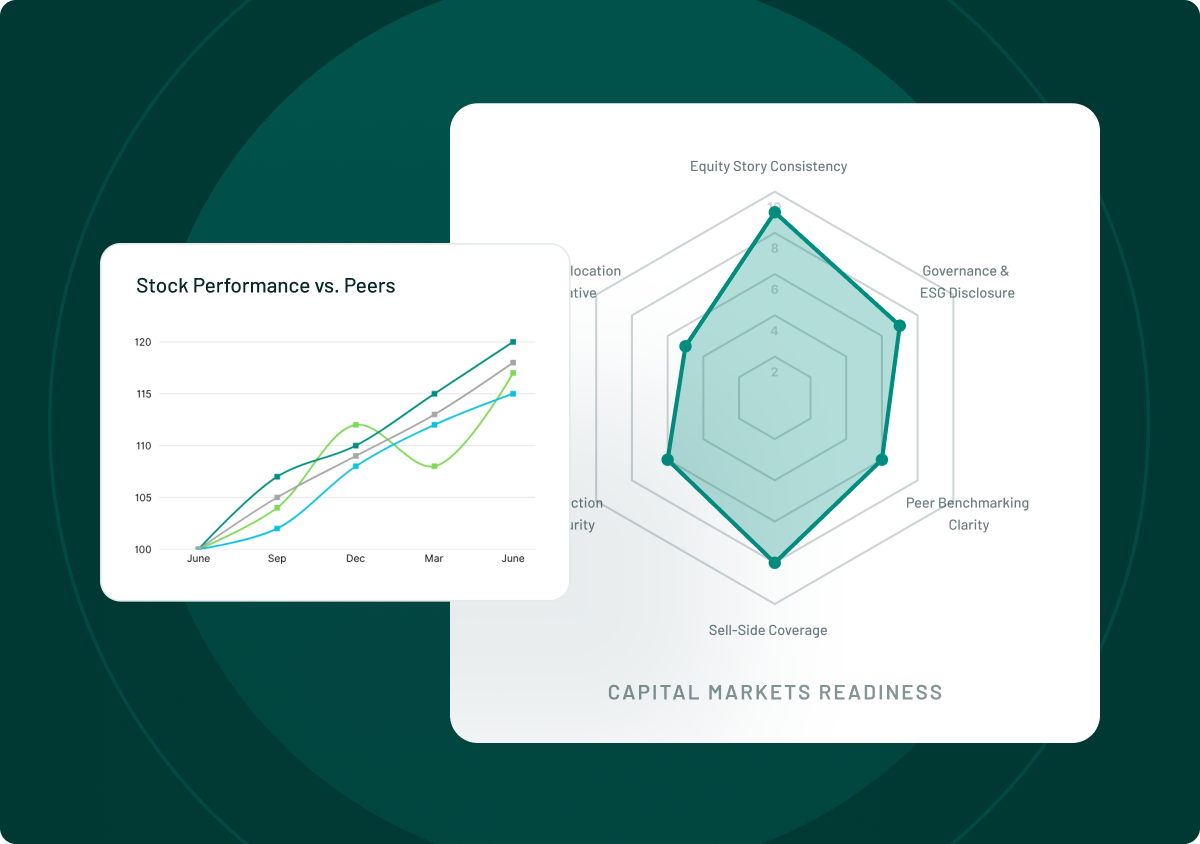
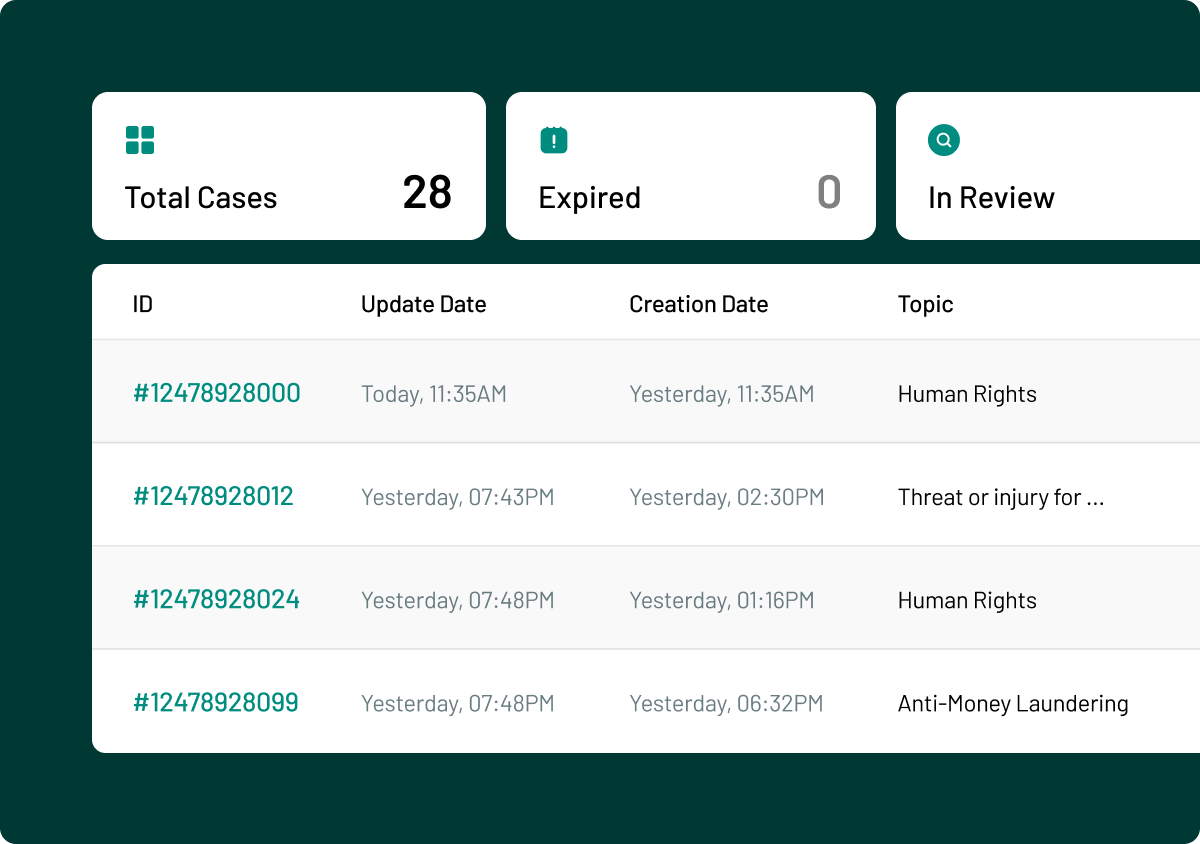
Most listed issuers retain external advisory support such as perception studies, investor targeting projects, capital markets transactions. The portal should be the single delivery point for these reports, with role-based access, secure storage and instant alerts on new deliveries. The pattern of advisory PDFs scattered across email inboxes and shared drives is a productivity tax and a security liability.
6. Security architecture appropriate to listed-company data
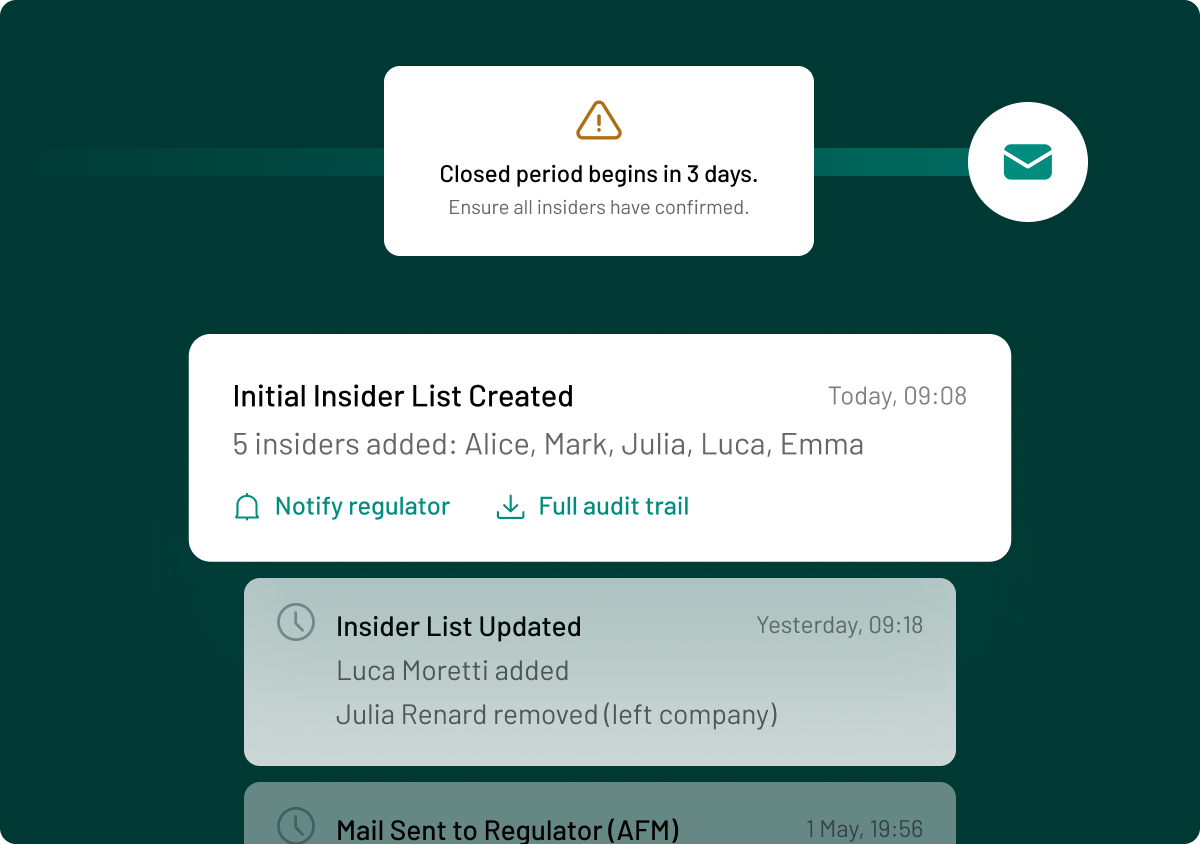
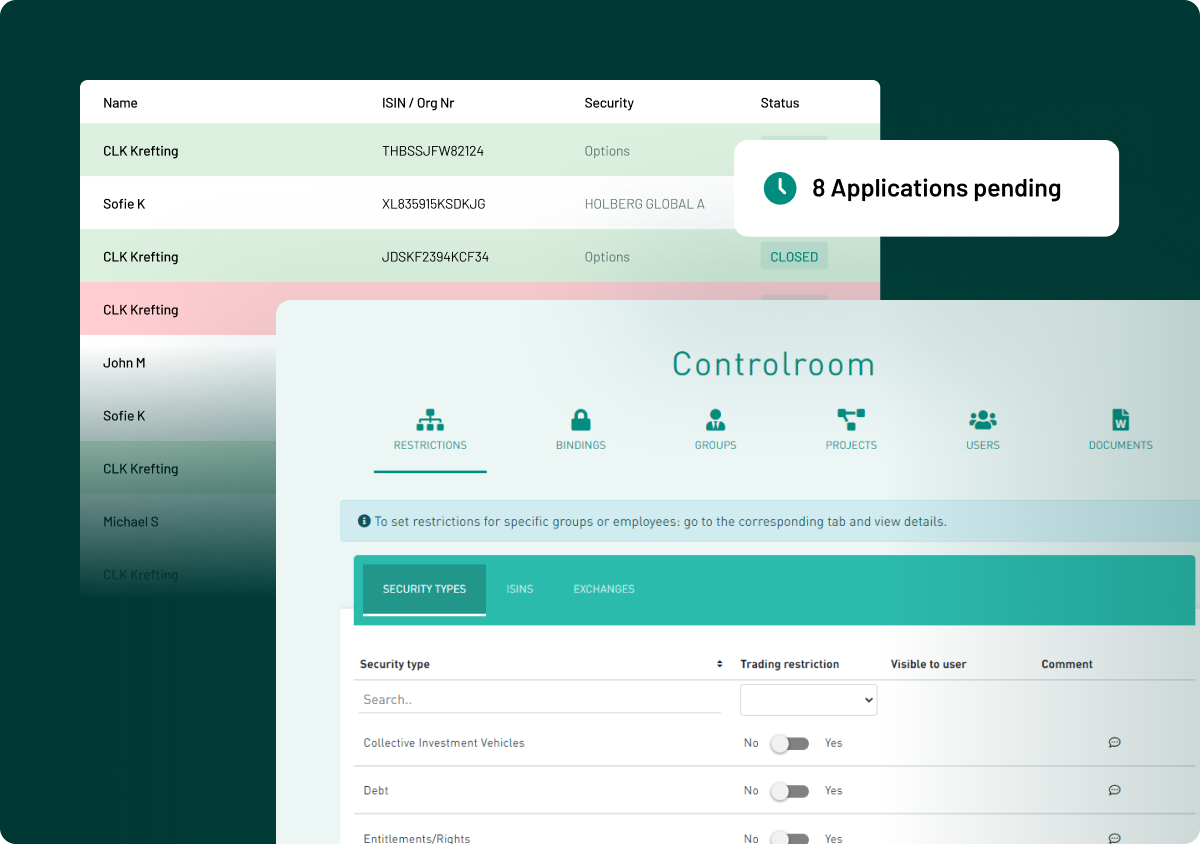
Investor relations data is market-sensitive by definition. A credible IR portal needs EU data residency, ISO 27001 certification, GDPR compliance, role-based access control, single sign-on, and a documented audit trail of every action taken in the system.
IR portal vs spreadsheets: the natural switch
The spreadsheet workflow persists in some IR functions because it is familiar, free at the point of use and individually controllable. The reason teams move off it is not the tool itself but the second-order effects: contact lists drift out of sync between team members, holdings data is months out of date by the time it is needed, meeting notes live in private inboxes, and the audit trail required to defend a disclosure decision does not exist.
The transition costs are real but bounded. A typical mid-cap IR function can complete a portal migration including data import, CRM hygiene, integration with the IR website and team training in eight to twelve weeks. Once live, the operating gain is significant: time spent on data reconciliation drops sharply, targeting becomes evidence-led, and the IR team gains the bandwidth to do the strategic work that justified investing in the portal in the first place.
Frequently asked questions
What is the best CRM for investor relations?
A purpose-built IR CRM, one designed for the investor relations workflow rather than adapted from a sales CRM, is the right starting point. Key criteria are the depth of the underlying investor database, the integration with shareholder analysis, the support for roadshow and targeting workflows, and the security posture appropriate to market-sensitive data.
What is the best investor relations software for 2026?
The right answer depends on company size, listing venue, free float and the existing IR technology stack. Mid-cap European issuers typically need an integrated portal covering CRM, shareholder analysis, real-time market data and event delivery. Newly listed companies can start with a lighter configuration and expand as the IR programme matures.
What are the top AI tools for investor relations?
The most established AI use cases in IR are automated meeting briefing notes, sentiment analysis on earnings call transcripts and analyst research, and drafting support for routine investor communications. The constraint is regulatory: any AI-generated content that touches market-sensitive information has to pass through the same review as human-generated disclosure.
Can I run investor relations on a spreadsheet?
For a single-person IR function at a small newly listed issuer, a well-maintained spreadsheet can cover the basics for a short period. Beyond that, the operational fragility (data drift, lost meeting notes, no audit trail) and the regulatory exposure (no defensible record of disclosure decisions) make the spreadsheet workflow untenable. Most issuers move to a purpose-built portal within the first two years on market.
The Euronext Corporate Solutions IR Portal
Euronext Corporate Solutions delivers an integrated IR portal covering the full operational stack: IR.Manager for the investor relations CRM, Shareholder Analysis for SRD II identification and ownership intelligence, LiveEquity for real-time share-price widgets on the IR website, Post-Listing Advisory for strategic IR support, and EngageStream for the events and webcasting layer. Single sign-on across the stack, EU data residency, ISO 27001 certification, role-based access control, and a centralised secure inbox for advisory deliverables.
The portal is used by more than 4,000 listed and pre-IPO companies across Europe, from newly listed mid-caps to large-cap index constituents.
Continue reading
→ Investor Relations: The Complete Guide
→ IR Communication Best Practices: the disciplines that shape investor perception.
→ Organising IR Events that Drive Engagement: the production discipline.