









.png)






.svg)
.svg)
.svg)







.png)
.png)







.jpg)

%20F%20(1).jpeg)







.webp)






 Login
Login
disclosure schedule
What is a Disclosure Schedule?
A disclosure schedule is a document used in mergers and acquisitions (M&A) to qualify or limit the seller’s reps and warranties in the purchase agreement. It lists known exceptions, risks or issues that the seller wants to disclose formally to the buyer before the transaction completes.
Disclosure schedules are important because they help allocate risk between the parties. They create a written record of what the buyer was told during due diligence and can reduce the likelihood of disputes after closing.
In most transactions, disclosure schedules form part of the share purchase agreement (SPA) or asset purchase agreement (APA).
Why are disclosure schedules important?
Reps and warranties require sellers to make statements about the condition of the business. However, very few companies operate without any risks, disputes or exceptions. Disclosure schedules allow sellers to identify those issues openly rather than giving completely unqualified assurances.
For example, a seller may give a warranty stating that there is no material litigation involving the company. If, however, there is an ongoing minor legal dispute that has not reached the litigation stage, the seller can disclose this information in the disclosure schedule.
This process helps:
- Limit seller liability
- Improve transparency during due diligence
- Clarify which risks the buyer already knows about
- Reduce the risk of warranty claims after completion
The more accurate and complete the disclosure schedule is, the stronger the seller’s protection is likely to be later.
What information is included in a disclosure schedule?
Disclosure schedules can cover almost every area of the business being sold. Typical disclosures include:
Category | Examples |
Corporate matters | Subsidiaries, governance exceptions, ownership issues |
Financial matters | Outstanding liabilities, debt arrangements, unusual accounting items |
Legal and compliance | Litigation, regulatory investigations, compliance breaches |
Commercial matters | Customer concentration risks, supplier dependencies, contract exceptions |
Employment matters | Employee disputes, pension obligations, retention agreements |
Intellectual property | Licensing disputes, ownership limitations |
Data protection | GDPR issues, cybersecurity incidents |
Tax matters | Historic tax exposures or ongoing audits |
The disclosures are usually linked directly to specific reps and warranties in the purchase agreement.
How disclosure schedules work in practice
- The buyer’s legal team normally drafts the reps and warranties section of the agreement.
- The seller then reviews those statements and identifies any exceptions that should be disclosed.
Disclosure schedules are often highly detailed and thoroughly negotiated:
- Sellers want disclosures to be broad enough to protect them from future claims.
- Buyers want them to remain specific and relevant.
The schedules may also be updated between signing and closing if new issues arise before the transaction completes.
Disclosure schedules vs disclosure letters
Disclosure schedules and disclosure letters serve similar purposes, but the structure often differs depending on jurisdiction and transaction style:
Disclosure schedule | Disclosure letter |
Structured schedules attached to the agreement | Narrative disclosure document |
Usually organised by warranty section | Often combines general and specific disclosures |
Common in US-style transactions | |
Focused on itemised exceptions | Often includes broader contextual explanations |
In practice, many transactions use a combination of both approaches.
Common mistakes in disclosure schedules
Poor disclosure management can create significant legal and commercial risk. Common mistakes include:
- Vague or incomplete disclosures
- Inconsistencies between the schedule and VDR documents
- Failing to disclose material risks
- Weak cross-referencing to warranties
- Over-disclosure that creates confusion rather than clarity
Sellers should ensure disclosures are accurate, specific and supported by documentation wherever possible.
Why buyers scrutinise disclosure schedules carefully
Buyers review disclosure schedules closely because they reveal exceptions to the seller’s assurances about the business. The disclosures may affect:
- Valuation
- Indemnity negotiations
- Purchase price adjustments
- Deal structure
- Risk allocation
Significant disclosures can also trigger additional due diligence questions or negotiations before completion.
Manage your M&A deals with confidence
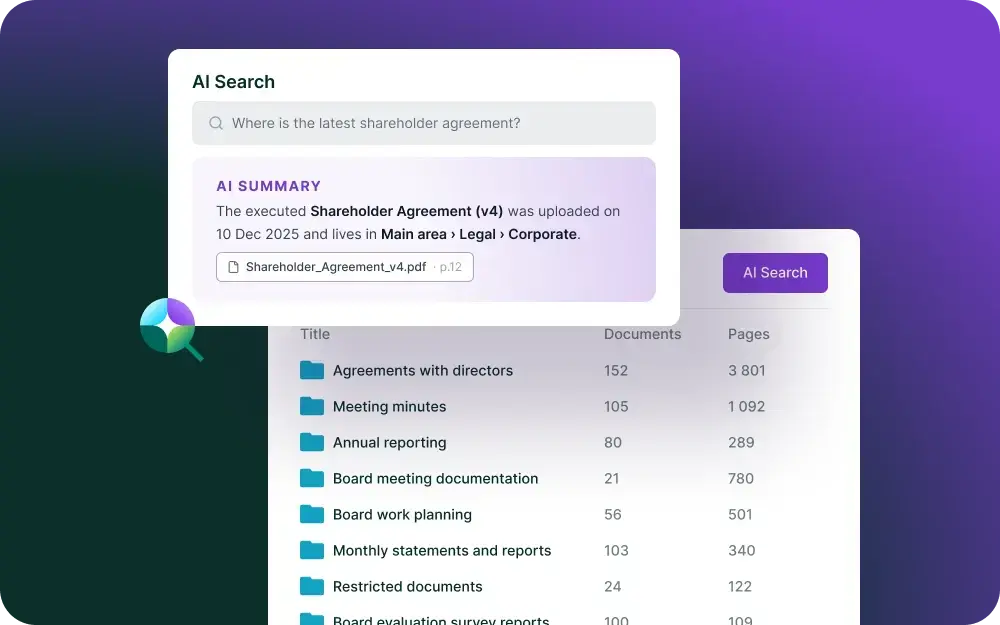
Admincontrol’s virtual data room provides recommended folder structures that you can tailor to get your VDR up and running quickly when a deal starts to move. Use the encrypted Q&A function to keep conversations private and advanced keyword matching to find the document you need when you need it.
Related terms
View all termsDefinition of Insider Trading
Insider trading is when a person in possession of confidential information uses ...
Market Abuse Regulation (MAR) Outlined
The Market Abuse Regulation (MAR) came into effect in 2016 to ensure a uniform ...
Definition of Market Manipulation
Market manipulation, a form of market abuse, is the illegal act of artificially ...