















































 Login
In 2024, EU member states issued 377 sanctions for breaches of the Market Abuse Regulation (MAR), with fines of more than €45.5 million. The fines covered insider dealing and unlawful disclosure, market manipulation, the public disclosure of inside information and managers' transactions.
The cost is not only financial. In one case, a major EU-based manufacturer was fined €280,000 for failing to disclose inside information, and its share price fell 1.5% when the sanction was announced. In another, three companies and two individuals were fined more than €18 million for offences including insider dealing and trading by persons discharging managerial responsibilities (PDMRs) during a closed period.
Behind many of these cases sits a common problem: MAR is complex, and its obligations are spread across several teams using tools that were never designed to work together. This article looks at where that complexity comes from, where fragmented "point solutions" fall short, and what an integrated approach changes.
Managing MAR compliance in practice
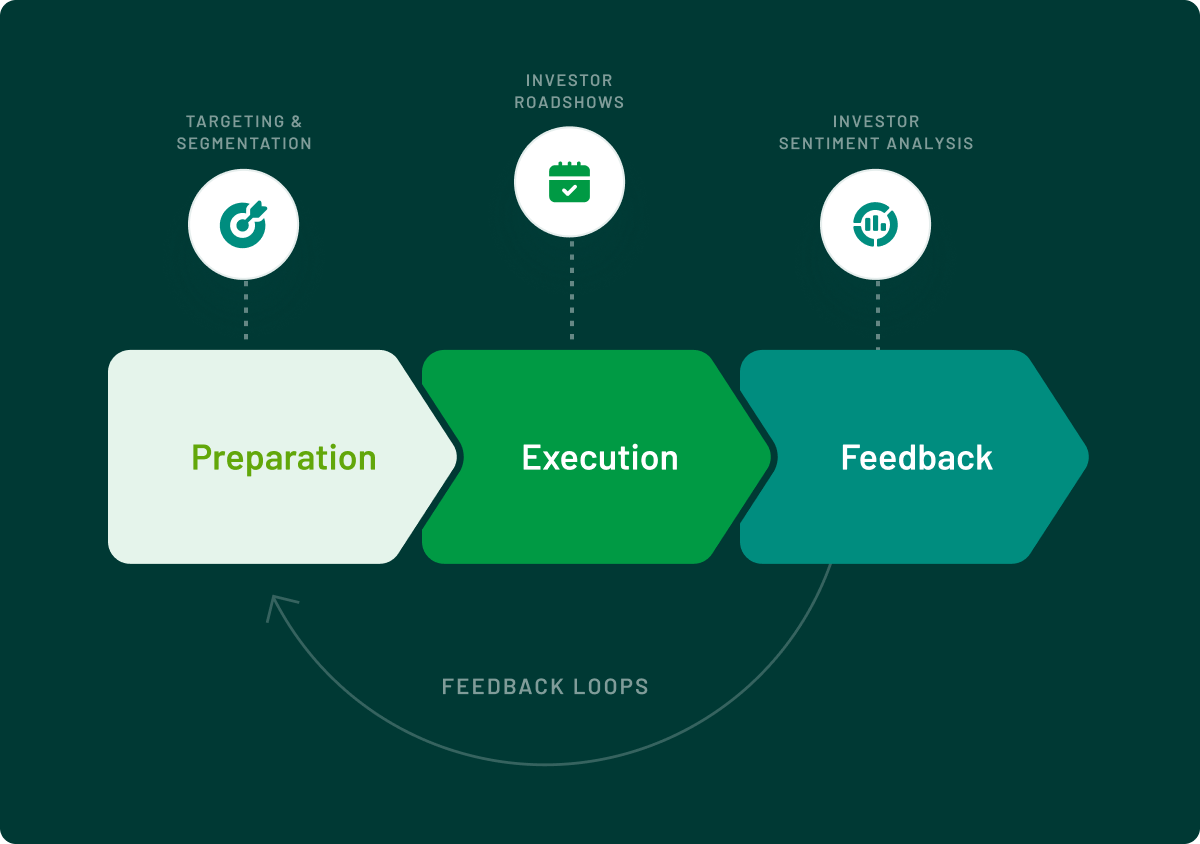
A practical framework for an integrated approach to MAR, from insider lists to disclosure timing.
What makes MAR compliance so complex?
Take a routine event: preparing financial results. Before a single figure is published, MAR requires a chain of steps, each owned by different people.
| Step | What MAR requires |
|---|---|
| Stakeholder access | Finance, legal, investor relations, senior management and advisors gain access to price-sensitive data. |
| Insider lists | Event-based lists in the ESMA format, with precise access timestamps and archived versions. |
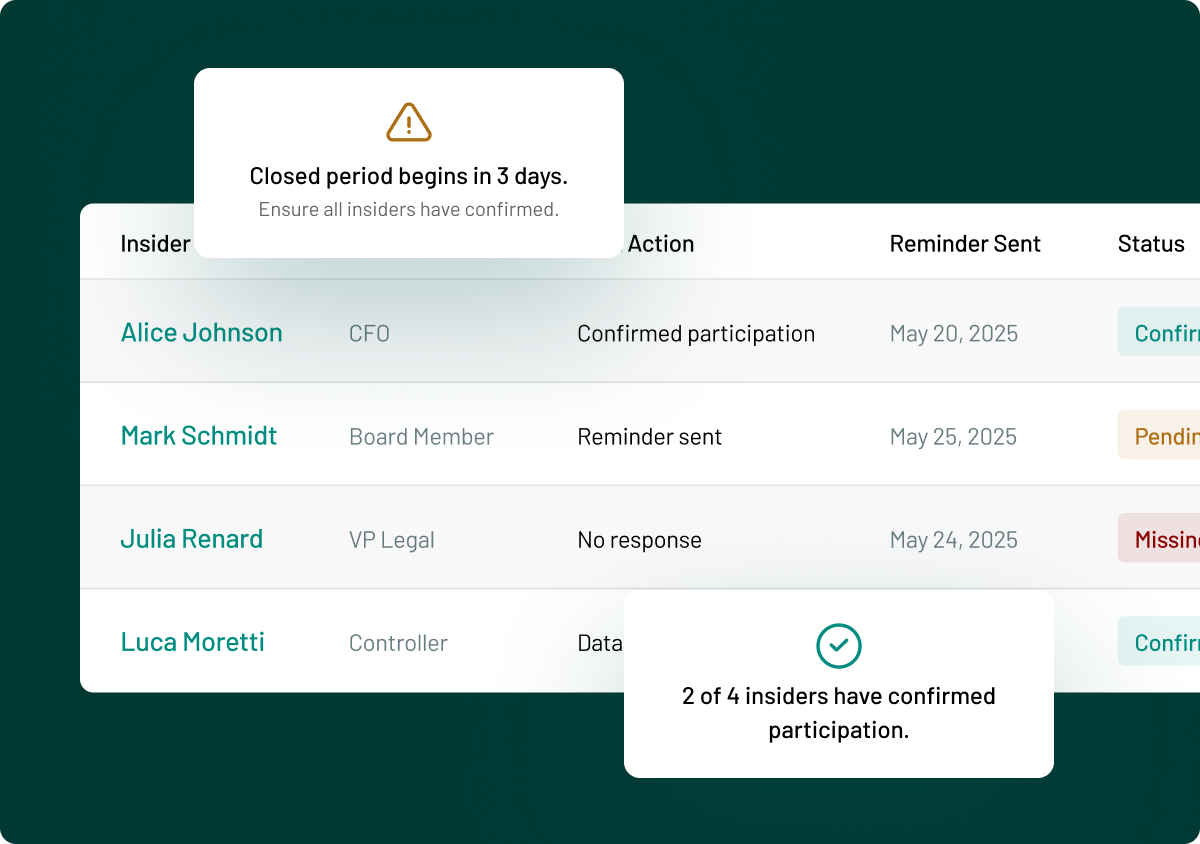
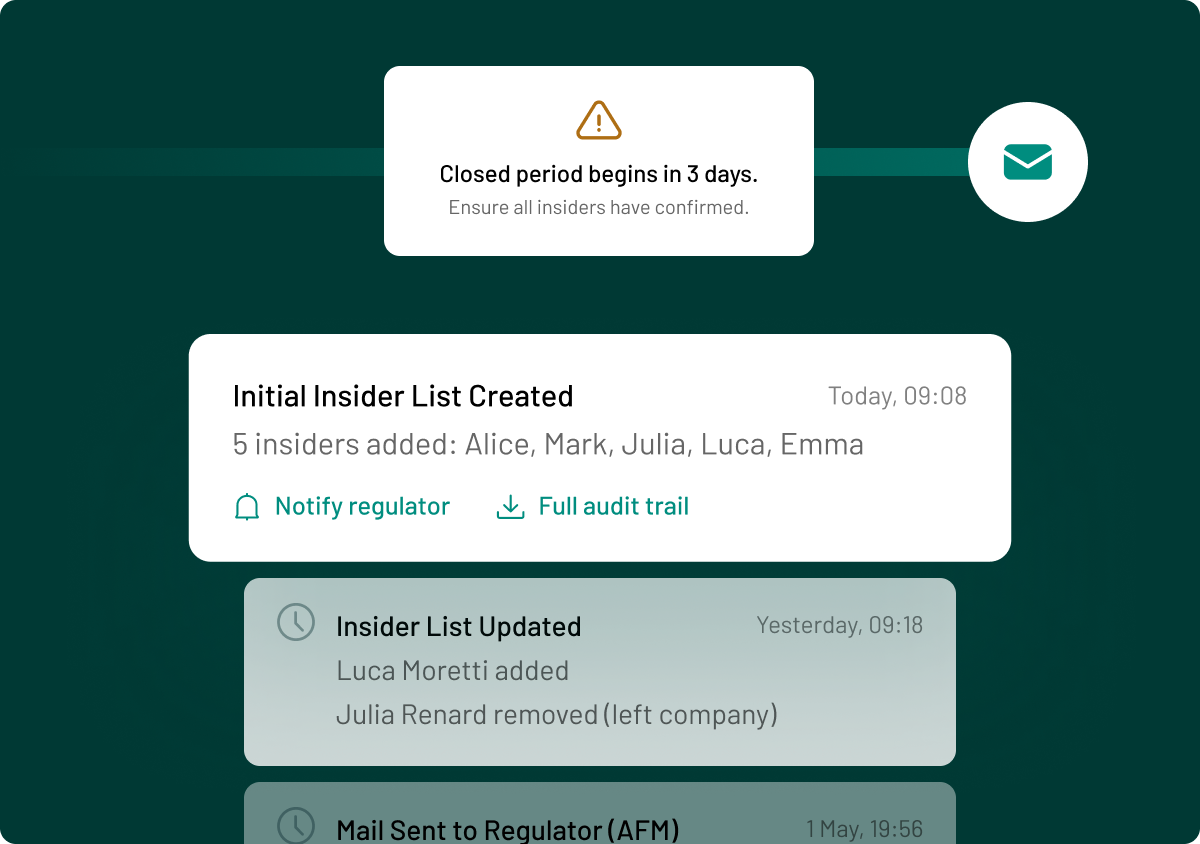
| Insider notifications | Insiders are told they are on a list and what their obligations are, and their acknowledgement is tracked. |
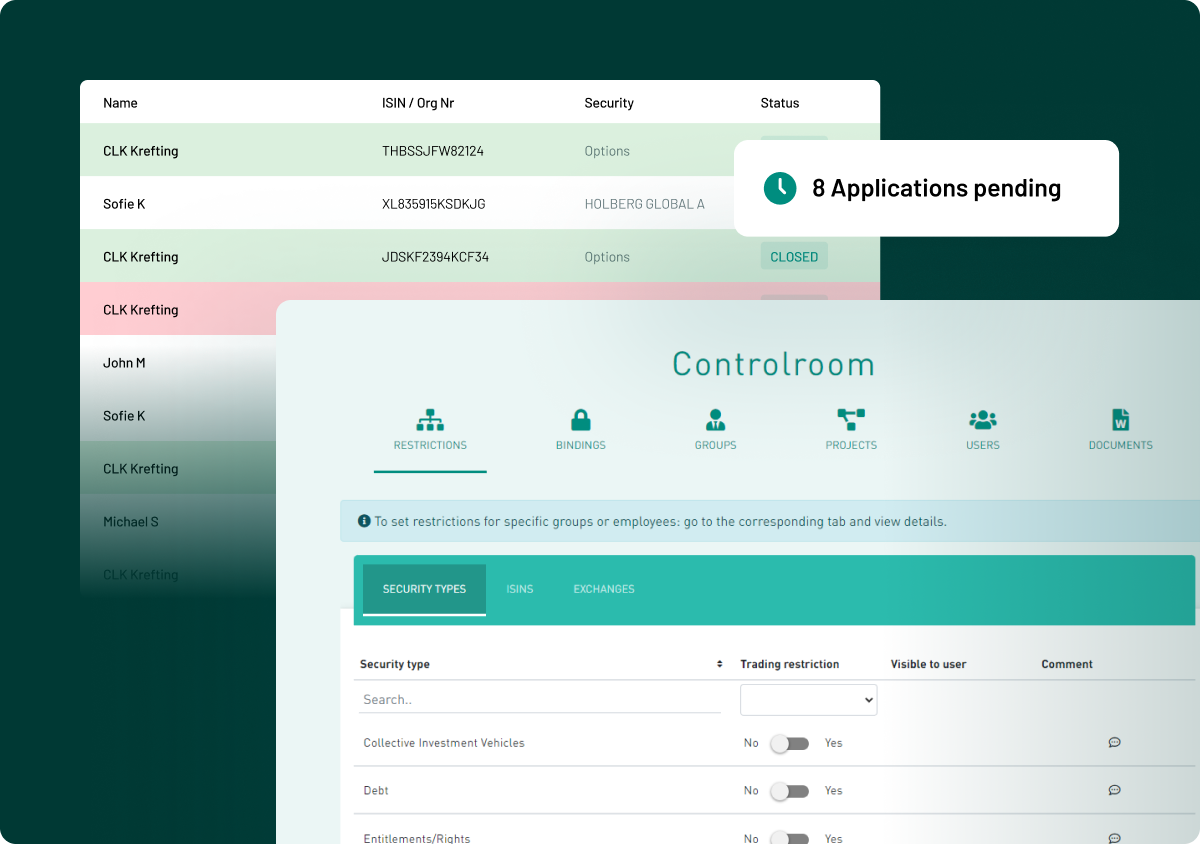
| PDMR restrictions | Closed-period notifications and controls on unauthorised trading and exceptions. |
| Disclosure timing | Equal-access announcements, with documented timing and approvals. |
Each of these steps has a different owner. Legal and compliance, the company secretary, investor relations, executives (including PDMRs) and external advisors all hold part of the responsibility. That split makes oversight hard: no single team sees the whole picture.
MAR compliance never stops
Results periods are only one trigger. M&A, capital raising, strategic partnerships, market soundings and board decisions involving price-sensitive information can all require list updates, insider notifications, disclosure assessments and trading window controls. Compliance is continuous, not seasonal.
And the rules keep changing
The EU Listing Act amended MAR in stages between 2024 and June 2026. The changes include:
- No obligation to disclose inside information at each intermediate step of a protracted process, such as an M&A transaction
- Simpler insider lists, with less granularity
- A new test for delaying disclosure: whether the information contradicts the issuer's latest public communication
- A higher threshold for reporting PDMR transactions
Each change means updated workflows and staff training. Issuers that did not watch the regulatory horizon may have had less time to prepare.
Regulators expect proof
Issuers must be able to show what they did to prevent market abuse: detailed records of insider lists, decisions to delay disclosure and qualifying PDMR transactions. That means clear, time-stamped audit trails showing what happened, when, and who knew what.
Where point solutions fall short
Many issuers still manage MAR with a collection of general-purpose tools. Each one creates its own risk:
- Spreadsheets for insider lists: errors, formatting issues, version control problems and missed updates
- Email notifications: no reliable proof of receipt or acknowledgement
- Shared calendars for trading windows: easily overlooked or misread
- Manual disclosure management: delays, inconsistent messages, weak approval records and possible unequal access
- Document folders for delay records: fragmented evidence that is hard to reconstruct during an audit
Put together, these tools create silos and duplicated work. They also leave room for human error: insiders added late or not at all, inaccurate timestamps, incomplete records, PDMR reporting thresholds that go unnoticed and trades that break the rules.
The case for an integrated MAR framework
An integrated approach brings these tasks into one controlled workflow. It delivers four benefits:
Visibility
A single view of insider lists, disclosure decisions and PDMR transactions
Less admin
Automated notifications, time-stamped archiving, trading alerts and record keeping
Audit readiness
A complete, time-stamped record, logged automatically
Governance
Standard processes, clearer accountability and better board oversight
The moments that need it most
An integrated framework matters most when pressure is highest and the number of insiders grows quickly:
- Preparing financial results
- M&A and other strategic transactions
- Capital raising
- IPO preparation
- Cross-border operations
- Crisis or unplanned announcements
How InsiderLog supports an integrated approach
InsiderLog brings MAR compliance tasks onto one platform. With it, you can:
- Manage event-based, permanent, PDMR and sensitive insider lists, with time-stamped versions
- Log and justify decisions to delay disclosure
- Send insider notifications, with automated reminders until each insider acknowledges
- Set and schedule closed-period alerts to PDMRs, and see who has opened them
- Track PDMR personal trades against the reporting threshold for their jurisdiction
To follow how regulators enforce MAR across the EU, you can also explore the MAR Enforcement Hub.