









.png)




.svg)
.svg)
.svg)







.png)
.png)






.jpg)

%20F%20(1).jpeg)







.webp)






 Login
Login
Market Abuse Regulation
What Is a Closed Period for PDMRs?
A closed period for PDMRs is a requirement under Article 19 of the Market Abuse Regulation (MAR). It restricts when Persons Discharging Managerial Responsibilities (PDMRs) can trade in your company’s financial instruments before the publication of financial results.
The rule helps prevent insider dealing and helps to build market integrity, which is one of the aims of MAR. For issuers, managing closed periods requires clear policies, timely communications and maintaining records that demonstrate you have met your obligations.
What is a closed period?
A closed period is the 30-calendar-day period before the announcement of an interim financial report or year-end report, during which PDMRs are prohibited from carrying out transactions on their own account or on the account of a third party in your company’s shares, debt instruments, derivatives or other linked financial instruments.
The restriction exists because, as financial results are being finalised, PDMRs are more likely to possess inside information that has not yet been made available to the market. By preventing trading during this period, MAR helps ensure a level playing field for investors.
Who do closed periods apply to?
The restriction applies to PDMRs. These are individuals who:
- Regularly have access to inside information relating directly or indirectly to the issuer
- Have the authority to make managerial decisions affecting the issuer’s actions and future developments.
This typically includes members of the board of directors and senior executives.
Although the legal trading restriction applies to PDMRs, you should also communicate this clearly with their Persons Closely Associated (PCAs), such as spouses, civil partners and dependent children. PCAs have separate reporting obligations under Article 19 and clear communication helps reduce the risk of confusion or inadvertent breaches.
When does the closed period begin and end?
Under Article 19 of MAR, the closed period begins 30 calendar days before the publication of your interim financial report or year-end report. It ends once you have publicly announced the financial information.
Planning ahead is essential. You should identify closed periods as part of your annual financial reporting calendar so PDMRs receive sufficient notice before trading restrictions begin.
Which transactions are restricted?
During the closed period, PDMRs must not carry out transactions relating to your company’s financial instruments. This includes:
-
buying or selling shares
-
dealing in bonds or other debt instruments
-
trading derivatives linked to your securities
-
other transactions covered by Article 19 of MAR
Because the scope extends beyond ordinary share purchases, your personal dealing policy should explain clearly which transactions are restricted.
Are there any exceptions?
MAR allows limited exceptions where a PDMR can trade during a closed period.
These may include exceptional circumstances, such as severe financial difficulty, or certain transactions carried out under employee share schemes or savings arrangements that satisfy the conditions set out in MAR.
Before granting any exception, you should assess the circumstances carefully and maintain clear records explaining why you gave approval.
How can you manage closed periods effectively?
Managing closed periods for compliance requires communication and consistent record keeping. You should:
- Maintain a clear personal dealing policy explaining when trading is prohibited
- Schedule closed periods within your financial reporting calendar
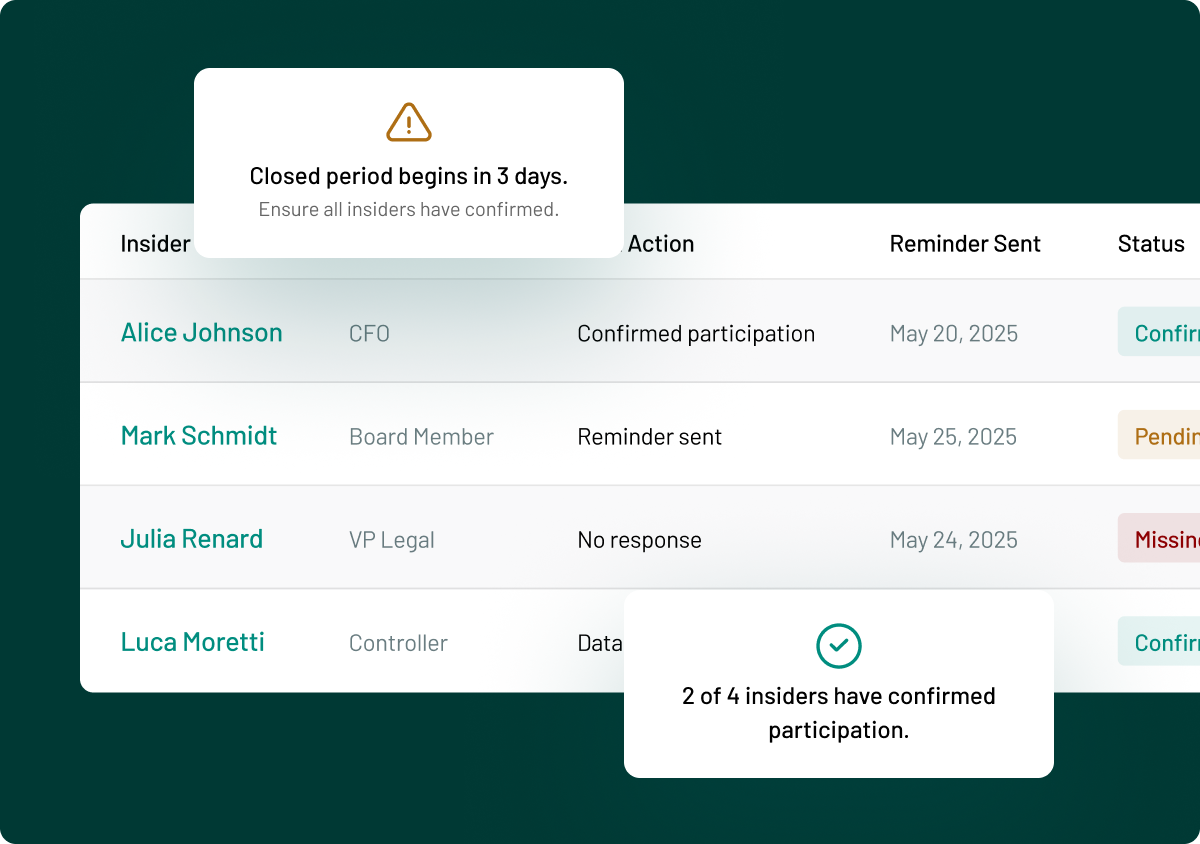
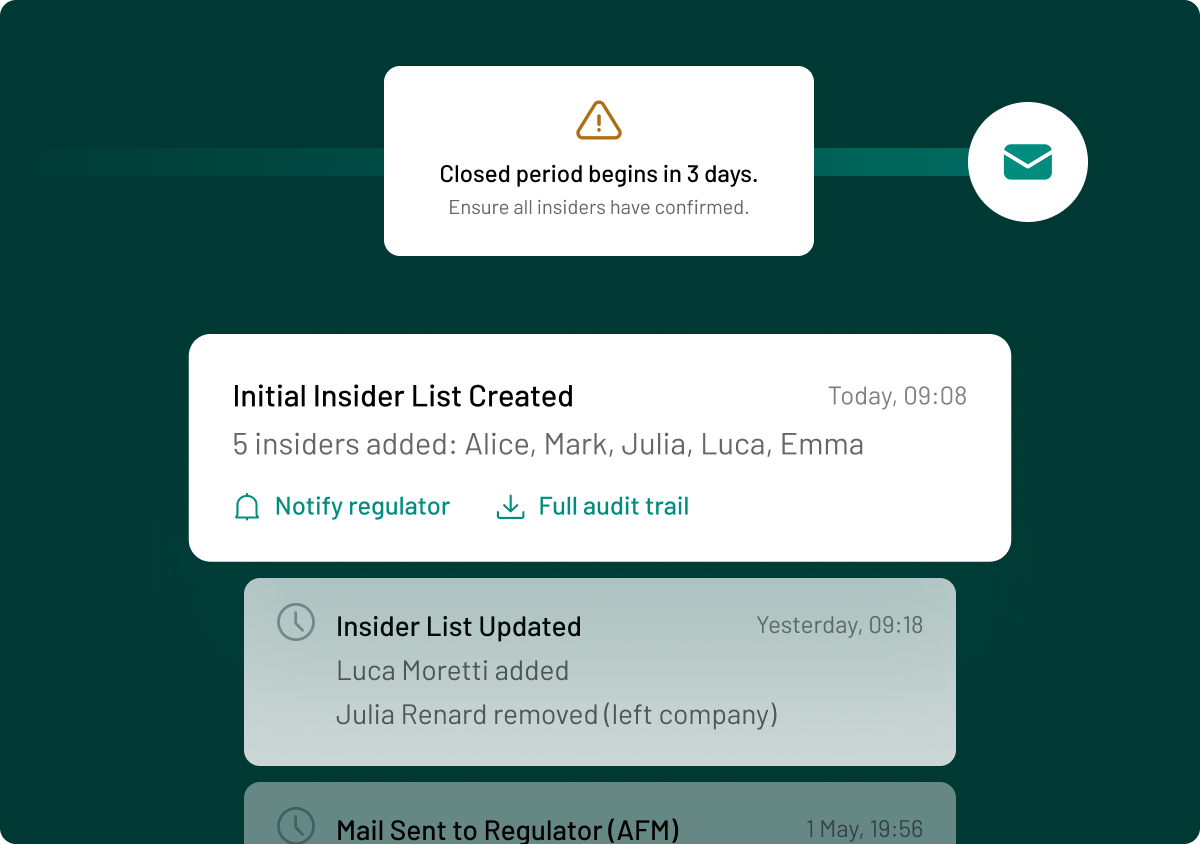
- Notify PDMRs before each closed period begins and when it ends
- Record acknowledgements and any requests for exceptional permission to trade
- Retain an audit trail showing when you issued notifications and how you managed any requests.
Related terms
View all termsDefinition of Insider Trading
Insider trading is when a person in possession of confidential information uses ...
Market Abuse Regulation (MAR) Outlined
The Market Abuse Regulation (MAR) came into effect in 2016 to ensure a uniform ...
Definition of Market Manipulation
Market manipulation, a form of market abuse, is the illegal act of artificially ...