









.png)




.svg)
.svg)
.svg)







.png)
.png)







.jpg)

%20F%20(1).jpeg)







.webp)






 Login
Login
Market Abuse Regulation
What Is a PDMR Trading Notification Under Article 19 MAR?
A PDMR trading notification is one of the key transparency requirements under Article 19 of the Market Abuse Regulation (MAR).
A Person Discharging Managerial Responsibilities (PDMR) is someone within a listed company who has the authority to make managerial decisions affecting the company’s future developments and business prospects. When PDMRs, or people closely associated with them, trade in the issuer’s financial instruments above the applicable reporting threshold, they must notify both the issuer and the relevant national competent authority.
This process helps promote market transparency by ensuring investors have visibility of transactions made by individuals who may possess price-sensitive information. It is also intended to reduce the risk of insider trading, as PDMRs are publicly accountable.
What is a PDMR trading notification?
A PDMR trading notification is the formal notification submitted when a PDMR or one of their Persons Closely Associated (PCAs) carries out a reportable transaction in the issuer’s financial instruments.
The notification contains information such as:
-
The identity of the PDMR or PCA
-
The type of financial instrument involved
-
The nature of the transaction
-
The transaction date and price
-
The volume traded.
This information allows the market to see when senior decision-makers are buying or selling securities in their own company, helping regulators monitor potential market abuse.
Who must submit a notification?
The notification requirement applies to:
PDMRs, including directors and senior executives who regularly have access to inside information and make strategic management decisions.- PCAs, such as spouses, civil partners, dependent children and certain legal entities connected to the PDMR.
Although the legal obligation to notify the national competent authority (NCA) rests with the individual carrying out the transaction, issuers also have responsibilities to make the transactions public.
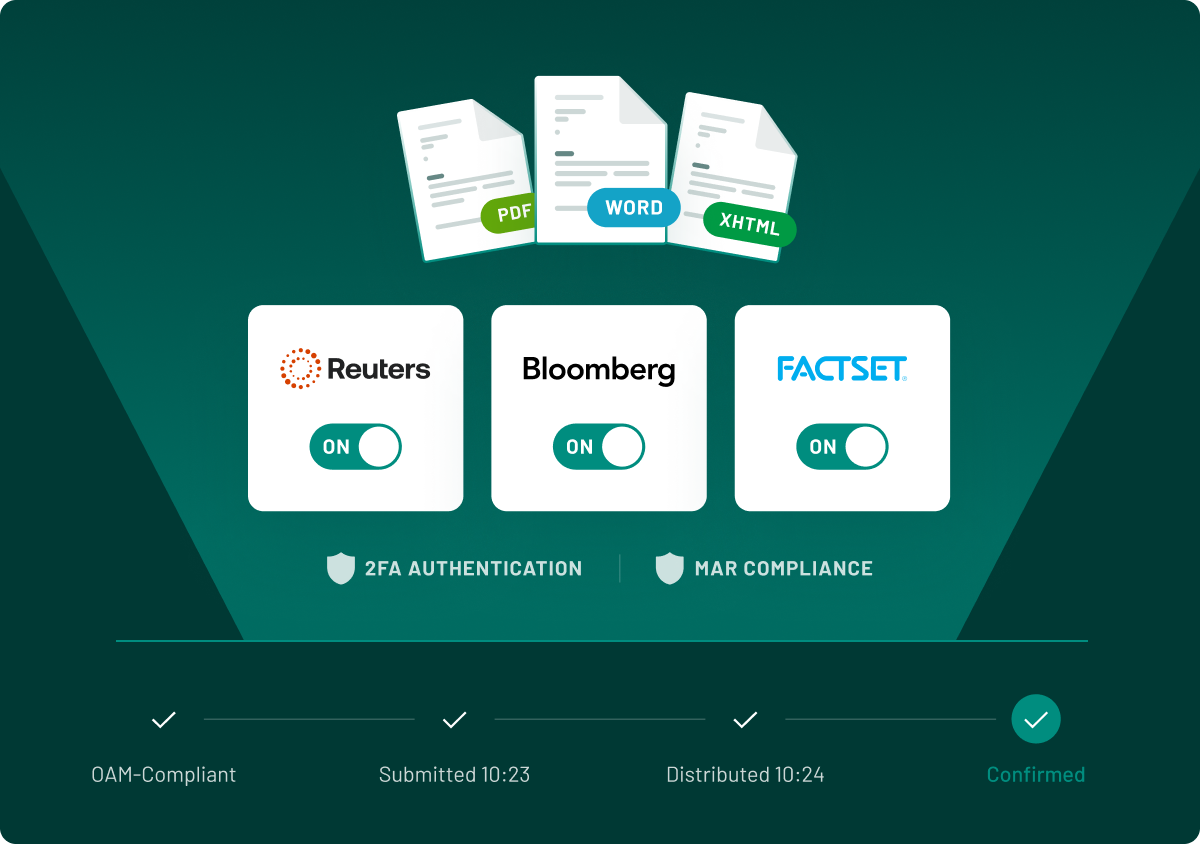
Once notified, Article 19.3 of MAR states that the issuer should publish details of the transaction “promptly and no later than three business days after the transaction.” They should use a format that is distributed to the public throughout the European Union, also publishing through the country’s officially appointed mechanism (OAM).
Which transactions must be reported?
Article 19 covers a broad range of transactions involving the issuer’s financial instruments. Examples include:
-
Buying or selling shares
-
Transactions in bonds and other debt instruments
-
Dealings in derivatives linked to the issuer’s securities
-
Transactions carried out under employee share schemes, where reportable.
Because the scope extends beyond straightforward share purchases and sales, you should ensure your PDMRs understand which transactions require notification.
When is a notification required?
A notification is required once the total value of a PDMR’s transactions reaches the applicable annual reporting threshold:
Following the EU Listing Act, the default threshold under MAR is €20,000 per calendar year. However, Member States may choose a different threshold between €10,000 and €50,000, so you should always confirm the rules that apply in your jurisdiction.
Once the threshold has been reached, the PDMR must report every subsequent in-scope transaction during that calendar year.
They must submit notifications within three business days of the transaction to both the issuer and the relevant national competent authority.
Common compliance challenges
While the reporting obligation is straightforward, managing it in practice can be more demanding. Common challenges include:
- Tracking cumulative transactions against the reporting threshold
- Identifying transactions carried out by Persons Closely Associated
- Ensuring PDMRs understand their reporting obligations
- Coordinating notifications across multiple jurisdictions
- Maintaining complete records for audit and regulatory review.
Without structured processes, there is a greater risk of late notifications, incomplete records or inconsistent reporting.
How can issuers manage PDMR notifications effectively?
The goal should be to establish clear responsibilities and consistent processes for your PDMR trading notifications. You should:
- Maintain a documented personal dealing policy that explains PDMR obligations.
Operate a formal pre-clearance process for personal trades.
Monitor reporting thresholds and remind PDMRs when they are approaching them.
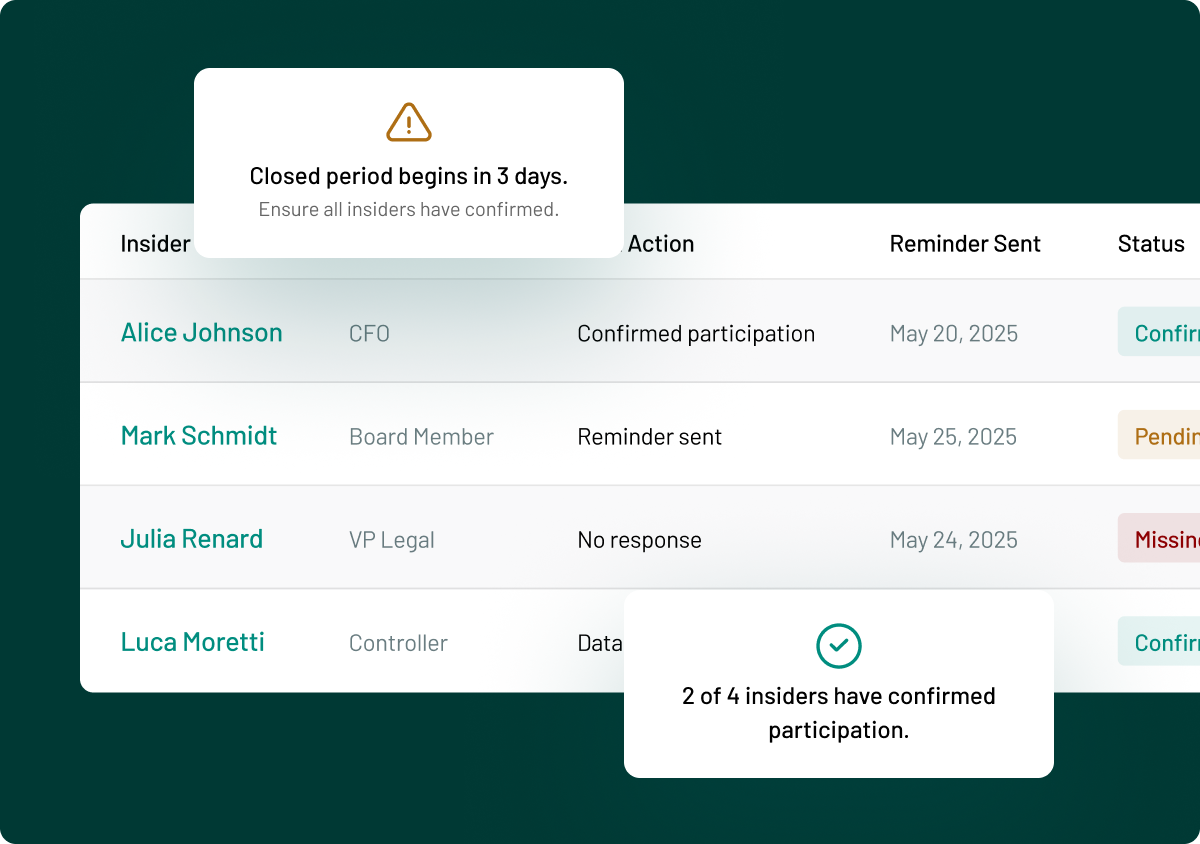
Notify PDMRs when closed periods begin and end.
Keep complete records of notifications, approvals and disclosures to demonstrate compliance.
Related terms
View all termsDefinition of Insider Trading
Insider trading is when a person in possession of confidential information uses ...
Market Abuse Regulation (MAR) Outlined
The Market Abuse Regulation (MAR) came into effect in 2016 to ensure a uniform ...
Definition of Market Manipulation
Market manipulation, a form of market abuse, is the illegal act of artificially ...