









.png)





.svg)
.svg)
.svg)







.png)
.png)






.jpg)

%20F%20(1).jpeg)







.webp)






 Login
Login
Market Abuse Regulation
What Does the EU Listing Act Change for MAR in 2026?
The EU Listing Act introduces the biggest changes to the Market Abuse Regulation (MAR) since it came into force in 2016. The aim is to reduce the administrative burden on issuers while maintaining market integrity and investor confidence. If your company is admitted to trading on an EU-regulated market or SME growth market, you should understand how these changes affect your compliance processes. This article explains the EU Listing Act MAR changes in 2026.
Why was the EU Listing Act introduced?
The European Commission introduced the EU Listing Act to make EU capital markets more attractive to companies seeking investment.
The reforms seek to:
- Reduce unnecessary compliance costs
- Simplify certain reporting requirements
- Make public markets more attractive, particularly for smaller issuers
- Maintain the standards of transparency and investor protection established by MAR.
The changes simplify some administrative processes, but they do not reduce your responsibility to identify inside information, prevent market abuse or maintain accurate records.
Get an overview of ESMA fines and sanctions over the years, insights into market abuse data, practical resources to support compliance, and the latest updates on MAR.
Get access to the Enforcement HubWhich MAR changes apply in 2026?
|
Change |
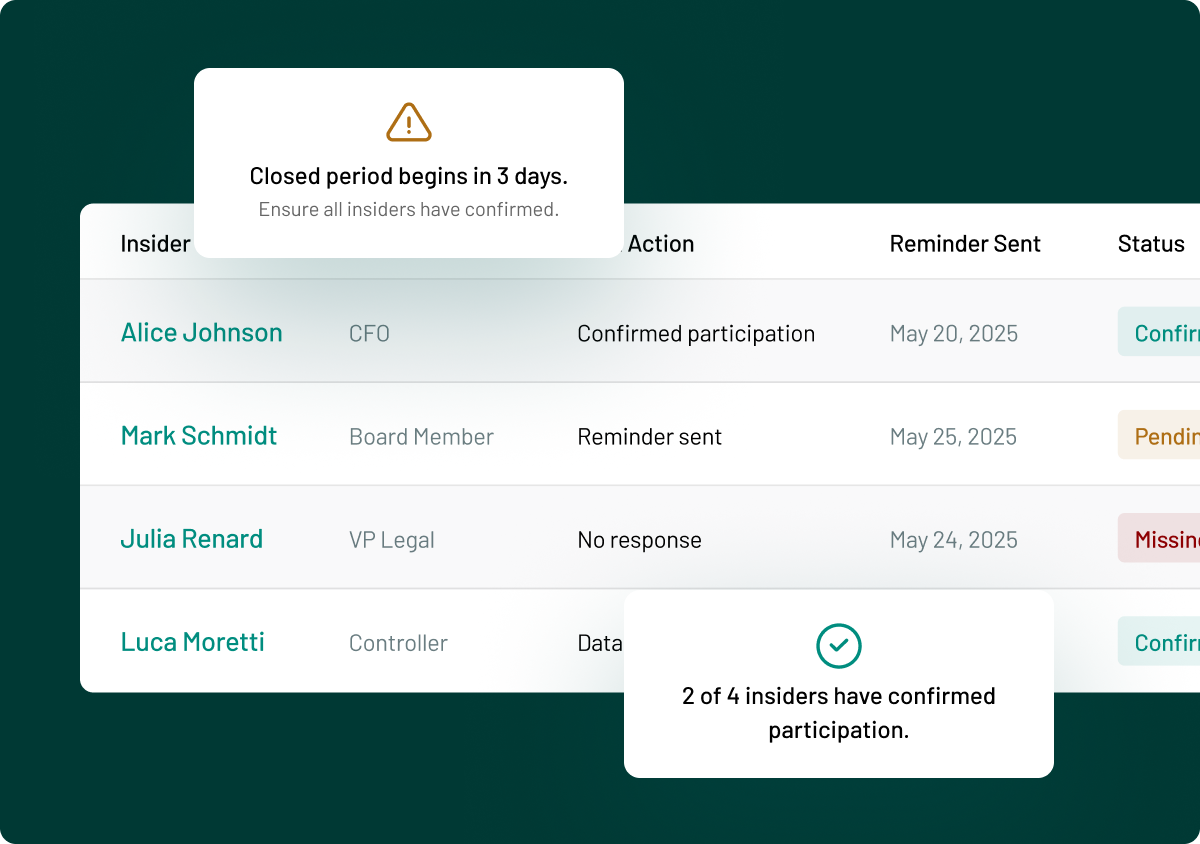
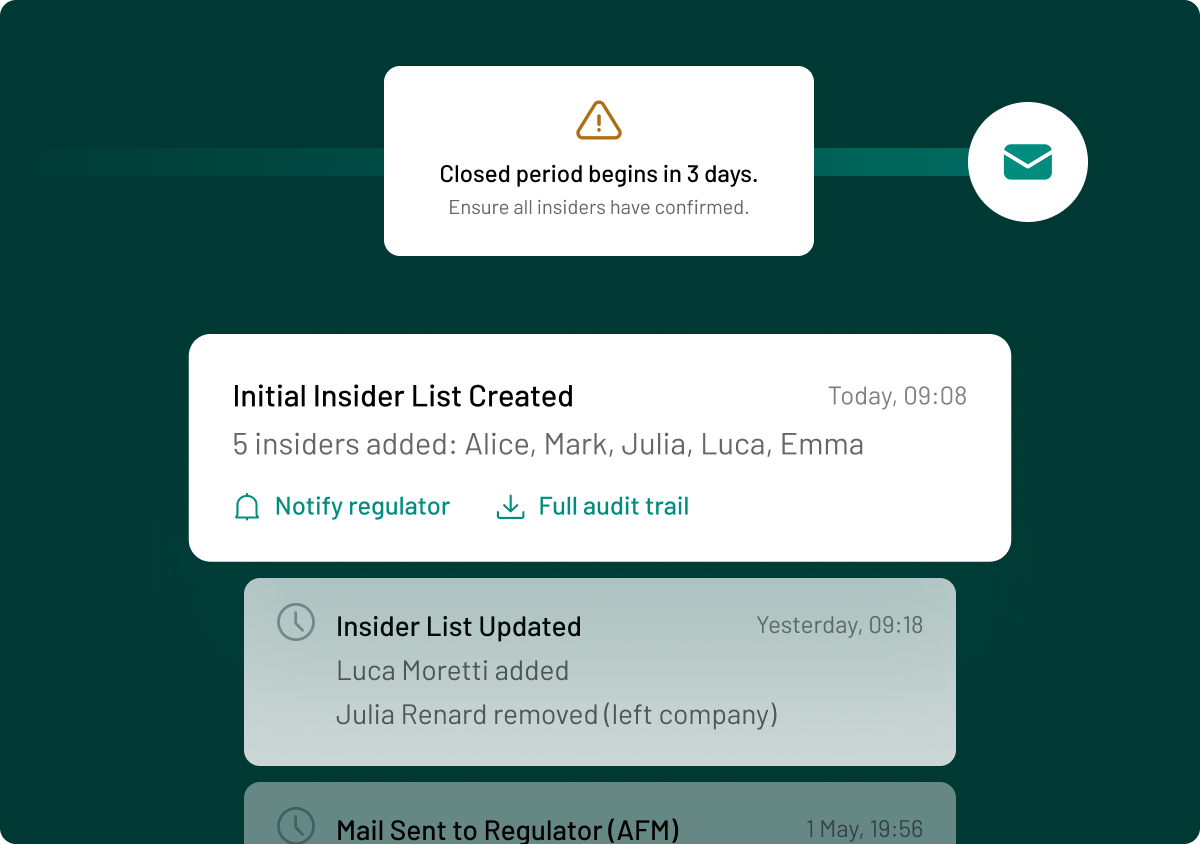
Event-based insider list |
|
Disclosure of protracted processes |
From 5 June 2026, you no longer need to disclose intermediate steps in a protracted process as inside information. Instead, disclosure is required when the final event or final circumstance occurs, provided you have maintained the confidentiality of the information. |
|
Delayed disclosure |
The test for delaying disclosure has changed. As well as releasing the information being detrimental to your business and ensuring you can keep the information confidential, the inside information you delay must not contradict with your latest public announcement or other. |
|
PDMR reporting thresholds |
The default threshold for reporting the transactions of persons discharging managerial responsibilities (PDMR) in the company’s own instruments has increased from €5,000 to €20,000 per calendar year. However, Member States may set a different threshold between €10,000 and €50,000, so you should check the rules that apply in your jurisdiction. |
|
Revised sanctions |
From 5 March 2026, maximum administrative sanctions became more proportionate to the size of your organisation, although significant penalties remain available for serious breaches. |
|
Simplified insider lists |
In July 2026, an alleviated insider list format was extended to all issuers after Commission Implementing Regulation (EU) 2026/1291 came into effect. This reduces the amount of personal information you need to collect. |
What stays the same?
Although some requirements have changed, the core principles of MAR remain unchanged.
You must still:
- Identify inside information as soon as it arises
- Disclose inside information to the market as soon as possible unless the rules allow otherwise
- Maintain insider lists
- Prevent insider dealing and unlawful disclosure
- Protect the confidentiality of inside information
- Maintain records that demonstrate your compliance decisions.
The Listing Act simplifies some processes, but it does not remove your obligation to maintain effective governance and documentation.
What do the changes mean for your compliance process?
The changes provide an opportunity to review your existing MAR procedures. You should:
-
Update your disclosure policy to reflect the new rules on protracted processes
-
Review your delayed disclosure procedures and decision-making criteria
-
Prepare for the revised insider list formats
-
Train directors and employees on the updated requirements
-
Develop a system to ensure PDMRs understand when they meet the threshold for transaction reporting
-
Ensure your compliance systems and workflows reflect the new rules.
Related terms
View all termsDefinition of Insider Trading
Insider trading is when a person in possession of confidential information uses ...
Market Abuse Regulation (MAR) Outlined
The Market Abuse Regulation (MAR) came into effect in 2016 to ensure a uniform ...
Definition of Market Manipulation
Market manipulation, a form of market abuse, is the illegal act of artificially ...